


After last year’s brief foray into the flagship smartphone space with the Phone 3, Nothing is entering 2026 with a new upper-mid-range follow-up it calls the Phone 4a Pro. I’ve been a fan of Nothing’s mid-rangers for some time now, ultimately coming away impressed by the Phone 2a Plus and the Phone 3a Pro, both of which I’ve reviewed right here on Pocket-lint in 2024 and 2025, respectively.
This time around, Nothing is infusing various elements of its more expensive Phone 3 right into the Phone 4a Pro, making for an interesting blend of both hardware and software, and culminating in a device with a rather unique product identity to call its own. Here are my thoughts after using the Phone 4a Pro extensively over the past couple of weeks.


4.5/5
- Brand
-
Nothing
- SoC
-
Qualcomm Snapdragon 7 Gen 4
- Display
-
6.83-inch, 144Hz
- RAM
-
8GB, 12 GB LPDDR5X
The Nothing Phone (4a) Pro is a mid-range Android handset with a 6.83-inch 144Hz AMOLED display panel, the Snapdragon 7 Gen 4 chipset, and a tetraprism periscope telephoto lens capable of 7x lossless zoom.
- Distinct look and feel
- Lightning-fast 144Hz display
- Bloat-free Android experience
- No support for Glyph Toys
- No wireless charging
- AI features still feel under-baked
Price, specs, and availability
An aggressively-priced smartphone from Nothing
The Nothing Phone 4a Pro packs a fair bit of kit into a $500 package. The device comes equipped with the Qualcomm Snapdragon 7 Gen 4 system on chip (SoC), 8 GB or 12 GB of LPDDR5X RAM, 128 GB or 256 GB of UFS 3.1 internal storage, and a 5,080 mAh battery pack.
Dawning the front of the Phone 4a Pro is a large 6.83-inch AMOLED display panel, complete with a 1,260 x 2,800 pixel resolution, support for the HDR10+ standard for high dynamic range, a peak brightness of 5,000 nits, and a super-speedy adaptive 144Hz refresh rate. Under this display an optical fingerprint sensor is housed, as well as a 32-megapixel 1080p FHD selfie camera with an f/2.2 aperture and a 1/3.42-inch sensor size.
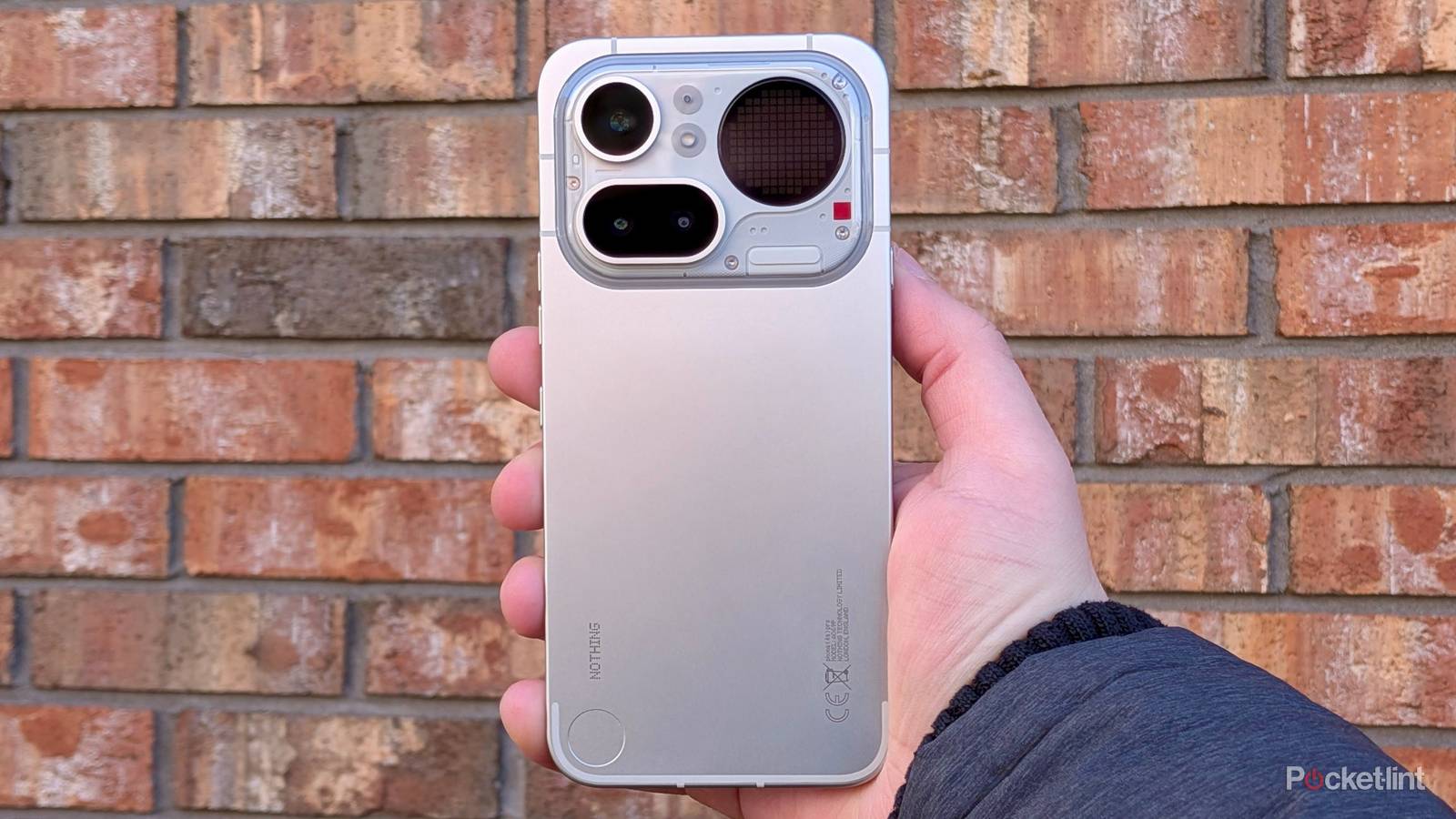
Flipping over to the 4a Pro’s back side, the unit’s triple rear-camera array features prominently. This cluster of 4K-capable optics consists of a main 50-megapixel wide-angle shooter with an f-stop of 1.9 and a 1/1.56-inch sensor size, a 50-megapixel 3. 5x periscope telephoto lens with an f/2.9 aperture and a 1/2.75-inch sensor size, and an 8-megapixel 120-degree ultra-wide camera with f/2.2 and 1/4.0-inch attributes. The company is using its own TrueLens Engine 4 processing solution under the hood, while touting support for Ultra XDR photo and video capture.
The Nothing Phone 4a Pro starts at $500, and it comes configured with 128GB of internal storage and 8GB of RAM. The product is available in black, silver, and pink colorways. My review unit is the step-up variant in silver, which sells for $600, and that ships with 256GB of storage and 12 GB of RAM. The Phone 4a Pro is available for pre-order as of March 13, with a full release date slated for March 27.
The phone’s external footprint and dimensions are relatively compact, measuring in at 6.44 x 3.02 x 0.31-inches (163.7 x 76.6 x 8 mm). The unit tips the scales at 7.41 oz (210g), which is fairly average as far as phones operating in the 6.8-inch screen space go.
Other key Phone 4a Pro specifications include an IP65 water and dust resistance rating, stereo speakers, 50W wired charging, 7.5W reverse wired charging, Wi-Fi 6, Bluetooth 5.4, NFC, 5G, USB 2.0-based Type-C connectivity, and a sheet of Corning Gorilla Glass 7i tempered glass covering the front display.
- Brand
-
Nothing
- SoC
-
Qualcomm Snapdragon 7 Gen 4
- Display
-
6.83-inch, 144Hz
- RAM
-
8GB, 12 GB LPDDR5X
- Storage
-
128GB, 256GB UFS 3.1
- Battery
-
5,080 mAh
- Ports
-
USB Type-C, 2.0
- Operating System
-
Android 16 + Nothing OS 4.1
- Front camera
-
32-megapixel, f/2.2, 1/3.42-inch
- Dimensions
-
6.44 x 3.02 x 0.31-inches (163.7 x 76.6 x 8 mm)
- Colors
-
Black, Silver, Pink
- Display type
-
AMOLED
- Weight
-
7.41 oz (210g)
- Charge speed
-
50W wired, 7.5W reverse wired
- IP Rating
-
IP65
- Price
-
Starts at $500
- Micro SD card support
-
No
- Stylus
-
No
- Release date
-
March 27, 2026
- Main Camera
-
50-megapixel, f/1.9, 1/1.56-inch
- Wide-Angle Camera
-
8-megapixel ultra-wide, f/2.2, 1/4.0-inch, 120-degree field of view
- Display resolution
-
1,260 x 2,800 pixel resolution,
- Cellular connectivity
-
Yes, 5G
- Wi-Fi connectivity
-
Yes, 802.11 a/b/g/n/ac/6
- Bluetooth
-
Yes, 5.4
- Authentication
-
Optical under-display fingerprint sensor
- Periscope Telephoto
-
50-megapixel, f/2.9, 1/2.75-inch, 3.5x optical zoom
- Software Update Policy
-
3 years of Android updates, 6 years of security patches
- Model
-
A069P
What I liked about the Nothing Phone 4a Pro
It punches well above its weight class

First thing’s first: the Phone 4a Pro is a well-built piece of mobile hardware. The aluminum unibody design feels premium in the hand, buttons are tactile and clicky, and the display’s symmetrical borders are nice and thin. Nothing has opted for an iPhone 17 Pro-esque full-width ‘camera plateau’ here, and I think it was the right call. When compared with the company’s Phone 3 from last year, this new design feels more purposeful and deliberate.
As ever with Nothing handsets, the opinionated aesthetic here is a matter of personal preference. I love the look, and I appreciate that Nothing’s identity continues to peek through in the form of the transparent camera section. It contrasts well with the aluminum, while looking distinct and entirely playful. Somehow, the company has managed to make an asymmetrical camera array look symmetrical, and I can’t help but love the way it all comes together.
The 4a Pro’s screen is undeniably one of the highlights of the package, performing well above the mid-range average. The 1.5K AMOLED panel is bright and vivid, it supports HDR, and its refresh rate is blisteringly speedy. In all honesty, I have trouble differentiating refresh rates above 120Hz or so, but the higher number here is technically impressive. The 2,160 Hz Pulse Width Modulation (PWM) dimming is another highlight, far surpassing most flagships in the North American market when it comes to fighting against eye strain.
Nothing OS remains a pleasantly lightweight third-party Android skin, with next to no software bloat, a wholly unique style, and small, sensible customizations and tweaks peppered throughout base Android 16.
Nothing has also fixed one of my biggest gripes with previous-generation Phone models, which is button placement. I don’t mind the existence of a dedicated AI / function key on the side of a device, but I always found myself accidentally clicking it instead of the power button on previous models. Thankfully, this Essential Key has been relocated to the left-hand side of the phone, leaving the right-hand side sensibly dedicated to sleep/wake and to volume control.
Speaking of the Essential Key, it still serves as the main gateway into the world of Nothing’s AI ambitions. As previously, it can be used to take screenshots and to record snippets of audio to pair alongside them, and a sprinkling of other AI tools can be found throughout Nothing OS 4.1. I appreciate Nothing’s AI Usage Dashboard, which provides a general overview of all AI processes, but most of the AI features themselves are about as hit-or-miss as they are on other modern Android devices.


Luckily, the AI never gets in the way of the operating system’s fundamentals, which remain downright excellent. Nothing OS remains a pleasantly lightweight third-party Android skin, with next to no software bloat, a wholly unique visual style, and small, sensible customizations and tweaks peppered throughout base Android 16. Nothing promises up to 3 years of major OS upgrades, in addition to up to 5 years of security patches. This isn’t an industry-leading promise by any means, but it one-ups a lot of other mid-rangers on the market.
What I didn’t like about the Nothing Phone 4a Pro
The lack of Glyph Toys here is a bummer

Despite having a flagship-class external build and display panel, the Nothing Phone 4a Pro does make concessions in other areas. The device’s mid-range Qualcomm processor is adequate for the price range, but there’s a distinct lack of wireless charging, IP68 or IP69 certifications, higher-end Gorilla Glass protection, or larger storage and memory size configurations to choose from.
The phone’s optical in-display fingerprint sensor is pokier than the ultrasonic units I’ve grown accustomed to on Android devices, and, while it’s hard to fault Nothing when even $1,000+ smartphones from Samsung et al. still lack Qi2’s Magnetic Power Profile (MPP), I sure do wish I could attach my various MagSafe and Pixelsnap accessories onto the back of my Phone 4a Pro.
…it feels like Nothing is teasing the Glyph Matrix here without delivering on the actual goods.
I ran a Geekbench 6 benchmarking test on the 4a Pro, and its Snapdragon 7 Gen 4 produced suitably mid-range results of 1,360 in single-core and 4,306 in multi-core. For most everyday computing tasks of both the content consumption and the productivity varieties, this is more than enough horsepower and then some. For gamers and creative types, meanwhile, you’ll be left wishing for some extra processing headroom.
Unfortunately, the 4a Pro’s (admittedly slow) USB 2.0 Type-C port doesn’t appear to offer video output support, which means the handset is incapable of benefiting from Android’s recently-released desktop mode. This is a real disappointment, especially given the phone’s ‘Pro’ moniker. I’d personally love to see Nothing tackle the desktop PC software environment with its signature dot matrix aesthetic.
The cameras, too, are only just alright. None of the included sensors are pushing any hardware boundaries, and Nothing’s mix of computational photography algorithms, color science, and post-processing produce average results at best. That’s not to say this is a bad camera phone — the triple array of optical focal lengths is nice to have, and the 140x digital Ultra Zoom of the periscope lens adds more zoom flexibility to the mix than any other phone out on the market. As expected, images snapped at 140x are hardly usable in the real world, but there’s always the 3.5x optical zoom and the hybrid 7x lossless zoom on deck, too.
Then, there’s the 137 mini-LED Glyph Matrix display found on the back of the device. On the one hand, I prefer its implementation here over that of the Phone 3, with its 57-percent larger size and its 100-percent brighter output (up to 3,000 nits), but, much to my dismay, it lacks the pressure sensitive button for switching through modules, and it outright nixes support for third-party Matrix Toys. This is most likely a cost-saving measure, but it feels like Nothing is teasing the Glyph Matrix here without delivering on the actual goods.
Should you buy the Nothing Phone 4a Pro?
As far as mid-range Android devices go, you can’t go wrong with Nothing’s latest offering

While not a full-blown flagship handset, the Nothing Phone 4a Pro takes the Phone 3’s DNA and runs with it. Critically, the 4a Pro manages to beat the 3 in several key areas, evolving the company’s winning handset formula while also reigning in the price tag to a palatable $500. The Phone 4a Pro is comfortably mid-range, but it punches well above its weight in terms of distinctiveness, build quality, software tuning, and display panel performance.
If you’re in the market for a sensibly priced smartphone, the Phone 4a Pro is pretty easy to recommend. The device’s ethos is one of confidence and deliberate refinement, and, at least in my opinion, it offers a bolder and more opinionated take on Android when compared to other $500 offerings like the Google Pixel 10a or the Samsung Galaxy A56 5G, or even the slightly more expensive $550 Motorola Edge (2025).
The Phone 4a Pro isn’t perfect, of course, but none of its issues are systemic. Rather, all my gripes (like the lack of magnetic wireless charging and the relatively weak processor) boil down to deliberately calculated cutbacks used to achieve a particular MSRP. With this in mind, I already can’t wait to see how Nothing builds upon the 4a Pro’s rock-solid foundations in subsequent hardware generations. The company has already stated that a true flagship successor to the Phone 3 isn’t in the pipeline for 2026, but I’m crossing my fingers for what’s to come in 2027 and beyond.
This device was provided to Pocket-lint by Nothing.
4.5/5
- Brand
-
Nothing
- SoC
-
Qualcomm Snapdragon 7 Gen 4
- Display
-
6.83-inch, 144Hz
- RAM
-
8GB, 12 GB LPDDR5X
The Nothing Phone (4a) Pro is a mid-range Android handset with a 6.83-inch 144Hz AMOLED display panel, the Snapdragon 7 Gen 4 chipset, and a tetraprism periscope telephoto lens capable of 7x lossless zoom.