



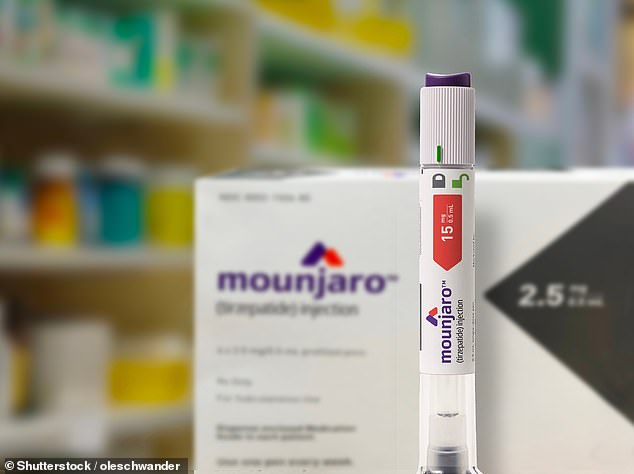
Weight loss jabs could leave users ‘worse off than before’ if they pile fat back on when they stop taking them, researchers warn.
People taking the likes of Mounjaro or Wegovy will regain almost two thirds of the weight they lose within a year of stopping the drugs, a new study suggests.
The period of piling on the pounds post-treatment is likely to plateau, with patients managing to keep a quarter of the weight lost off.
However, researchers say around half the weight lost during treatment is usually muscle and if the regained mass is mainly fat, patients’ long-term health may be better if they had not taken the drugs at all.
Weight loss jabs are a class of drugs known as GLP-1 receptor agonists, which work by mimicking the hormone GLP-1 to regulate blood sugar levels and suppress appetite.
They were initially developed as a treatment for type 2 diabetes, but certain types such Mounjaro and Wegovy are approved for use on the NHS to help tackle obesity.
The study by scientists at the University of Cambridge examined six trials involving more than 3,200 people taking the drugs.
Their analysis suggests people regained an average of 60 per cent of the weight they lost 52 weeks – one year – after they stopped taking them.

The period of piling on the pounds post-treatment is likely to plateau, with patients managing to keep a quarter of the weight lost off.
Researchers said the findings, published in eClinicalMedicine, ‘indicate that there is significant weight regain following cessation of GLP-1RAs’.
However, by 60 weeks, researchers said the regain started to taper off at 75 per cent of the original weight lost, suggesting 25 per cent may be sustained in the long-term.
Study author Brajan Budini said: ‘Drugs such as Ozempic and Wegovy act like brakes on our appetite, making us feel full sooner, which means we eat less and therefore lose weight.
‘When people stop taking them, they are essentially taking their foot off the brake, and this can lead to rapid weight regain.
‘Our projections show that even though people regain most of the weight they have lost, they still maintain some of the weight loss, but what we currently don’t know is if the same proportion of lean mass is recovered.
‘If the regained weight is disproportionately fat, individuals may ultimately be worse off than before in their fat-to-lean mass ratio, which may have adverse consequences for their health.’
Researchers called for future trials to explore the the effect of GLP-1RAs on the composition of weight loss during and after treatment.
They added that current prescribing guidelines for GLP-1RAs ‘are inconsistent and largely inadequate in addressing the risk of weight regain following treatment cessation’.
For example, the National Institute for Health and Care Excellence recommends that patients should be on Wegovy for weight loss for a maximum of two years, although there is no such limit for Mounjaro.
Steven Luo, also an author on the study, said: ‘When stopping weight loss drugs, doctors and patients should be aware of the potential for weight regain and consider ways to mitigate this risk.
‘It’s important that people are given advice on improving their diet and exercise, rather than relying solely on the drugs, as this may help them maintain good habits when they stop taking them.’