



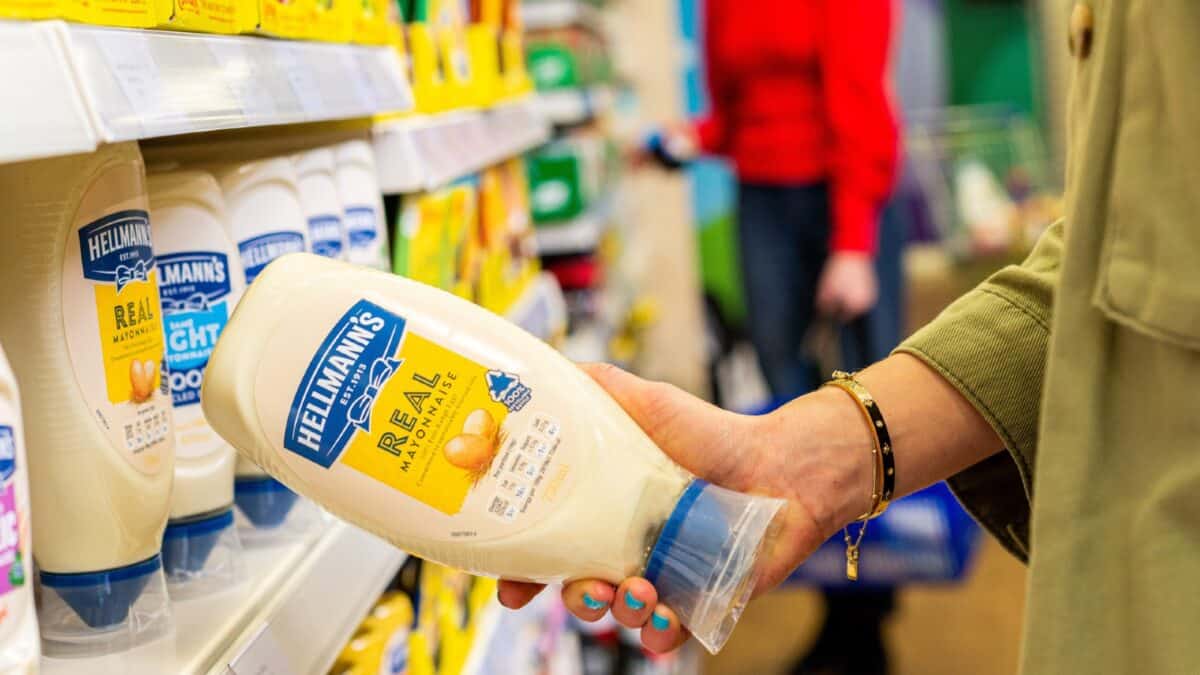
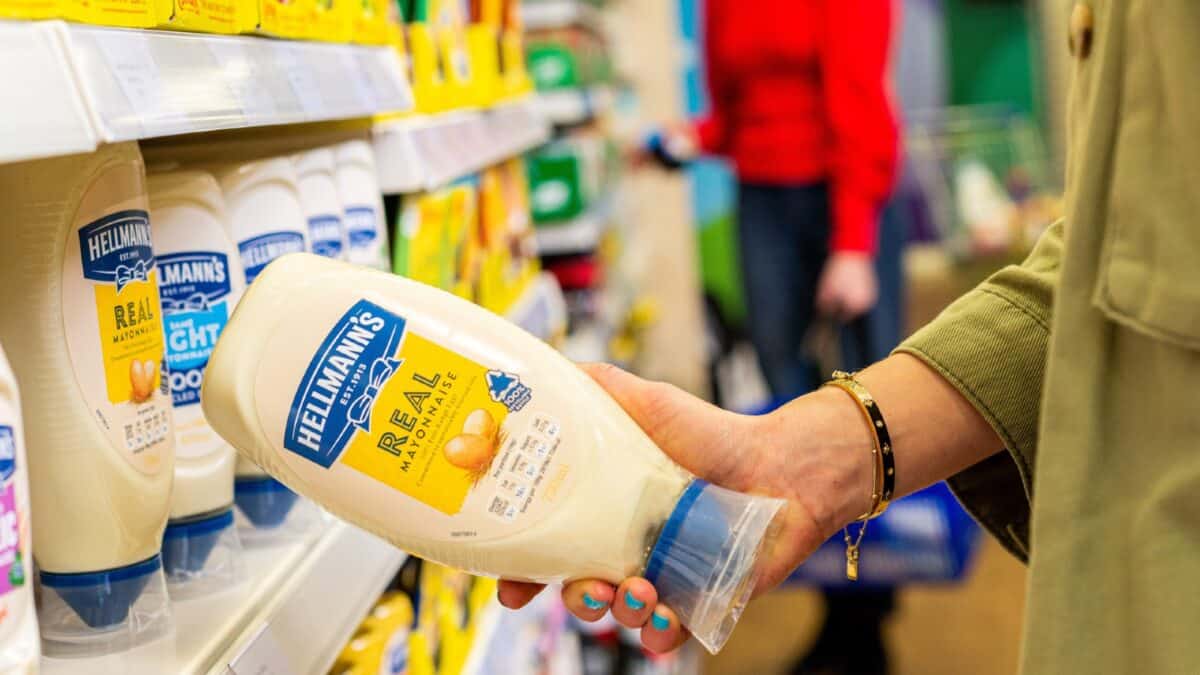
Image source: Unilever plc
Unilever (LSE: ULVR) shares have been on a bit of a roll, up nearly 10% so far in 2026. It seems longer-term safety might be back in vogue as higher-risk tech stocks have been volatile. But the share price dipped 3% Thursday morning (12 February), on the back of 2025 full-year results.
Unilver reported 3.5% underlying sales growth, with 1.5% being down to actual volume growth. Of that, the company’s ‘Power Brands’ led the way with growth of 4.3% — and volumes up 2.2%. But revenue dipped a bit, due to currency movements and disposals.
We saw a modest 0.7% rise in underlying earnings per share (EPS) with margins improved since the ice cream business was split out to form The Magnum Ice Cream Company. Magnum reported a 20% fall in operating profit the same day — though it did face significant separation and restructuring costs.
What does this mean for shareholders?
Cash rewards
An underlying gross margin of 20% contributed to €5.9bn in free cash flow. As a result, the quarterly dividend is up 3%. And the board has launched a new €1.5 billion share buyback programme.
Unilever has been refocusing on core products and simplifying its business over the past few years. And it looks like it’s paying off. CEO Fernando Fernandez highlighted the target of “prioritising premium segments and digital commerce, and anchoring our growth in the US and India.” And he added: “Despite slowing markets, our sharper focus and disciplined execution underpin our confidence for 2026 and beyond.”
So what should we expect for 2026? Management guidance indicates underlying sales growth between 4% and 6% for the year, based on at least 2% underlying volume growth. And we should expect a “modest improvement” in the year’s operating margin.
All in all, I rate this as a solid performance in a time of pressured market conditions.
Value proposition?
Unilever shares have put on an impressive 27% over the past few years. And that does appear to have put a defensive premium on the stock now. EPS of 268p gives us a trailing price-to-earnings (P/E) ratio of 20 for the year just ended — significantly ahead of the FTSE 100 long-term average. And that’s for a stock with pretty average dividend yields a bit above 3%.
Forecast earnings growth in this kind of business is modest at best, even if it is positive in the current conditions. But it doesn’t look likely to bring the P/E down very far in the next few years.
My main fear right now is that Unilever shares perhaps look fully valued — or maybe even a bit toppy. And we could be in for a period of stagnation, especially if the recent ‘flight to safety’ among investors should ease off when today’s economic turmoil calms down. I suspect that’s why the revenue dip caused the results morning wobble.
This doesn’t mean I don’t rate Unilever as an investment. I still do, and I reckon new ISA investors should consider it as a relatively safe cornerstone for a long-term portfolio.