

Victor Glover says he wants to listen to all audiences learning about his upcoming moon mission — especially those people who don’t usually pay attention to space exploration.
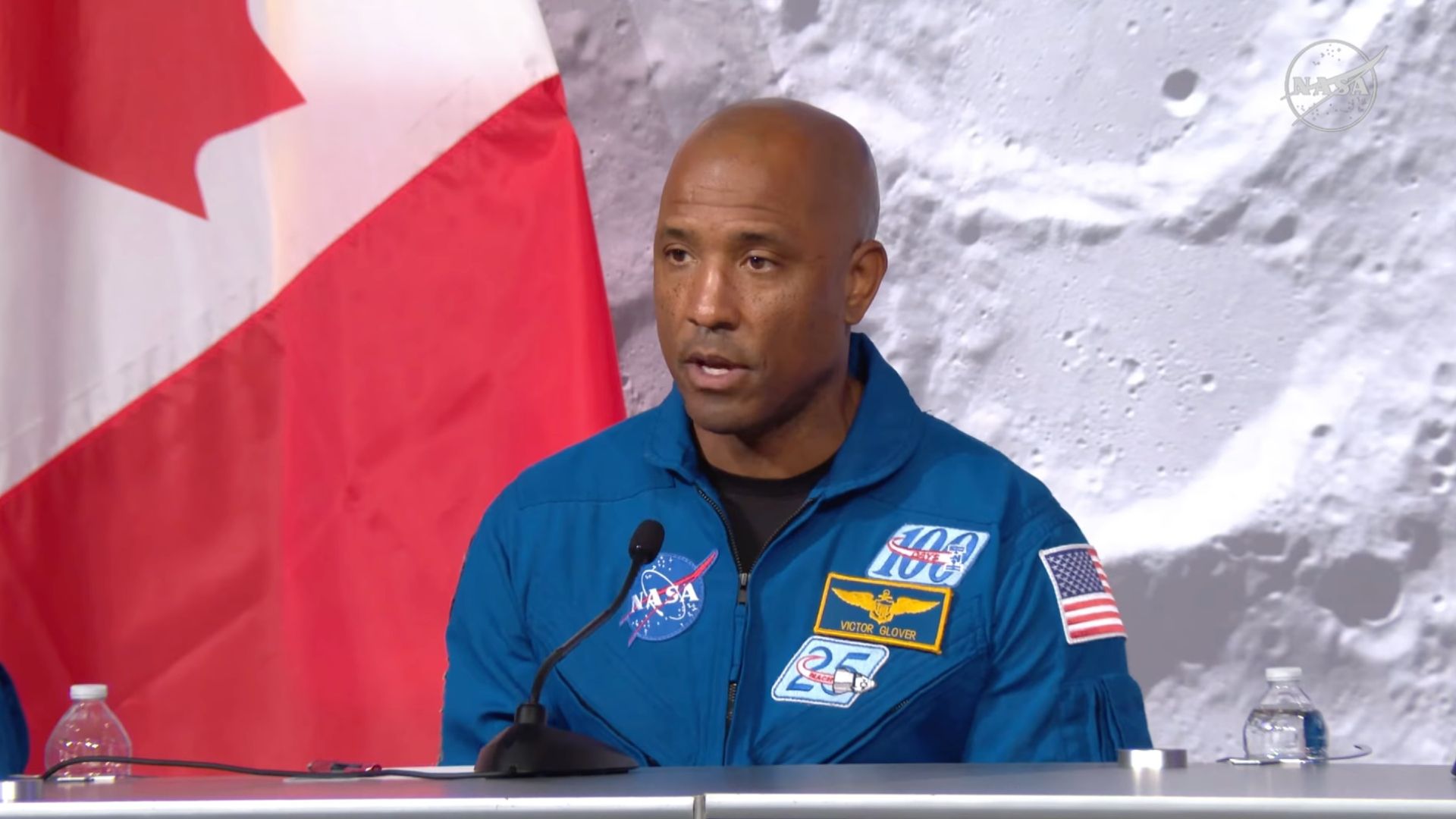
NASA astronaut Victor Glover told Space.com that he doesn’t think much about milestones for the Artemis 2 mission, which is scheduled to launch no earlier than April 1 — even though it will make him the first Black person ever to leave low Earth orbit (LEO). His priority, aside from training for a safe mission, is sharing the experience with different communities.
Glover served as pilot on Crew-1, SpaceX’s first operational astronaut mission to the International Space Station. He spent 168 days in space on that flight, conducting four spacewalks. Glover is also an aviator with combat experience for the U.S. Navy, a former test pilot for programs such as the F/A‐18 Hornet and the holder of several advanced engineering and science degrees. Next up for him: the moon.
Article continues below
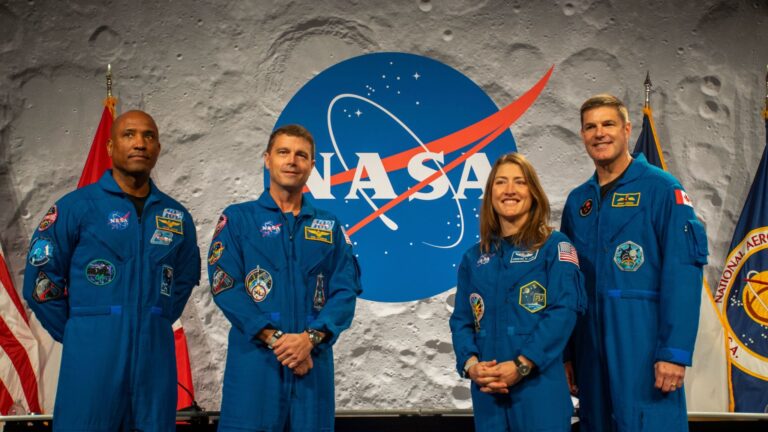
Artemis 2 also includes NASA commander Reid Wiseman, NASA mission specialist Christina Koch (who will become the first woman to leave LEO) and Canadian Space Agency mission specialist Jeremy Hansen (the first non-American to leave LEO). The crew aims to fly for 10 days inside an Orion spacecraft, which will make a loop around the moon and then come back to Earth. If all goes well with Artemis 2 and Artemis 3, which will practice docking activities in LEO, Artemis 4 could land astronauts on the moon in 2028.
Glover spoke with Space.com during an interview in September 2025 at NASA’s Johnson Space Center, during Artemis 2 press activities. Below are some of his remarks during the interview, which has been edited for space and clarity.
“Jeremy put it very eloquently: This can be an example that people can lean on to see that excellence comes in all shapes, sizes, forms, backgrounds [and] educational experiences. We all see so much division. We hope that what we’re doing is a source of — I know, it sounds so cliché — unity. We’re not doing it just for that purpose, right? We’re not just trying to start some unity movement. It really takes us all, in all of our skills, to successfully go to the moon and come back. But in order to do that, we have to take all of our frictions we have as a crew. We work them out, or sometimes we give each other space and we just take a moment. But we have to take these humans — that’s who we’ve got — and we have to work it out.
“You guys [the media] find all these really amazing things that we’re doing: first, farthest and stuff, and — I hadn’t heard that one [until recently] — the first pilot to the moon in the 21st century. But at the end of the day, I know my role. And, even though we haven’t had a person do this in a long time, we know what questions to ask. We know what’s going to get us, and the things that we don’t know; we’ve built a resilient system that has backups and redundancies. We’re going to use the team on the ground, and each other, to come up with the best solutions we can.
“I’m very protective of my emotional well-being and my mental bandwidth. So I don’t think of things in ways that are going to put pressure on me. I like to simplify. [Former U.S. Secretary of State] Colin Powell said a great leader is a great simplifier. And so I try very hard to make these things into very simple widgets that I can use to understand the vehicle, my team and our mission, and then put together solutions that make sense. And so I don’t think of those kinds of terms, right? I do my job, and once it’s over with, and we want to write about it and celebrate it, then maybe we’ll say that kind of stuff.
“This mission is going to be recorded as those 10 days we fly. Nobody sees us in the sim[ulation] when we’re just grinding and having fun and working through something that there’s no procedure for. We’re just going to go do it. Yeah, and we learn, and the team learns, and we get better, and we’re building trust. And that’s what exploration is about. The vigilance is in the part that people don’t see, and so we’re doing our best to meet this moment.
“Every Monday, like once a week, it’s kind of a routine: [I listen] to a song. It’s originally a poem, and it’s called “Whitey on the Moon” by Gil Scott-Heron. It ain’t about racism. It’s about the human condition. That song is a reminder that everybody wasn’t having a good time when we launched the first Apollo missions. People were struggling. Some people were like, ‘These bills and these potholes — like, my condition hasn’t been improved by NASA.’
“The man who took over the movement after Martin Luther King was assassinated [Ralph Abernathy] came to Kennedy Space Center to protest the Apollo 11 launch. The NASA administrator [Thomas Paine] went down himself and talked to him. By the end of that conversation, that group of people that was at a protest prayed for the safety of those astronauts in that mission, because they had a human moment, and they talked, and they were heard.
“I think that is a lesson. It’s: Why do we read history books to understand, when we’ve done those things? And so for me, it’s a reminder that it’s easy to go to Comic-Con and South by Southwest and talk about NASA with all these tech people who love everything that we do. But you know what? There’s people all over the country that maybe don’t know what we do, or when we’re doing it. It’s as important for us to talk to them as well.
“And that’s why I listen to that song. That song reminds me that at that time, that community, which is very similar to the community I grew up in, they didn’t feel heard. And so it’s a reminder to me that there are more perspectives and more stories out there than you’ll hear from the people cheering for NASA on a regular basis. But those people, we work for them, too.”