

She’s back…
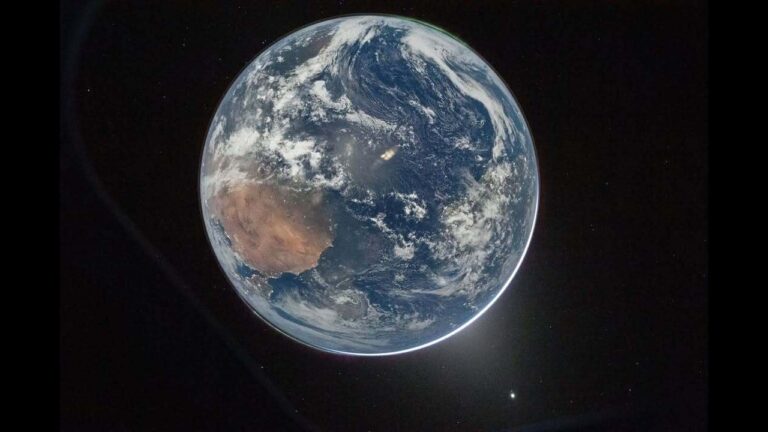
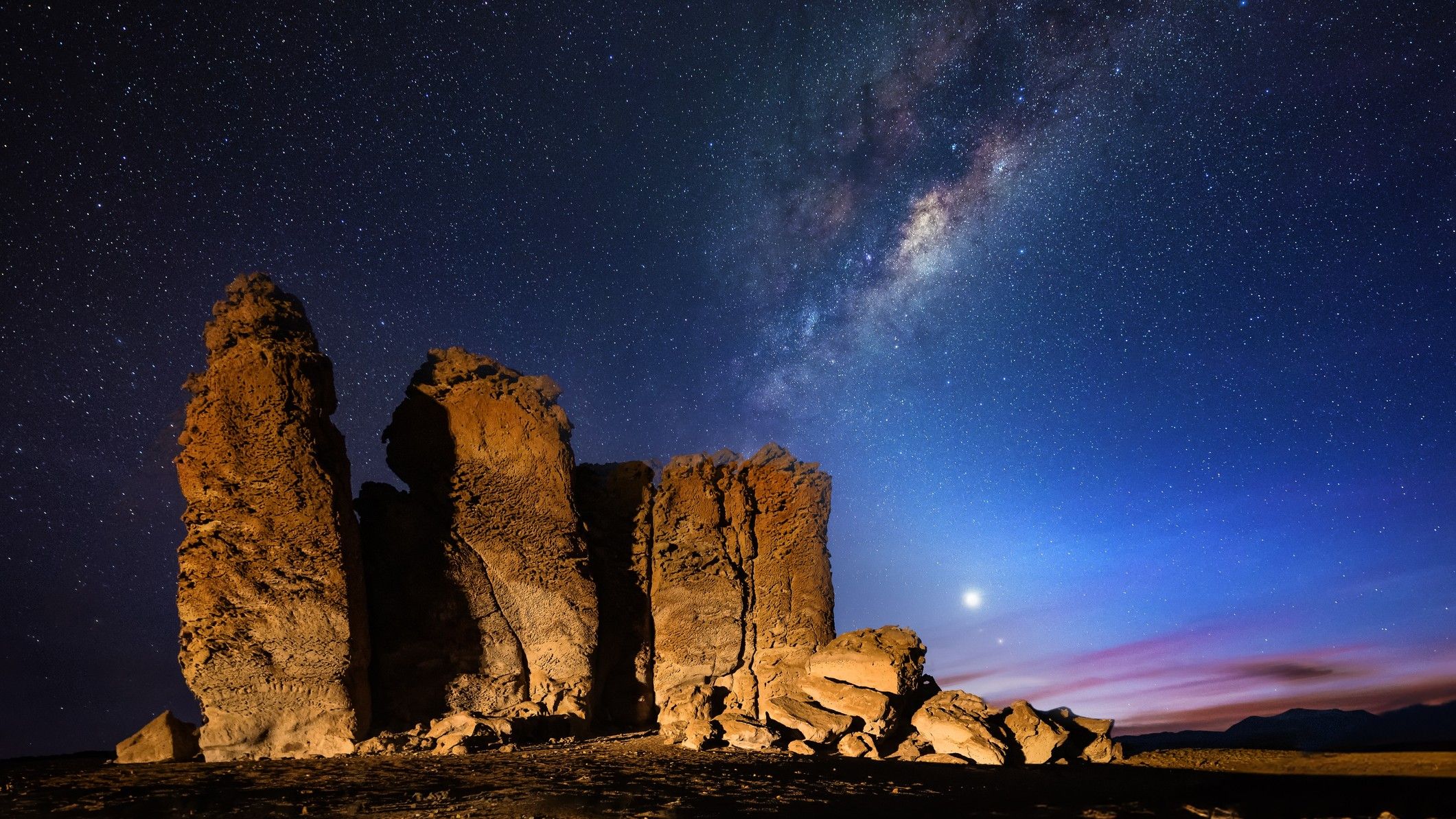
After what basically amounted to a winter sabbatical of sorts, having been out of sight since the beginning of December, Venus — by far the most brilliant of the naked-eye planets — is now fully back in view. After having spent much of 2025 as a morning object, Venus has now settled in as a prominent “evening star” for the next five months, becoming a fixture of the western sky.
Venus passed superior conjunction (appearing to go behind the sun as seen from Earth) back on Jan. 6. Until mid-February it had been invisible, mired deep in the brilliant glare of the sun. Nonetheless, with each passing day, it moved on a slow course toward the east and progressively pulled away from the sun’s vicinity.
During March, Venus rapidly climbed out of the bright evening twilight, becoming by far the most brilliant of all the “stars.” The interval between sunset and Venus-set during the month increased from nearly 60 minutes to almost 100 minutes. During the final week of March, Venus began setting after the end of astronomical twilight, that is, in a completely dark sky, a circumstance that will persist until late August.
Keeping company with Uranus and the Pleiades

As a bonus for Venus watchers, on April 23, you can use Venus as a “pointer” to locate the planet Uranus. On that evening, Venus passes just three-quarters of a degree to the right of Uranus. Venus will be resplendent at magnitude -3.9 compared to +5.8 magnitude Uranus: a brightness ratio difference of some 7,700-fold! But this close approach will serve as a convenient opportunity for identifying Uranus in a small telescope without the need of consulting a sky map. The seventh planet out from the sun appears as a greenish dot of light in good binoculars or a small telescope. Wait until about 75 minutes after sundown, but be aware that by that time the planet duo will be very low, only about 10 degrees above the west-northwest horizon.
Also on that very same evening, Venus makes its closest approach to the famous Pleiades star cluster, passing about 3½ degrees to their lower left, making for a lovely sight in binoculars. In fact, you probably will be able to fit all three objects, Venus, Uranus and the Pleiades in the field of view of most standard 7-power binoculars.

A June summit meeting
With each passing week, Venus rises higher each evening to adorn the western evening sky from early spring through mid-summer.
By the beginning of June, it will stand nearly 30 degrees above the sunset horizon and set as late as 2 hours and 40 minutes after the sun. Interestingly, the planet’s greatest altitude at sunset will also be occurring at this time, when the ecliptic (the apparent path of the sun, moon and planets throughout the year) becomes nearly vertical with respect to the western horizon for observers in northern latitudes.
Also in June, Venus will be a part of a “celestial summit meeting” of sorts, as a fascinating dance of three planets and the moon provides evening enchantment this month. One hour after sunset on June 9, Venus will team up with brilliant Jupiter; this dynamic duo literally calls attention to itself low in the west-northwest sky, separated by only 1.8 degrees. On the 16, a slender crescent moon appears to the lower right of Jupiter, while directly below the moon floats a third bright planet, Mercury. The following evening, the lunar crescent passes just off to the left of Venus. And all the while, in the same general vicinity, seemingly watching this amazing display will be Pollux and Castor, the two stars marking the heads of Gemini the Twins.
On July 9, Venus passes less than one degree above bluish Regulus, the brightest star of Leo, the Lion. Seven days later, although widely separated on Friday, July 17, Venus and a slender (17% illuminated) crescent moon will make for an eye-catching sight in the western sky.

A slow rise to prominence; then a rapid exit
Venus reaches its greatest elongation — its greatest angular distance — 46 degrees to the east of the sun — on Aug. 15, though it will appear about 10 degrees lower compared to where it was during late spring. It is brightest near the very end of summer as it heads back down toward the sun, reaching its greatest illuminated extent (greatest brilliancy) for this apparition on the evening of Sept. 18 at an eye-popping magnitude of –4.8. By then, however, it will only be 10 degrees high at sunset and will be setting just over an hour after the sun. During the last week of September, as it rapidly sinks lower each night, it will appear as a relatively huge and slender crescent. At mid-northern latitudes, we’ll have to struggle to catch her very low in the west-southwest soon after sunset during the final days of the month.
Venus then falls rapidly back toward the sun, vanishing from view at the start of October, and passes inferior conjunction on Oct. 24.
Morning “night light”
In November, she sprouts up into the predawn eastern sky to reach an even greater maximum of height in the morning skies of December. If you have a clear view toward the east-southeast, look low to the horizon on Nov. 7, about an hour before sunrise, to see a narrow crescent moon passing below brilliant Venus — and also nearby, the bluish first magnitude star Spica in Virgo the Virgin.
And Christmas 2026 will see Venus mimicking a modern-day Star of Bethlehem, appearing as a glorious “star in the east” before sunrise.
Through a telescope
Celestron NexStar 4SE

Want a quick and reliable view of the night sky? We recommend the Celestron NexStar 4SE as a top choice for beginners.
Between now and October, repeated observation of Venus with a small telescope will show the complete range of its phases and disk sizes. Currently, the planet appears practically full (93% sunlit); a tiny, dazzling gibbous disk. It will start becoming noticeably less gibbous by July 17. On Aug. 12, Venus reaches dichotomy (displaying a “half-moon” shape). Then, for the rest of the year, it appears as a large crescent as it swings near Earth. Indeed, those using telescopes will note that while the Earth-Venus distance is lessening, the apparent size of Venus’ disk will grow, doubling from its present size by Aug. 3. When it has doubled again in size on Sept. 23, its large crescent shape should be easily discernible even in steadily held 7-power binoculars.
If you’re looking for a telescope or binoculars to observe the night sky, our guides for the best binocular deals and the best telescope deals can help. Our best cameras for astrophotography and best lenses for astrophotography can help you get ready to capture the next stunning skywatching event.
Joe Rao serves as an instructor and guest lecturer at New York’s Hayden Planetarium. He writes about astronomy for Natural History magazine, Sky and Telescope, The Old Farmer’s Almanac and other publications.