

United States and Israeli forces have launched military strikes against Iran, with President Donald Trump calling the attacks a “major combat operation” against the Iranian regime.
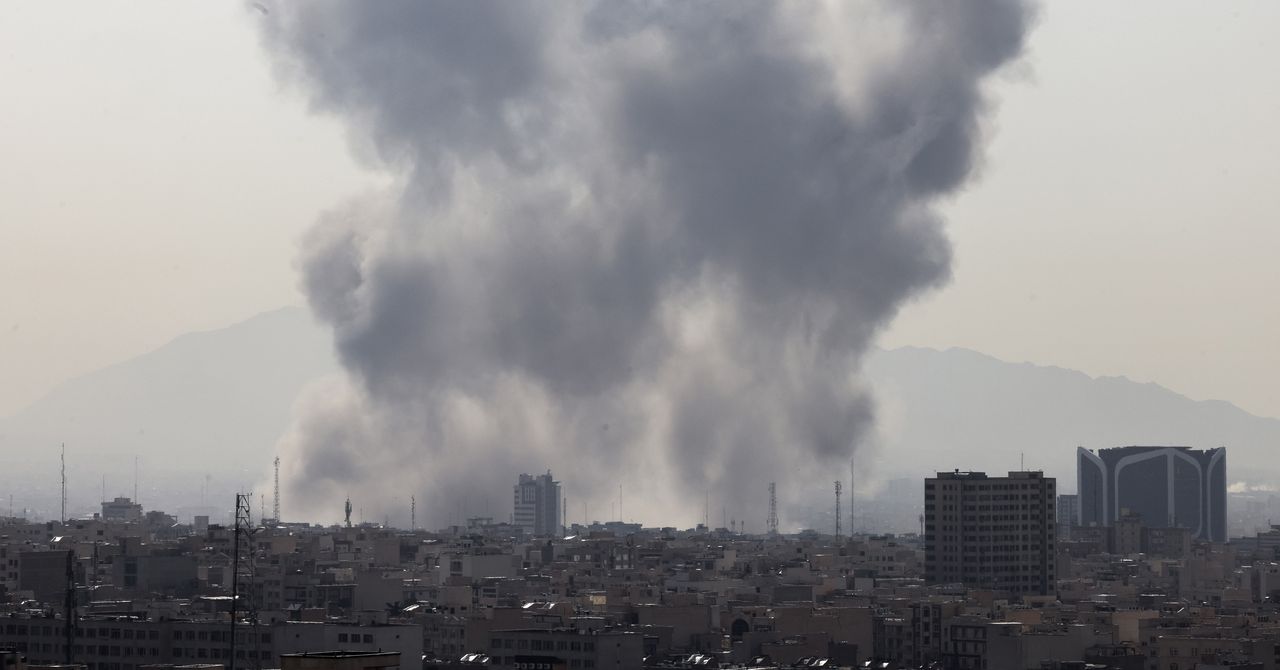
Explosions within Iran were first recorded in the early hours of Saturday morning ET, with smoke rising above the capital city Tehran. Shortly after the first reports of the attacks emerged, both the US and Israel claimed responsibility for the strikes.
In an eight-minute video posted to Truth Social and X, Trump said the operation’s objective was to “defend the American people by eliminating imminent threats from the Iranian regime.” Israeli Prime Minister Benjamin Netanyahu issued a statement confirming the military operation and said Israel was aiming to “remove the existential threat posed” by Iran.
Shortly after confirming launching the attacks, the Israel Defense Forces also said it had “identified” Iranian missiles being launched towards Israel.
The US and Iran have participated in three recent rounds of mediated diplomatic negotiations billed as an effort to forge an agreement on Iran’s nuclear program and avert armed conflict. Reports out of meetings in Geneva on Thursday seemed lukewarm, with negotiators sharing vaguely positive reactions with journalists and on social media. For example, Oman’s foreign minister Badr Albusaidi wrote in a post on X that there had been “significant progress” and that technical teams would meet for further discussion next week in Vienna.
In a follow up on Friday, he posted that he had met with US Vice President JD Vance and that he expected “further and decisive progress in the coming days.” He added, “Peace is within our reach.” However, also on Friday, US officials told embassy staff in Israel to leave the country.
The strikes follow weeks of US military build up in the Middle East and increased operation of surveillance aircraft in the region. Fighter jets, cargo planes, and the USS Abraham Lincoln aircraft carrier were all moved into place ahead of the strikes. Tensions between the US and Iran have risen since the start of January, first over Iranian forces killing thousands of anti-government protesters during a widespread internet blackout and then over negotiations around the country’s nuclear program.
Ahead of a meeting with a group of US governors on February 20, President Trump publicly acknowledged for the first time that he was weighing a strike on Iran. “I guess I can say I am considering that,” he told reporters. Democratic leaders in the House Foreign Affairs, Armed Services, and Intelligence Committees responded in a statement to Trump’s comments that they “strongly oppose preemptive US military action against Iran,” which they say “would be destabilizing, dangerous, and counterproductive to efforts to achieve peace in the Middle East.”
In January, as Iran’s protests intensified, Trump claimed that US forces could intervene and stop the barbarity—although no immediate action followed. The US-based Human Rights Activists News Agency claims that 7,015 people were killed during the protests, with 11,744 incidents still being reviewed. It claims more than 53,000 people have been arrested.
During the most intense protest period in January, Trump said that “help is on its way” and his administration would take “very strong action” against the Iranian regime if some arrested protesters were later executed. He later claimed that a “massive Armada” was being sent towards Iran, which has southern borders along the Persian Gulf and the Gulf of Oman. “It is moving quickly, with great power, enthusiasm, and purpose,” Trump wrote in a Truth Social post.
Satellite images taken in the middle of February, and confirmed by the BBC, showed that the USS Abraham Lincoln aircraft carrier, described as one of the largest types of warships in the world, had arrived in the region. Fighter jets were also moved to military bases in Jordan and more than 250 US cargo flights have taken place in recent weeks, according to an analysis by CNN. The newly arrived military vessels and bolstered the thousands of US personnel already located in the Middle East.
Trump’s prior warning messages in January claimed that “time is running out” and suggested a US military strike on Iran could be “far worse” than the bombing of Iranian nuclear facilities last year dubbed “Midnight Hammer.”
In that June operation, more than 100 US military aircraft launched a largely unexpected bombing raid on three sites connected to Iran’s nuclear program, including Fordow, Natanz, and Isfahan. During the strike they dropped a 30,000-pound “bunker-buster” bomb meant to damage underground facilities. Overall, though, Midnight Hammer did not seem to eliminate Iran’s nuclear development capabilities.