



On Friday, global markets will face a trillions-of-dollars quarterly derivatives event known as quadruple witching.
The event occurs on the third Friday of March, June, September, and December, when four major types of derivatives expire simultaneously. These include stock index futures, stock index options, single-stock options, and single-stock futures.
Because traders must close, roll or settle these positions simultaneously, trading activity often surges, and price swings can intensify in the traditional markets.
Exact figures for the March 2026 expiry have not yet been published, though recent events illustrate the scale. In March 2025, roughly $4.7 trillion worth of equity and index derivatives expired during the quarterly event. According to TradeStation, that session saw the highest S&P 500 trading volume of the entire year, while other witching days also recorded above-average activity.
Large expiries like this often force institutions to rebalance portfolios, unwind hedges and adjust risk exposure within a short window. Much of the activity tends to concentrate in the final hour of trading, when liquidity spikes and volatility can increase rapidly.
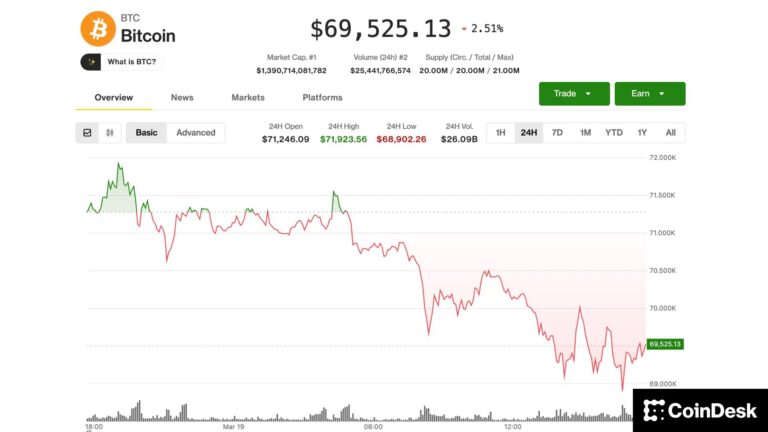
This quarter’s expiration arrives during an already volatile trading environment. Conflict in the Middle East recently pushed oil prices to $120 per barrel, while gold slipped below $4,600 and bitcoin fell below $69,000. Meanwhile, the VIX volatility index jumped above 35 last week, the highest level in a year, signalling heightened stress in financial markets.
Although quadruple witching originates in traditional finance, it can spill into crypto markets. Bitcoin increasingly trades alongside broader risk assets, meaning sharp moves in equities often ripple into digital markets.
Cole Kennelly, CEO of Volmex Finance, said tomorrow’s event could drive volatility in crypto markets, noting that “quadruple witching could trigger a spike in cross-asset volatility as large derivatives positions expire. This may already be showing up in crypto, with the Bitcoin Volmex Implied Volatility (BVIV) Index trending higher into the event.”

How did bitcoin perform on quadruple witching days in 2025
On March 21, bitcoin was slightly down on the day, but the more significant move came later, with prices bottoming a few weeks afterward around $76,000 following the market reaction to President Trump’s “Liberation Day” tariffs.
On June 20, bitcoin declined 1.5% and continued drifting lower, reaching a local bottom near $98,000 just two days later. On September 19, Bitcoin fell over 1% on the day, but the real move unfolded in the following week, with a sharp drop from $177,000 to $108,000. Then, on December 19, bitcoin finished roughly 3% higher at around $85,000, though it remained in a broader drawdown from the October highs.
While price action on the day itself tends to be relatively muted, a consistent pattern of weakness emerges in the days to weeks that follow.
Even if the quad-witching doesn’t add to bitcoin’s volatility on Friday, crypto traders have another event, specifically for digital assets, to keep in mind.
Crypto derivatives face their own major quarterly expiry the week after, on March 27, with $13.5 billion set to expire on Deribit, where positioning points to elevated demand for volatility strategies rather than strong directional bets.