


The Conservatives have said that an Al Qaeda-inspired terrorist who plotted to bomb a UK army base must be kept in prison after it was revealed he could walk free in a few weeks.
Writing to the Justice Secretary David Lammy, the shadow Home Secretary Chris Philp has urged Mr Lammy to veto the parole board’s decision to release Zahid Iqbal three years earlier than his maximum sentence – as first revealed by the Mail.
Iqbal was a member of a terrorist gang who plotted an attack at a Territorial Army centre in Luton where a remote-controlled toy car would be used to carry a homemade bomb.
The co-leader of the group planned to make the bomb based on instructions in an Al Qaeda manual called ‘Make a bomb in the kitchen of your mom – by the Al Qaeda chef’.
Iqbal and his co-conspirators were jailed in 2013 with the 43-year-old being sentenced to 16 years he admitted one count of engaging in conduct in preparation for acts of terrorism.
In the letter to Mr Lammy, seen by the Daily Mail, Mr Philp wrote that he was ‘deeply concerned’ about the parole board’s decisions especially because his prison offender manager and community offender manager both said he should stay behind bars.
He said: ‘Under the Victims and Prisoners Act 2024, the Justice Secretary has the power to veto recommendations to release criminals, including terrorists.
‘We [The Conservatives] urge you to use this power to keep this dangerous criminal behind bars.

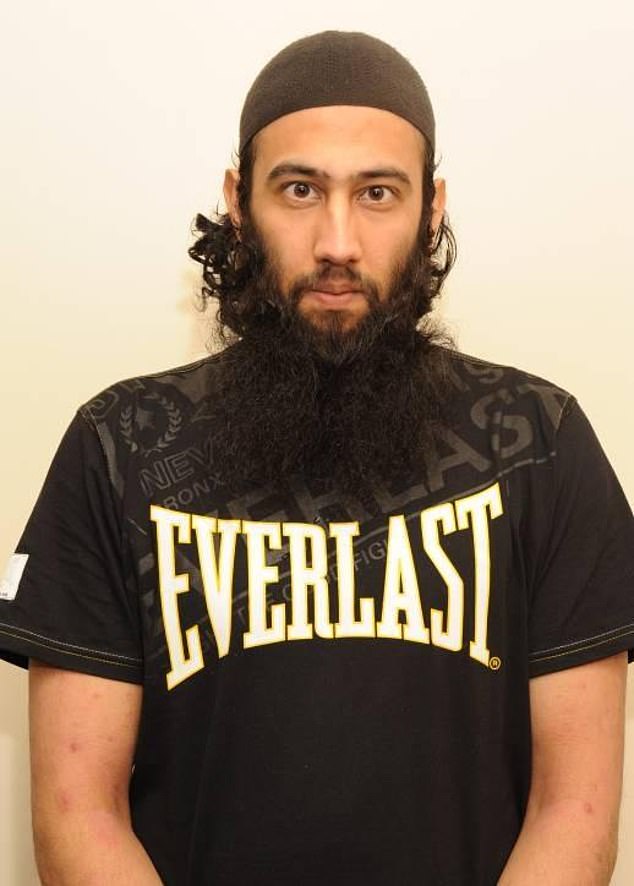
Zahid Iqbal (pictured) was handed a 16-year prison sentence for his part in a plot to bomb a UK army base

Iqbal and his co-conspirators planned an attack at a Territorial Army centre in Luton (pictured) where a remote-controlled toy car would be used to carry a homemade bomb
‘We all know the threat posed by Islamist extremism in this country. In Great Britain, Islamists are responsible for 94 per cent of all deaths caused by terrorism since 1999 and around 88 per cent of injuries caused by terrorism over the same period.
‘We must take this threat seriously. That is why the Government must veto the decision to release Zahid Iqbal and keep him behind bars.’
The decision was made despite both his prison offender manager and community offender manager saying he should stay in prison.
And a terror attack survivor and experts have criticised the ruling, saying he will strike again and believe the Parole Board will have ‘blood on their hands’.
Iqbal is also thought to have had connections to Westminster terror attacker Khalid Masood.
Masood was investigated as part of the Army base plot and it was thought the pair may have knew each other. Masood had lived in Luton and it is thought they could have made contact at a gym.
On 2 November 2021 Iqbal was released on the direction of the Parole Board but was recalled in 2023 after a number of concerns were raised.
A report into his release said: ‘Evidence was presented at the hearing regarding Mr Iqbal’s progress and custodial conduct during this sentence and since his recall.
‘During his time on licence, Mr Iqbal was assessed by professionals as having low level of engagement in extremism ideology.

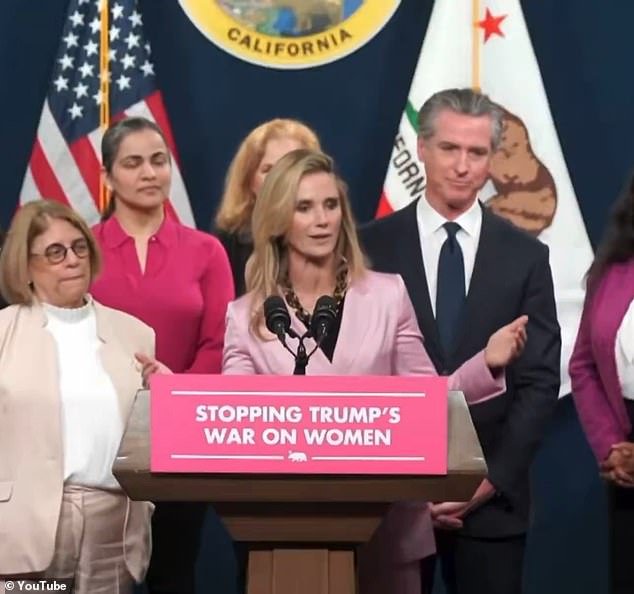
Writing to the Justice Secretary David Lammy, the shadow Home Secretary Chris Philp (pictured) has urged Mr Lammy to veto the parole board’s decision to release Iqbal three years earlier than his maximum sentence


Mohammed Sharfaraz Ahmed (pictured left) was handed an 11 year prison sentence for his role in the terrorist plot in 2013. Farhan Hussain (right) got five years
‘Mr Iqbal had undertaken an accredited programme on his sentence to address extremist offending and ways of disengaging.
‘He had also completed work to help him better understand his faith and was seen to distance himself from other extremist offenders.’
The report added that while there had been ‘no behavioural issues in custody since recall’ the ‘key concern’ for professionals was they did not know what he had been doing while on licence because of the ‘nature of the breaches’.
This included having a phone of which probation officers were not aware.
The report added: ‘The psychologist recommended release, whilst the prison offender manager and community offender manager both recommended Mr Iqbal remain in custody.
‘The panel examined the release plan provided by Mr Iqbal’s probation officer and weighed its proposals against assessed risks.
‘The plan included a requirement to reside in designated accommodation as well as strict limitations on Mr Iqbal’s contacts, movements, and activities. The panel considered whether all licence conditions would be necessary in this case. It concluded that the release plan would be robust enough to manage Mr Iqbal in the community.’
The report added: ‘The panel was not persuaded that Mr Iqbal continued to be a risk of carrying out, encouraging, or supporting extremist activity. No other potential area of risk had been identified, and the evidence was that Mr Iqbal no longer held an extremist ideology.’


Umar Arshad (pictured left) was jailed for six years for his role in the planned attack. Iqbal is also thought to have had connections to Westminster terror attacker Khalid Masood (right)
He will now be under strict conditions which include stay at a designated address, disclose details of relationships, be open to police searches and meet restrictions of tech uses.
Jade Clough, who was injured in the Manchester Arena attack in 2017, said that Iqbal’s released terrified her.
She said: ‘I have real fear he will carry out an attack. It’s awful. Why not listen to the experts who know him?
‘Surely they know him better than anyone recently? They are saying keep him in prison. It’s a shocking decision.
‘It piles more and more pressure on our security services as well.’
Terrorism expert Colonel Richard Kemp, former commander of UK forces in Afghanistan, described the decisions as ‘extremely unwise’.
‘This has all the hallmarks of the case of the London Bridge attacker, Usman Khan. He was released and then carried out a horrific attack. I fear that happening here,’ Colonel Kemp said.
‘The Parole Board has gone against the advice of experts. They are putting the lives of British citizens at risk.
‘If this individual does attack, then the blood of his victims will be on the hands of the Parole Board.’

Woolwich Crown Court where the gang was sentenced in March 2013
The report added: ‘After considering the circumstances of his offending and time on licence, the progress made while in custody and the evidence presented at the hearing, the panel was satisfied that imprisonment was no longer necessary for the protection of the public.
‘The panel was not persuaded that Mr Iqbal continued to be a risk of carrying out, encouraging, or supporting extremist activity. No other potential area of risk had been identified, and the evidence was that Mr Iqbal no longer held an extremist ideology.’
In 2023, three members of the terror gang, Umar Arshad, Syed Farhan Hussain and Mohammed Sharfaraz Ahmed, were quietly released from jail.
Arshad was previously jailed for for six years and nine months and Hussain for five years and three months.
While Ahmed was handed a 11-year sentence.
In March 2013, at Woolwich Crown Court, the four men admitted one count of engaging in conduct in preparation for acts of terrorism between January 1, 2011 and April 25, 2012 at a hearing on March 1.
As tapes of them discussing bomb-making were played in court, the four men had sat smiling and giggling in the dock.
Sentencing the men, Mr Justice Wilkie QC said in April 2013 that Iqbal and Ahmed, then 25, posed a continuing risk to the public.
Their extended sentence of 11 years in jail and an additional five years on licence after release reflected their key roles in the plot.
The terms of their sentences mean they could be recalled to prison anytime during their five years on licence.
The judge said: ‘In each of their cases, their persistent commitment to terrorist activity, in a number of different ways, over a significant period of time and, in each case, their willingness to take practical steps to obtain terrorist training abroad, marks them out as particularly dangerous.
‘This, coupled with the fact that, after their houses had been searched, and they were obviously under serious suspicion, they nonetheless continued to access material consistent with the mindset which informed their previous preparatory activities, persuades me that they continue to be ‘dangerous’ to such a degree that I should exercise my discretion to pass an extended sentence.
A Ministry of Justice spokesperson said: The decision to release Zahid Iqbal was made by the independent Parole Board after a thorough risk assessment.
‘Officials acting on behalf of the Secretary of State for Justice are examining if there are grounds to challenge the Parole Board’s decision through the reconsideration mechanism.’