

One of my favorite speaker reviews in recent memory was my time with the Bluesound Pulse 2i. The clarity, the soundstage, so many elements that contributed to an audio experience that was like listening to live music. So, when I found out that Bluesound was going to send their two new soundbars, the Pulse Cinema and Pulse Cinema Mini, I was eager to put them through their paces. The question in my mind was: will these Pulse series soundbars be as adept at reproducing cinematic sound design and scoring as the Pulse 2i was with music? Would the musicality be diminished as a result?
The answer to both questions? Yes, and no, respectively. I’ll break it all down in the review below, so let’s get into it!


4.3/5
- Brand
-
Bluesound
- Connectivity
-
2x dual band WiFi 5, Two-way Bluetooth 5.2 aptX Adaptive, IR sensor, Bluetooth headphone output, RCA/Wireless PULSE SUB+ output
- Integrations
-
AirPlay 2, Spotify Connect, Tidal Connect, Roon Ready, Creston, Control4, RTI, Nice, URC, Lutron, Amazon Alexa Skills
- Ports
-
HDMI eARC, Gigabit ethernet, Toslink Optical, RCA analog, USB Type A
- Excellent clarity, and detail for music and movies
- Film dialogue is audible even during action sequences
- Broad support for HiRes and Lossless audio
- Connectivity options
- Easy to configure
- No room correction function
- No in-app EQ
- No Dolby Atmos Music support
Price, availability, and specs
The Bluesound Pulse Cinema and Cinema Mini are available directly from Bluesound.com, BestBuy, and a plethora of boutique home theater and audio retailers for $1499.00 and $999.00, respectively.
- Connectivity
-
2x dual band WiFi 5, Two-way Bluetooth 5.2 aptX Adaptive, IR sensor, Bluetooth headphone output, RCA/Wireless PULSE SUB+ output
- Integrations
-
AirPlay 2, Spotify Connect, Tidal Connect, Roon Ready, Creston, Control4, RTI, Nice, URC, Lutron, Amazon Alexa Skills
- Ports
-
HDMI eARC, Gigabit ethernet, Toslink Optical, RCA analog, USB Type A
- Audio Format
-
MP3, AAC, WMA, WMA-L, OGG, OPUS, FLAC, MQA, ALAC, WAV, AIFF, MPEG-4 SLS, DSD256
- Speaker Arrangement
-
3.2.2
- Dimensions
-
47.12 x 2.91 x 5.51 in (W x H x D)
- Colors
-
Black
- Buttons
-
Touch LED
- Drivers
-
38W x 5 Tweeter. 38W x 5 Mid-Range, 65W x 2 Woofer 0.75″ (21mm) Tweeter x 5; 1.5″x3″ (44mm x 75mm) Mid-Range x 5; 4″ (102mm) Woofer x 2; 4″ (102mm) Passive Radiator x 4
What I liked about the Bluesound Pulse Cinema/Mini
Big, expansive, clear, detailed sound from movies and music!

Bluesound is a Sonos competitor. A whole home audio solution, whether that’s just smart speakers or home theater, you can find something that may work for you. As such, their products aren’t entry-level or even mid-range in terms of price. Crack open the box of a Bluesound Pulse Cinema or Cinema Mini, and inside you’re going to find everything you need for your setup: cables, hardware, manuals, and a wall-mount bracket. Sonos will charge you extra for the latter.
Also, unlike Sonos, you get a greater diversity of connectivity options and some supporting cables in the box. You get both US and international power cords, an Ethernet cable for the Gigabit port, and an HDMI cable. Those align with the ports on the back, but you’ll need your own cables for the Type-A USB port, the RCA subwoofer output port, and the optical/analog inputs that support Toslink Optical and RCA analog interfaces. Rounding out the connectivity are Bluetooth 5.2 (aptX Adaptive), which can receive and transmit, two dual-band WiFi 5 (802.11ac) cards, and an optical IR sensor.

Some of those wireless options support connectivity with their Pulse Sub+, Pulse M, and/or Flex speakers and output to Bluetooth headphones. The connectivity doesn’t end there, though, because you can also connect to those speakers via ethernet cable, not just WiFi.
All of this is connected and managed by the BluOS app for iOS or Android. The app is well-organized and fairly intuitive, but there are some features I’d like to see added in future iterations. I’ll cover that in a moment. Now, let’s talk about sound!

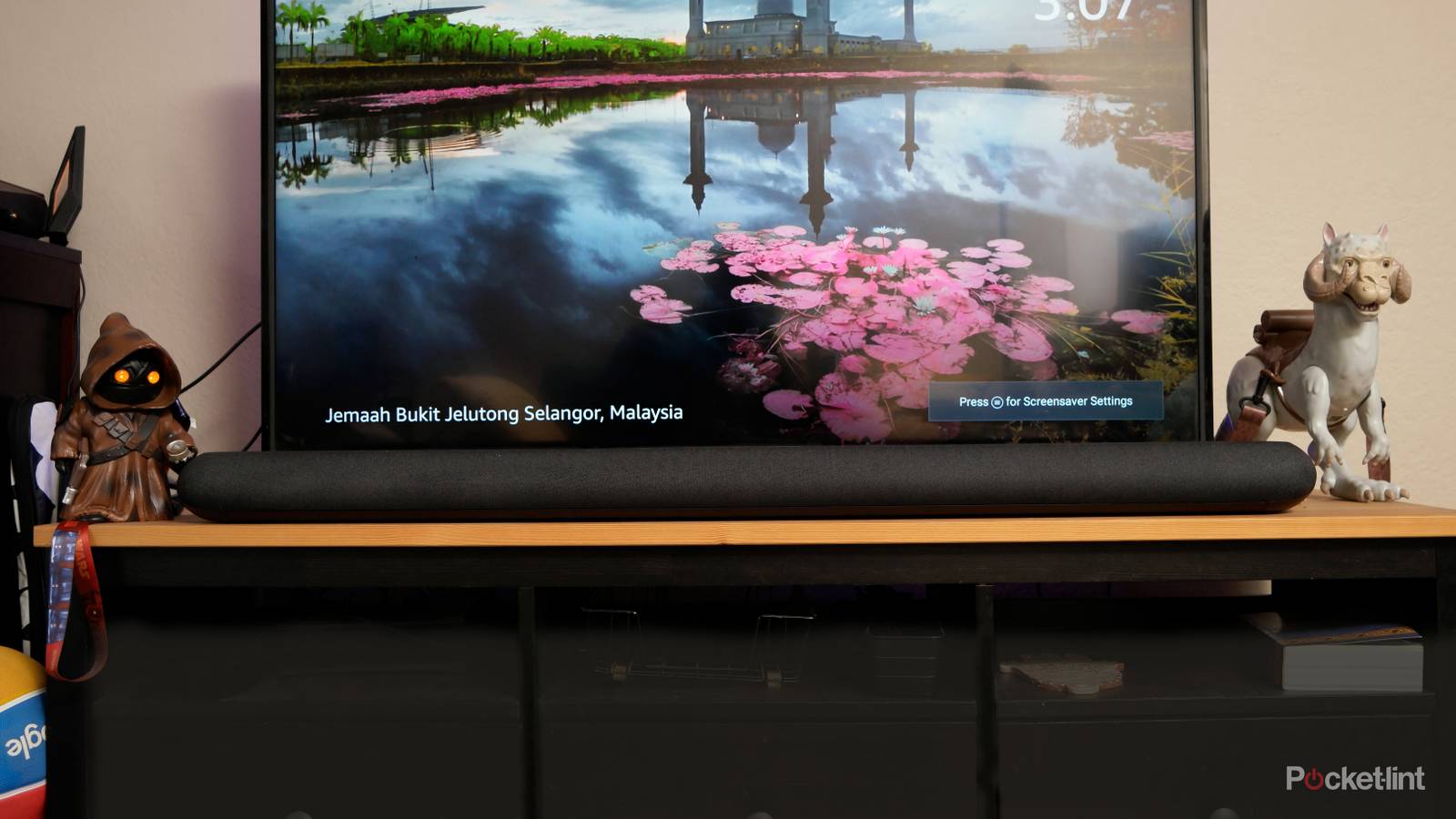
First things first, both the Pulse Cinema and Cinema Mini will easily fill almost any size standard living room with robust sound that has crisp highs, punchy mids, and the full-size Pulse Cinema’s bass response without a dedicated sub, puts out decent lows with its 500 total watts of output power, two 2-inch woofers, and four 4-inch passive radiators. The Mini still has decent output for its size, with its two 2-inch woofers. Both soundbars support automatic DSP-powered orientation detection, which adapts to them sitting on a table or being wall-mounted.
If you’ve read my consumer audio coverage, then you’ve likely been introduced to my music test playlists. This time, we’ll begin by going through my film clips playlist. I tested using streaming services, since that’s how most readers will likely watch content.
First up, Spider-Man: Homecoming. In this movie, Peter Parker is wearing a Spider-Man suit given to him by Tony Stark, so it has all kinds of bells and whistles. One of those is an ever-present AI assistant. Through both the Pulse and to a lesser extent, the Mini, that AI voice in his head/suit, is reproduced well, sounding like an omnipresent voice that wraps around you. In the ferry fight scene, the sound design elements have good width and clear left-right separation. Dialog is crisp, audible, and always intelligible. Background actors’ screams and gasps are also crisp and audible during chaotic sequences with multiple elements, such as explosions, and the ship’s metal buckling and twisting as it comes apart in the middle.
There’s a guy on screen left who says “Way to go, Iron Man” after the sinking ship is saved, and the soundbar clearly reproduces his voice in space, sounding like it’s coming from the left and no bleed from the right. A helicopter flies in from screen right at the end of the ferry sequence and crosses to screen left. The soundbar again does a great job of giving the sense of where that helicopter is in space, even if the Atmos height effect isn’t quite as pronounced as I’ve heard with Sonos.
“The Batman” has a chase scene with Pattinson and Colin Farrell’s “Penguin,” which is thoroughly engrossing with the full-size Pulse Cinema. Both soundbars reproduce the mix with great clarity in the vocals, grunts, and growls of two men locked in a fight for their lives. The cars’ engines sounds, their swerving in and out of traffic, the Pulse Cinema reproduces it all well without burying the more subtle notes. When the camera cuts to Penguin inside his car, he makes subtle grunts and gasps that aren’t buried in the mix, despite the chaos of cars slamming into one another, engines revving, and tires screeching. This scene really shows off how the soundbars handle fine details with aplomb. Especially hearing the rain droplets hitting the ground in the midst of this frenetic sequence.
Spotify and Tidal Lossless
The feature that makes this soundbar, along with the optional satellite speakers and subwoofer, stand out in the market is its support for lossless audio. Using hooks like Spotify or Tidal Connect via the BluOS app, I can play back up to 24-bit/192kHz streams or music from a local library, supporting up to DSD256. Best of all, this can be configured for whole-home use as you add more speakers, so I can stream those beautiful sounds to any or all rooms in the house.
Much like the cinematic sound quality, this soundbar reproduces delightfully clear, nuanced highs and vocals. Detail retrieval is brilliant, mids are punchy, and to have such small woofers, bass is satisfying. The soundstage is very immersive, despite the lack of actual Dolby Atmos music support. The stereo imaging when listening to my favorite test tracks, Charles Mingus’ “Moanin’” and Herbie Hancock’s “Watermelon Man,” is highly engaging. Just be sure to have the Surround Upmixer and Virtualizer features enabled when listening to the soundbar and when connected to Bluesound’s Sub+ or compatible speakers.
Because of their attention to dialog/vocal clarity, both soundbars handle multiple music genres quite well. Of course, Classical, Rock, and Folk music sound great, but so does Jazz and R&B. Even without the sub, hip-hop and dubstep are entertaining. For audiophiles or more casual music lovers, this system delivers on being a great plug-and-play speaker group that delivers audio so crisp and so detailed that the overall experience is highly engaging and immersive.
For the full effect, though, you’ll want to spend the additional money to plug a Sub+ into the mix at some point. With it, you’ll get beautiful, domicile-vibrating bass extension, and more punch in the lower mids.
What could use improvement
Minor caveats to be aware of

First up, note that the Pulse Cinema Mini is a smaller speaker at 33 inches, compared to the full-size Pulse Cinema’s 47 inches. It has less power at 280 watts, compared to 500 watts, and fewer internal drivers/speakers. This means that the soundstage isn’t quite as expansive as the full-size sibling, so it’s better suited to smaller rooms or guest rooms. It also doesn’t support true Dolby Atmos decoding; it only supports Atmos processing with virtualized height effects.
There are Dolby Atmos soundbars that deliver a better sense of “height” with their upfiring speakers, though they generally don’t have the feature set and connectivity options of the Pulse Cinema, and some may lack the hardware to decode high-resolution and lossless audio via Spotify and Tidal Connect, or one of the other 20-plus supported streaming services.
And speaking of lossless audio, you should know that although the BluOS app offers some minor sound adjustments, it doesn’t include EQ. You’ll get some basic tone control in the form of bass and treble sliders with the satellite speakers, but that’s really it. Even though I thoroughly enjoy the sound from both soundbars, we all hear a bit differently, so the ability to adjust certain frequencies to accommodate people’s different hearing needs is definitely something I’d like to see in a future software update for the BluOS app.


The last items to be aware of are that the “Volume Leveler” function in BluOS should be deactivated when listening to music. It will limit the dynamic range of the music you’re listening to, and you definitely don’t want that under normal circumstances. Also, neither soundbar has a room correction feature that competing soundbars use to ensure that the sound is customized to the unique size and shape (and echo) of your room.
And when we’re talking about room-filling sound, neither soundbar supports Dolby Atmos Music, though the stereo virtualization feature is very convincing with the SUB+ and satellite speakers in the mix. The music reproduction is so good that I don’t think this is a deal-breaker at all, but it’s worth noting if you’re really into Dolby Atmos Music mixes and reissues/remixes.
Should you buy the Pulse Cinema or Pulse Cinema Mini?
They aren’t perfect, but they are darn good!

Make no mistake: these are expensive options, designed for very specific users. Despite many modern movies containing audio mixes that often make dialogue hard to hear during frenetic action sequences, the Bluesound Pulse Cinema and Pulse Cinema Mini handle dialogue with aplomb. I no longer feel the need to use subtitles when watching movies or TV using either soundbar. That center channel dialog punches through like a young Mike Tyson!
Also, the musicality, clarity, and detail in high-resolution and lossless audio make me feel like I’m sitting front and center at the Hollywood Bowl. The sound is expansive and greatly benefits from the same vocal clarity that makes movies such a joy to hear through the Pulse Cinema soundbars.
If you want audiophile-grade music without the hassle of building an audiophile-focused home theater system that also doubles as a Wi-Fi-connected whole-home audio system, this is absolutely worth considering. It’s plug-and-play high-fidelity entertainment hardware that meets the needs of audio enthusiasts with the cash to burn.
- Brand
-
Bluesound
- Connectivity
-
2x dual band WiFi 5, Two-way Bluetooth 5.2 aptX Adaptive, IR sensor, Bluetooth headphone output, RCA/Wireless PULSE SUB+ output
- Integrations
-
AirPlay 2, Spotify Connect, Tidal Connect, Roon Ready, Creston, Control4, RTI, Nice, URC, Lutron, Amazon Alexa Skills
- Ports
-
HDMI eARC, Gigabit ethernet, Toslink Optical, RCA analog, USB Type A
- Audio Format
-
MP3, AAC, WMA, WMA-L, OGG, OPUS, FLAC, MQA, ALAC, WAV, AIFF, MPEG-4 SLS, DSD256
- Power
-
500 watts
The Bluesound Pulse Cinema soundbar is a whole-home, connected speaker system that is as “at home”, delivering cinema sound with great clarity as it is delivering immersive high fidelity audio from sources like Spotify Connect. With true Dolby Atmos support and support for a broad range of music formats, most music lovers’ needs will be covered when it comes to enjoying audio from film and your favorite musicians.