

As of midday on Thursday of last week, the Mac Pro had vanished entirely from Apple’s online storefront. All mentions of the product have since been scrubbed from the company’s website, save for a technical and support documentation page.
Soon after, outlets confirmed that, yes, indeed, the Mac Pro has been officially discontinued. In a statement made to 9to5Mac, Apple even went on to confirm that it has no plans to offer new Mac Pro hardware in the future.
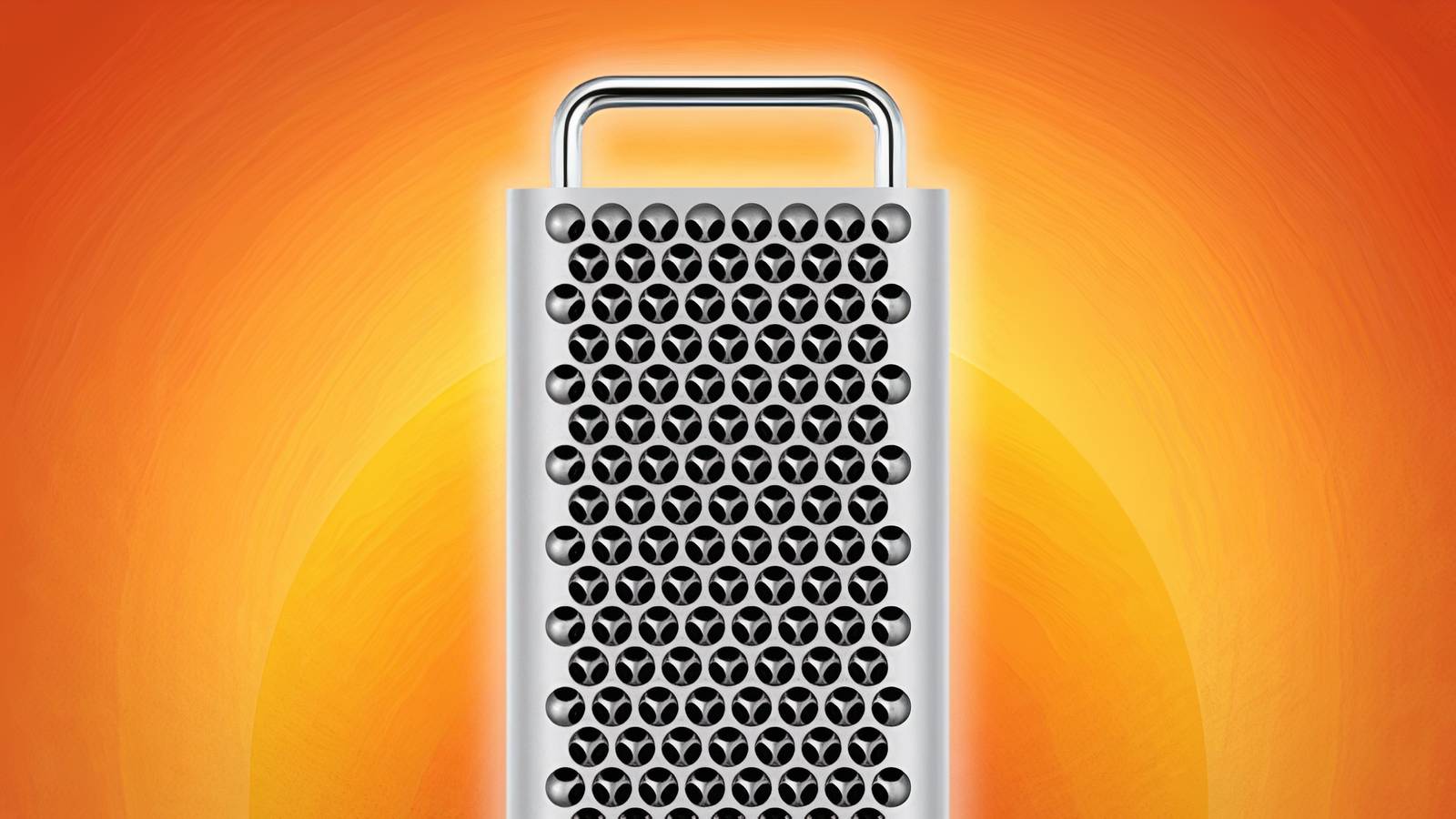
The Mac Pro, which last received a product line refresh in 2023, has served as Apple’s highest-end workstation computer for a number of years. Its latest incarnation shipped with an M2 Ultra chipset and support for expansion via six dedicated PCIe 4.0 slots, all in a traditional tower format with a unique lattice-style exterior that reassembled a cheese grater (and that helped facilitate a robust cooling system with advanced airflow).
With the Mac Pro now out of production, the Mac Studio assumes the role of Apple’s high-end Mac desktop computing rig for photo and video editors, 3D artists, CAD workers, and other creative professionals looking for a powerful macOS-powered rig.
The Mac Pro’s discontinuation has been a long time coming
The writing was very clearly on the wall

The Mac Pro’s traditional tower PC design has roots extending back decades. The premise has always been to provide a modular and upgradeable hardware experience, facilitated by a removal cover panel with easy access to expansion slots for RAM memory, storage, discrete graphics cards, and other drives, bays, and components.
This vision remains a compelling one even in the modern context, but Apple Silicon’s system-on-chip (SoC) design fights against it every step of the way. Unified memory, tightly-integrated components, and a lack of support for discreet graphics cards all diametrically oppose modularity at a philosophical level.
Considering the context of today’s computing industry more broadly, then, the discontinuation of the Mac Pro is a relatively unsurprising development. When Apple transitioned its Mac lineup over from Intel x86-64-based processors to its own in-house ARM-based silicon in 2020, the Mac Pro’s life expectancy plummeted soon after, with virtually no way to stop the direction of the wind.
…when Apple discontinued its Pro Display XDR several weeks ago, I knew the writing was well and truly on the wall for the Mac Pro.
By the time the M2 Ultra Mac Pro released to market in 2023, it was already an emaciated experience from a modularity standpoint. This now-discontinued model lacked its Intel-based predecessor’s graphics processing unit (GPU) expandability, and much of the internal space of the tower itself was left wholly untapped.
Then, when Apple discontinued its Pro Display XDR several weeks ago, I knew the writing was well and truly on the wall for the Mac Pro. After all, Apple’s now-defunct 32-inch monitor not only shared the Mac Pro’s ‘Pro’ moniker, but also its distinct lattice visual design pattern.
Towers live on in the gaming PC space
Handheld gaming PCs are making inroads, however

With the industry-wide shift towards tightly-integrated ARM SoCs, less aftermarket user configurability, and a desire for ever-thinner mobile devices, the venerable tower PC form factor finds itself in a precarious position in 2026.
With the Mac Pro out of the picture entirely, Apple’s highest-end desktop offering is now a (relatively) small box with fully enclosed internals, and other ‘tower-style’ stationary devices like the Xbox Series X and the upcoming Steam Machine are equally locked down and ‘consolized,’ so to speak.
Putting aside thin clients used in the enterprise and education sectors, as well as some lower-end Windows desktop products, the only real consumer-facing vestige of the tried-and-true desktop tower PC model is, of course, the gaming PC.
…handheld gaming PCs are making inroads now more than ever due to their portability.
Modern pre-built gaming rigs like the Asus ROG G700 not only pack a computational punch out of the box, but do so with upgradeable expansion slots via a removal panel cover, too. Of course, it’s also still possible to build your own gaming PC from scratch, though rising RAM and graphics card prices make this less viable than in the past.
It’s also worth noting that handheld gaming PCs are making inroads now more than ever due to their portability, while at the same time, those game console towers I mentioned earlier (as well as the recently-announced Xbox Project Helix) are looking more and more like the future of stationary gaming hardware — at least from my point of view.
You win some, you lose some
The Mac Pro leaves behind an outsized legacy

While it’s true that modular tower PCs are less relevant in the consumer space today than at any point in the past, they remain an important part of computing history, and they continue to make sense in some present-day contexts.
The Mac Pro itself will always be an iconic piece of technology, what with its overengineered cooling system, its funky cheese grater design language, and that unbelievably meme-worthy $700 Mac Pro Wheel Kit option provided by Apple.
Ultimately, if I could have things my way, I’d want Apple to honor the legacy of the Mac Pro by miniaturizing it and shipping it as the next-generation Mac mini. The idea of a mini desktop Mac built in the same style as the Mac Pro — handle bar, cheese grater looks, and all — is incredibly compelling to me, even if it means losing out on the PCIe 4.0 expansion slots found in its defunct full-fat equivalent.
In any case, I expect modular Windows 11 towers to continue to serve a purpose in the market, both in the context of gaming and thin-client PCs. That being said, the form factor’s heyday is no doubt in the rear-view mirror, and the Mac Pro is yet another nail in its inevitable coffin.