


Apple seems to have a fetish for rare or exclusive ports. The original iMac was one of the first computers to adopt USB. Later Macs adopted FireWire, then Thunderbolt, the second of which only became common on Windows PCs with the arrival of USB 4. Perhaps the most infamous one is Lightning, which Apple stubbornly clung onto for iPhones, iPads, and various accessories from 2012 through to early 2025 — despite the fact that USB-C had been an option since 2014. In fact, it only began transitioning iPhones to USB-C when European regulators forced its hand.
Today, the one proprietary port Apple still uses — if you don’t count MacBook or Apple Watch charging — is the Smart Connector on iPads. You might not know it, but it was once intended to be used for a lot more than just Apple’s own Magic Keyboards. So why didn’t that future turn out as planned? There are no firm answers, but there do seem to be strong candidates, likely similar to the reasons Apple has struggled in the gaming and smart home worlds.
The basics of the Smart Connector
A quick primer

The Smart Connector made its premiere with the first-generation iPad Pro, back in 2015. Presumably it was intended to get around the problem of a “professional” device otherwise being limited to a single USB-C port, something MacBook owners wouldn’t vibe with. In fact it was also the first iPad to get an Apple Pencil, since the company wanted to attract more illustrators and designers.
It took a while for the port to expand beyond the Pro sphere. Eventually, though, it reached the third-gen iPad Air and seventh-gen base iPad. As of April 2026, there’s a Smart Connector on every new iPad model except the Mini, even if it isn’t always in the same place on the chassis.
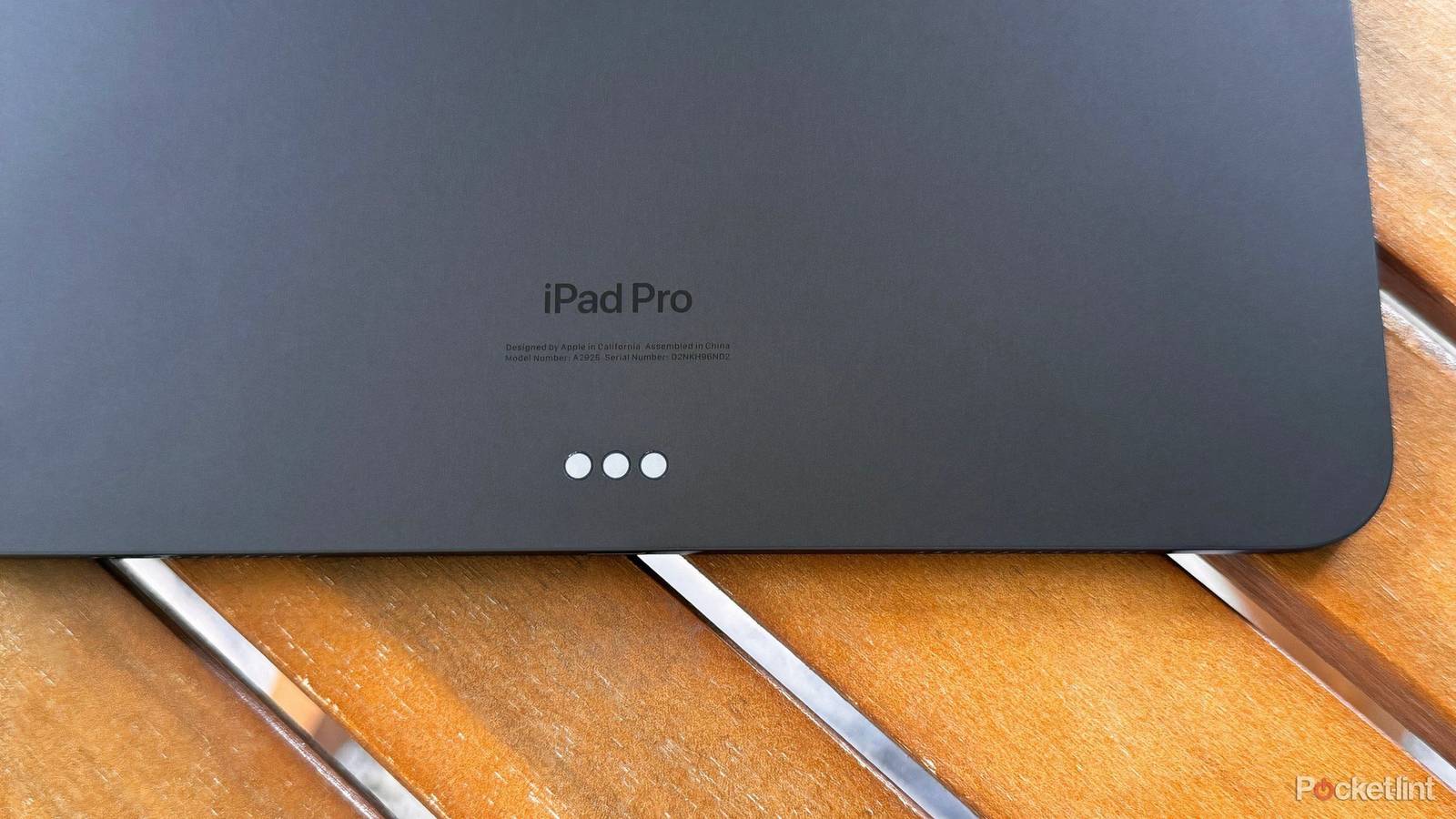
The port itself is extremely simple. It consists of three flat contacts, with magnets to hold things in place. It’s capable of delivering both data and power.
Most of the advantages of the port are obvious. For one, it frees up your USB port for accessories that are more power or data intensive, such as external displays and SSDs. It also sits flush with the back or edge of an iPad, so you’re not left with something jutting out in an awkward or vulnerable position. Lastly, it supports two-way power, which is one of the things that makes Magic Keyboards great — you don’t have to worry about charging them separately. As long as your iPad isn’t running on fumes, you’re always ready to post on Reddit or write that college essay.
Something that isn’t talked about as much is its instant-on functionality. While something similar is possible with Bluetooth, that has to be specifically exploited. Anything attached to a Smart Connector is instantly accessible as if you were using USB.
A good idea squandered
Too much control, too little support?

One barrier to adoption has been Apple’s scattershot implementation. At first, there was only one iPad that took advantage of the tech, which didn’t exactly provide the largest market for accessory makers. Now that it’s ubiquitous however, the fact that the Smart Connector can shift position from iPad to iPad has made it hard or impossible to standardize accessories. Products have to be updated as new iPads change dimensions — if you have an M5 iPad Pro, for example, you can’t use the same Magic Keyboard you paired with your M2 model.
There’s more going on. For a 2017 Fast Company story, Apple stated that multiple third-party companies were working on accessories, but that doesn’t seem to have produced much fruit. The Smart Connector is mostly supported by keyboard cases, and even then, many third-party products rely on Bluetooth instead. About the only company that reliably supports the port is Logitech, which has unusually close ties with Apple.
Anonymous accessory makers quoted in the Fast Company report said that they were dealing with long wait times and high prices for Smart Connector components, or simply that Bluetooth made more sense for them. Bluetooth has a couple of major benefits, one of course being that it’s not tied to specific tablet dimensions. Perhaps more significantly though, the tech doesn’t have to be licensed or certified by Apple — which was also a huge obstacle to the adoption of HomeKit for smart home accessories, at least until the arrival of Matter. Paying for Apple certification cuts into profits in a way that may not be worth it for some businesses, not when a cheaper alternative is available.
Apple is also unusually cagey about how much data and power the Smart Connector can handle. That info is obviously available to partners, but almost everyone else is in the dark. All I can fathom is that it doesn’t support much data, but that it does allow enough power to charge an iPad. You can buy dedicated Smart Connector chargers, and the Air and Pro versions of the Magic Keyboard support passthrough charging.
Ultimately, the Smart Connector’s biggest nemesis may be USB-C. USB seems to allow for way more data, and plenty of power throughput, enough that M5 Pros can charge up to 50% in 30 minutes with a 60W adapter. Indeed USB enables an option that Smart Connectors have never had: docks. It sometimes makes far more sense to buy a dock that can connect several accessories — such as a mouse, a monitor, and an SD card reader — while simultaneously charging your iPad, and being easy to leave behind when you just want to read on your couch. On Pros, a Thunderbolt 4 dock is enough to support an entire desktop workstation.
I haven’t even addressed the “U” part of USB. Simply put, with some exceptions, the universality of USB means that you can often connect accessories you already own, whether they were designed for Apple products or not. So while a dedicated keyboard case might still be worth buying for all-in-one convenience, some people will be fine with an existing USB mouse or keyboard if they don’t choose Bluetooth instead. It definitely makes more sense to buy a USB-C charger that supports multiple devices, rather than a Smart Connector model that could be rendered obsolete when Apple’s design whims change. Expect Smart Connectors to become less and less important as USB 4 and Thunderbolt filter down from Pros to cheaper iPads.
Can Apple salvage the Smart Connector?
The uphill battle

The more I think about it, the more I suspect the Smart Connector is doomed. Hypothetically, there’s no reason Apple couldn’t develop an updated version that would be more competitive with USB-C. It could even settle on better placement that would be more likely to carry over from one generation to the next.
The writing is on the wall, though. While Magic Keyboards are popular, the Smart Connector isn’t. In the current age, it probably makes far more sense to switch to a fully wireless format — perhaps an iPad equivalent of the magnetic MagSafe/Qi2 connectors that are de facto on iPhones. Any low-bandwidth data needs could be taken over by standards like Bluetooth and NFC. Qi2, notably, is universal, capable of working just as well with headphones and Android devices.
The move could be a win-win. Apple might get more support from third-party vendors, while still selling plenty of accessories itself. For us consumers, there would be more interchangeability.