

John Swinney has been branded ‘incoherent’ after saying he was ramping up spending on benefits to cut spending on them.
The First Minister said the rising bill for Scotland’s more generous welfare system, which is set to near £10 billion a year by 2030, was part of a long-term strategy to cut the bill.
He said the aim was to give people more money to help them get a job and ‘eradicate’ child poverty, which would in turn reduce the need to give them benefits.
But SNP ministers last week missed their legal targets on cutting poverty, and appear set to miss them again in 2030, meaning higher benefit spending is set to soar indefinitely
Scottish Tory leader Russell Findlay said the ‘tortured logic’ was ‘economically incoherent’.
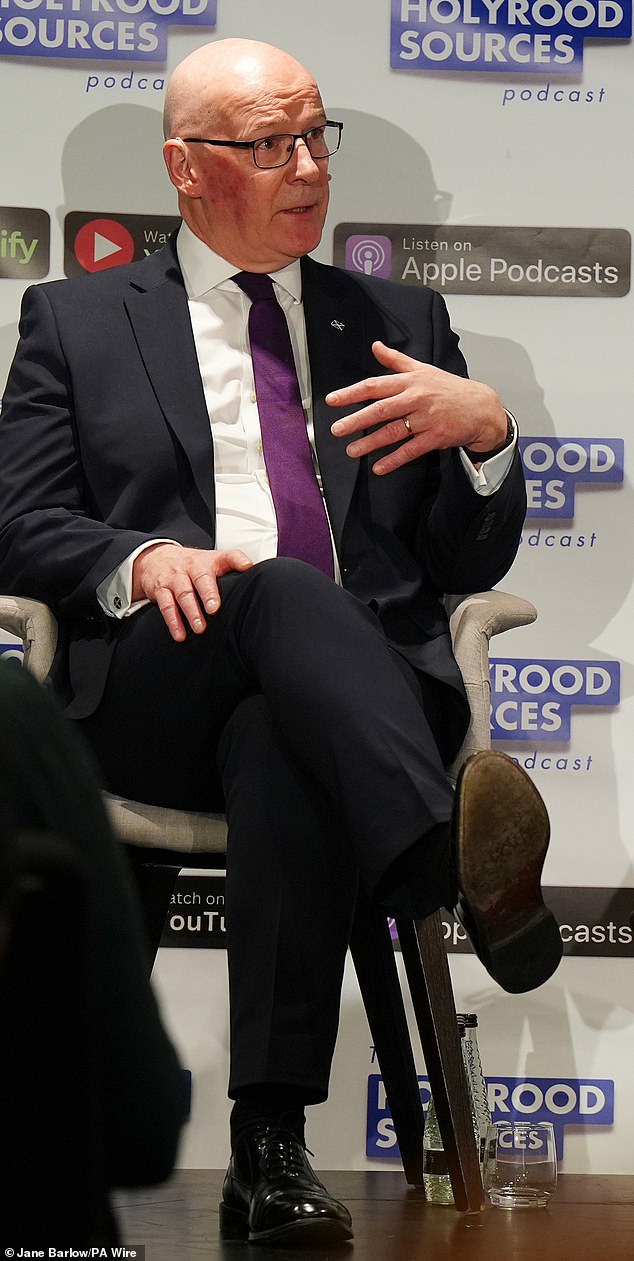
Mr Swinney made his comments at a recording of the Holyrood Sources podcast featuring all the main party leaders.
Holyrood currently spends £1 billion a year more on welfare than it gets from the Treasury for it because the SNP had created extra and more generous benefits.
With SNP spending plans running ahead of income, watchdogs have warned of a looming £5 billion black hole in the Holyrood budget by 2030, £2 billion of it due to rising welfare.

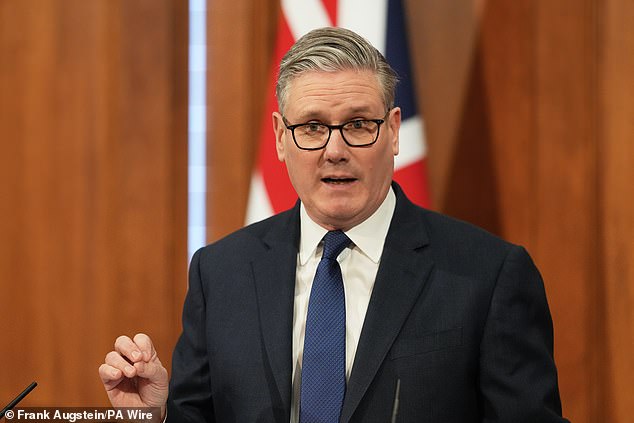
First Minister John Swinney said raising the bill for Scotland’s welfare system was part of a long-term strategy to cut the bill
Welfare is set to rise from £7.4 billion in 2026/27 to £9.2 billion by 2030/31, with 80 per cent of the bill on disability payments.
Asked if he considered increased welfare spending under the SNP to be a success or a failure, Mr Swinney he said: ’I don’t view it that way.
‘Welfare spending is a necessity for supporting for people who experience vulnerability in our society. I don’t think its increase is a necessity.
‘If I could help to lift families out of poverty, if I could get people into sustainable employment, then I wouldn’t have to contemplate that [black hole] scenario, because we would succeed in a strategic necessity for Scotland – to eradicate the number of families living in poverty.’
Asked if the strategic aim was to reduce the bill, he said: ‘Correct.’
Scottish Tory leader Russell Findlay said: ‘This appears to be John Swinney finally conceding that the SNPs sky-high benefits bill is completely out of control.
‘Following his tortured logic, he seems to say that it should actually rise further, and then at some point down the line, we’re told to believe that, having spent all these billions of pounds suddenly, magically, it’ll start coming down again.
‘It’s economically illiterate and incoherent, and the truth of the matter is that the benefits bill is already costing taxpayers too much. It’s unfair, and it needs to be reined in.’
Also at the event, Scottish Labour leader Anas Sarwar said he was only asking voters for ‘five years’ to show what he could do.
Alex Cole-Hamilton said he would ‘rather resign’ as Scottish Liberal Democrat leader than vote for John Swinney to remain First Minister in post-election haggling.

Scottish Tory leader Russell Findlay said the SNP’s welfare system strategy is ‘economically illiterate and incoherent’
Reform UK Scotland leader Lord Malcolm Offord called Alex Salmond ‘brilliant’.
He also downplayed party press officer Amanda Crawford quitting mid-campaign after complaining she wasn’t being allowed to do her job properly as ‘an internal staff matter’.
Scottish Greens co-leader Ross Greer dismissed Mr Swinney’s key election plan to win an SNP majority to deliver independence as a ‘dead end’.
He said it implied that if the SNP fell short, independence would be off the table.
But he believed a majority of SNP and Green MSPs combined was equally valid.
Mr Greer said: ‘‘The strategy is a dead end. It would be catastrophic for the independence movement if we once again elect a pro’-independence majority to the Parliament, but the SNP has robbed that majority of any democratic mandate.’
Mr Swinney also appeared to soften his personal line on new oil and gas drilling, which is to subject applications to a climate compatibility test.
He said the Iran war ‘changed the balance of arguments’ on climate and energy security.
He said that if importing oil and gas meant higher carbon, then ‘my argument would be we should prefer domestic production over imported production’.
However the SNP Government, which has no power over licensing, has also touted a presumption against new developments in the past.