


Not all that long ago, a party leader asserting that his opponents ‘jeopardise our national security’ would unleash several news cycles of fury and condemnation.
Yet Russell Findlay’s warning about the consequences of the SNP winning a majority on May 7 has elicited not so much as a tut. True enough, the Nationalists are distracted by other matters at the moment, but even the reliably soft-headed liberal commentariat has been uncharacteristically laconic.
Might it be that Findlay has a point?
In fact, he has several. He is right when he says every politician ‘should support Scotland’s defence businesses’, and when he notes that those who work in this industry ‘help to keep our country and our allies safe’.
He is correct also when he declaims ‘petty SNP politicians’ who would prefer to see this industry ‘destroyed’ in pursuit of independence.
However, I would go further. The SNP government should do more than simply support the Scottish defence industry, it should make the expansion of the sector a key priority.
There is a shallow and foolish school of thought on the Left that sees defence and national security as ‘Right-wing’ concerns. This is as muddle-headed as the assumption among some conservatives that health and education are ‘soft’ issues and the domain of the Left.
A party which refuses to leave its ideological safe space can never hope to govern well, and a country which cannot defend itself is no country at all.

Scotland is well-placed to make itself Britain’s defence production capital, writes Stephen Daisley
Which is why defence ought to play a larger role in the Holyrood election campaign than it likely will.
To be clear, this does not mean aspiring MSPs poking their noses into reserved matters. We’re talking about defence as an industry and the huge potential Scotland has to become a leader in the sector.
Why defence?
The answers are all around. There is the US-Israeli operation against the Islamic dictatorship in Iran. There is the Ukrainians’ brave struggle to free their country from the grips of the Russian war machine. Russian aggression also threatens the Arctic theatre, which Vladimir Putin’s advisers see as a strategic weak point for the West.
There is Beijing’s belligerent rhetoric against the citizens of Taiwan, an island nation whose people not only wish to remain free and democratic but are the world’s foremost exporters of the semiconductors without which our phones and computers could not function.
It is morally unserious to give grand speeches and sport lapel pins declaring our solidarity with this nation or that while refusing to dirty our hands in the necessary business of producing and selling the weapons with which their tribulations could be concluded promptly and favourably.
Kyiv’s fightback against the Russian invasion was hindered by the indecision of Joe Biden’s administration over the supply of weaponry, but it was delayed too by Europe’s pitiful stockpiles.
The Continent, and sadly this includes Britain, has spent the decades since the end of World War Two sheltering under the defensive umbrella of the US. While we have sunk our treasure into public services and welfare, Americans’ tax dollars have gone on funding an almighty military apparatus more often to be seen securing the interests of foreigners.
Yet it is those foreigners who are the real losers in that arrangement.
We have grown complacent, certain that Uncle Sam will always fight our corner, an illusion of which we are now being rudely disabused by Mr Trump and his sidekick Mr Vance. They are fed up underwriting Nato and demand that Europeans step up – and, more importantly, stump up – to defend Europe.
We all have our thoughts on the current US administration but it has at least been candid about its worldview and the direction of travel.
This creates a necessity, indeed an urgency, to enhance Europe’s defensive capabilities. Several European nations, including Poland and Finland, have already begun to do so.
New markets are emerging in conventional hardware, cyber, drone warfare, communications platforms, and more.
The opportunity to supply this demand, if taken and done well, could create thousands of high-paying jobs and attract transformative levels of investment in our economy. It presents the chance to make ourselves safer and more prosperous.
Why Scotland?
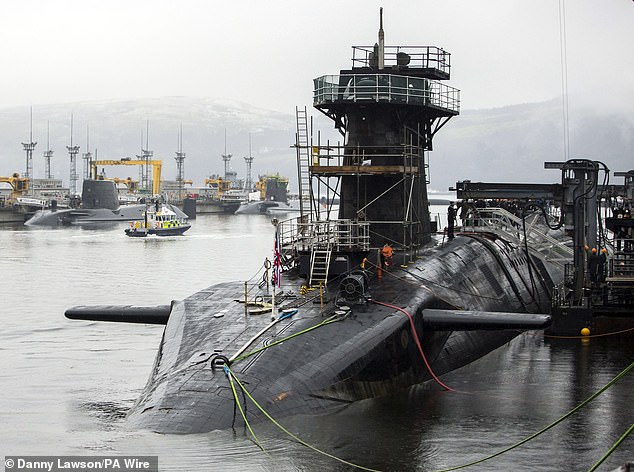
With its storied history of manufacturing warships, and as the home to the UK’s nuclear defences, not to mention its expertise in software development, Scotland is well-placed to make itself Britain’s defence production capital.
Obviously, that would require cooperation and investment from the UK Government but first and foremost it needs a Scottish Government that believes in the mission.
That appreciates the merits of Scotland becoming a top defence manufacturer in both economic and strategic terms.
Then again, how many in our political class think in those terms? A lot of them see the world through the window of the sixth-form common room. Leadership, in their eyes, is not the pursuit of Scottish interests but the frustration of those interests in the service of whatever the latest intellectual fashion is.
This is how oil-and-gas rich Scotland found itself importing expensive fuels, and doing so in a way that worsens our impact on the Earth’s ecology, instead of just extracting these resources ourselves from our own oil fields.
It makes no sense, of course, but then it’s not meant to. All that matters is that the gods of faddish ideology and performative politics are appeased.
Expecting Holyrood to do the right thing by Scotland is a triumph of hope over bitter experience after the past 20 years of SNP misrule, in which outsized egos and fringe agendas have conspired to obstruct almost all progress.
The powers were there, the resources were there, but the political will and aptitude never were. The Scottish parliament has come to be dominated by social issues legislation (the Hate Crime Act, the Gender Recognition Reform Bill, the Assisted Dying Bill) because, though controversial, the metrics used to judge their outcomes are less stringent.
An economic agenda or one geared towards infrastructure or industry cannot be gauged on vibes or good intentions. Such things demand results, hard numbers, material improvements. None of these is Holyrood’s strong suit.
Nevertheless, this is the direction in which we must go because it is the path that will fortify Britain’s defences, grow Scotland’s economy and make us an indispensable facet of the European security sector.
This is not synonymous with the UK becoming more involved in conflict overseas. It is simply recognising a market and selling to it.
This can only happen if John Swinney stops pandering to his party’s Left and the Greens, who would be dangerous if they weren’t so hopeless. Banning Israeli aircraft from landing to refuel and threatening to do the same with the Americans, denying public funds to Scottish companies doing business with Israeli partners – these are the politics of a toddler. All tantrum, no strategy.
If Scotland is to take its place among the foremost producers of defence materiel, its establishment must jettison this petty, posturing politics in favour of a solemn commitment to our security and economic wellbeing.
This sort of politics Holyrood has thus far proved incapable of, but a new parliament is an opportunity for fresh thinking to break with the past and make the tentative steps towards taking Scotland forward.