

March 5, 2026
3 min read

Stand Up for Science plans second rally on March 7
Public health chaos and research funding cuts are inspiring nationwide pro-science protests against the Trump administration
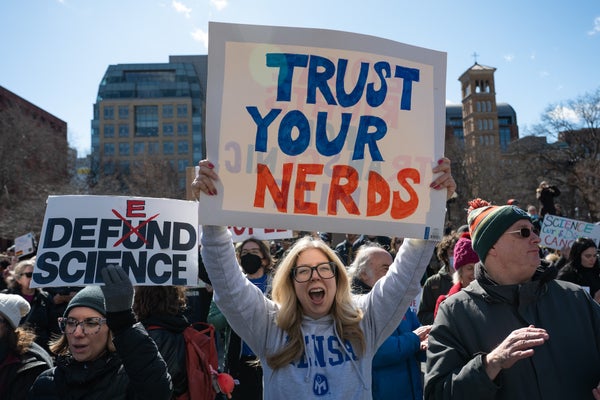
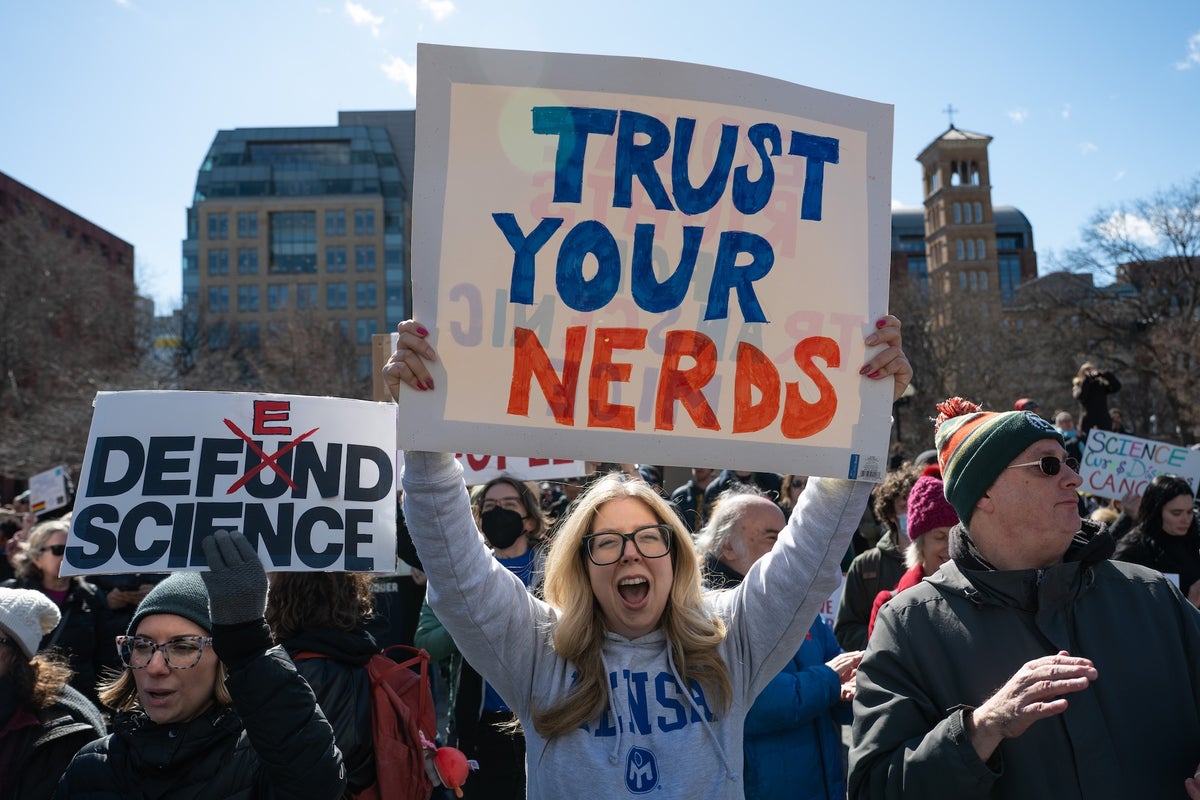
A scene from the “Stand Up For Science” held in New York City in March 2025.
Mostafa Bassim/Anadolu via Getty Images
On March 7 scientists and advocates are set to take to the streets in support of science—the nationwide demonstration will mark the second Stand Up for Science rally since U.S. president Donald Trump took office in 2025.
On Saturday Stand Up for Science is leading demonstrations in 25 locations, including Washington, D.C., New York City, Boston, Chicago, Nashville, Atlanta, Oklahoma City, Pittsburgh, Seattle and Albuquerque; smaller events will take place in about 25 additional cities. There will also be a virtual rally.
“Last year we were warning people,” says Colette Delawalla, founder and CEO of the eponymous nonprofit that has organized the rallies. “We were concerned about politicization of science, we were concerned about political interference and censorship, we were concerned about vaccines and public health,” says Delawalla, who is also a Ph.D. candidate in clinical psychology at Emory University. “Pretty much everything that we warned about has happened, which is extraordinarily unfortunate.”
On supporting science journalism
If you’re enjoying this article, consider supporting our award-winning journalism by subscribing. By purchasing a subscription you are helping to ensure the future of impactful stories about the discoveries and ideas shaping our world today.
Since the first Stand Up for Science rally took place on March 7, 2025, the Trump administration has moved to slash government research funding and grants, downsize federal science agency staff, overhaul the nation’s public health policies, roll back regulations designed to fight climate change, and more. The effects of these and other science policy shifts have been consequential, Delawalla says, even changing the way researchers write their grant funding proposals to better “fit” with the Trump administration’s standpoint.
Critics of the administration such as Delawalla point to Trump officials such as U.S. secretary of health and human services Robert F. Kennedy, Jr., as emblematic of the problems eroding American science. A long-standing vaccine skeptic, Kennedy has led the government’s efforts to reduce the number of recommended childhood vaccines—a move that has abandoned established science.
(In response to these criticisms, White House spokesperson Kush Desai told Scientific American, “Under President Trump, the United States remains the largest funder of scientific research and home to the largest public-private ecosystem for innovation in the world.” Similarly, Department of Health and Human Services press secretary Emily Hilliard told Scientific American that “Secretary Kennedy’s longstanding advocacy has focused on ensuring that vaccines and all medical interventions meet the highest standards of safety for the American people.”)
“For the first time in modern history, the appointed officials who lead our federal health agencies do not see vaccines as a first line of defense to protect the health of the American people,” says Michael Osterholm, an epidemiologist at the University of Minnesota. “That’s remarkable.”
The rally comes amid an explosion in measles cases, with more than 1,000 confirmed infections reported in just the first two months of the year, despite the disease having been eliminated from the country in 2000. How the administration communicates to the public about vaccines—and about science in general—will have consequences years into the future, Osterholm says.
Delawalla agrees. “Our big concern this year is: we’re worried that science is going to be used as a weapon against the public,” she says. “We want to make sure that science is not only well funded but is also used appropriately for the good of the public and to better the human experience across the world. That’s what publicly funded science should do.”
It’s Time to Stand Up for Science
If you enjoyed this article, I’d like to ask for your support. Scientific American has served as an advocate for science and industry for 180 years, and right now may be the most critical moment in that two-century history.
I’ve been a Scientific American subscriber since I was 12 years old, and it helped shape the way I look at the world. SciAm always educates and delights me, and inspires a sense of awe for our vast, beautiful universe. I hope it does that for you, too.
If you subscribe to Scientific American, you help ensure that our coverage is centered on meaningful research and discovery; that we have the resources to report on the decisions that threaten labs across the U.S.; and that we support both budding and working scientists at a time when the value of science itself too often goes unrecognized.
In return, you get essential news, captivating podcasts, brilliant infographics, can’t-miss newsletters, must-watch videos, challenging games, and the science world’s best writing and reporting. You can even gift someone a subscription.
There has never been a more important time for us to stand up and show why science matters. I hope you’ll support us in that mission.