

Labour came under fire on Thursday over its ‘Net Zero dogma’ after energy bills failed to fall by as much as Rachel Reeves had promised.
Ofgem announced the typical annual household bill will drop by £117 from April, less than the £150 reduction pledged by the Chancellor in her Budget.
It means that the cost will still be £73 higher than when Labour came to power, a far cry from Energy Secretary Ed Miliband’s pledge to lower them by £300.
They could have been cut further but for an increase in so called ‘network costs’ that are added to bills. These include the price of upgrading the grid as part of the switch to renewable energy sources, such as wind power.
The overall bill reduction comes after Ms Reeves announced in November that she would cut the level of so-called green levies that are currently added to them.
But critics pointed out that households would still be out of pocket as costs will instead be dumped onto taxpayers.
Tory business spokesman Andrew Griffith accused Labour of ‘gaslighting’ the public, adding: ‘Bills aren’t down by the £300 promised and taxes are rising. Their Net Zero dogma is hurting homes and businesses.’
Mr Miliband claimed the bill reduction would ‘provide much-needed cost-of-living support for families’.

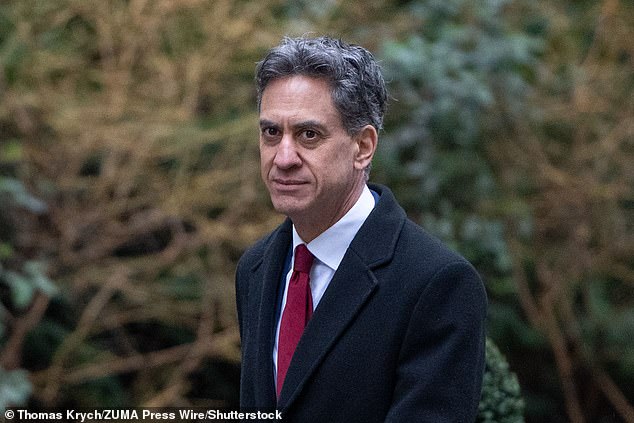
Energy bills under Labour will fail to fall by as much as promised – a far cry from Energy Secretary Ed Miliband’s pledge to lower them by £300
But Tory energy spokeswoman Claire Coutinho said: ‘Don’t let him fool you, this ‘£150 off’ is a sleight of hand.’
Even the Tony Blair Institute (TBI) – the think-tank set up by the former Labour PM – was unconvinced, arguing that energy price caps ‘aren’t going to end a cost-of-living crisis’ and wholesale reform of the system was instead needed to tackle ‘sky-high’ bills.
Andy Mayer, energy analyst at the Institute of Economic Affairs, a free market think-tank, said the transfer of costs from bills to taxes was ‘hiding the problem, not solving it’.
Regulator Ofgem sets a price cap on standard variable energy tariffs every three months for 33million domestic customer accounts that pay for gas and electricity.
It allows suppliers to charge more when their costs rise but forces them to charge less when costs fall.
The cap takes into account the upkeep of the grid and government levies.
In July 2024, when Labour came to power, typical annual energy bills regulated by the cap were £1,568.
They have since risen to the current level of £1,758. Thursday’s announcement means they will fall to £1,641 from April 1.
Ofgem has calculated the Budget changes will shave £134 from the cap. Other costs are also falling, including wholesale gas and electricity, which is down by £38.
But ‘network costs’ paying for the upkeep of the grid, as well as its green energy overhaul, add £66 – leaving the overall reduction at £117.
Citizens Advice chief executive Dame Clare Moriarty said: ‘For millions of households, this has stopped being a temporary hardship and become an ongoing threat to their financial stability.’