

A Liberal Party proposal that would block migrants from up to 13 countries or territories – including specific regions of Gaza, Egypt, Somalia, and the Philippines – has sensationally leaked.
The existence of the policy, which would suspend visa processing for up to three years from regions deemed to be under the control of terrorist organisations, was revealed by Sky News on Monday.
Senior party figures stress it remains a draft blueprint that could be revised but features up to 13 countries or territories linked to high‑risk security concerns, including Egypt and broad swathes of Africa.
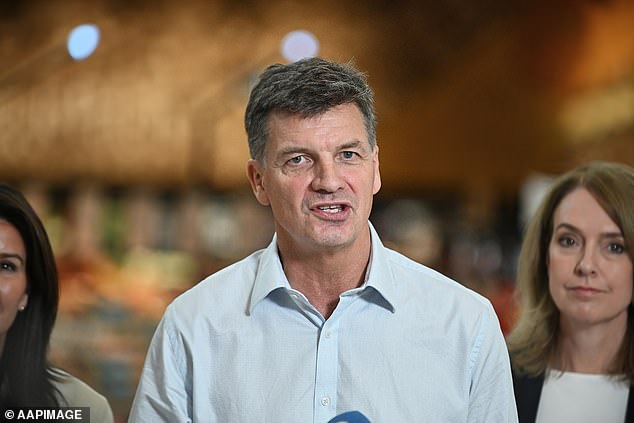
The proposal was drafted by home affairs spokesman Jonno Duniam, immigration spokesman Paul Scarr, and advisers from now-former Liberal leader Sussan Ley’s office. It is now pending consideration by new Opposition Leader Angus Taylor.
The move mirrors recent actions in the United States and the United Kingdom, both of which have introduced tougher rules in recent months to restrict or, in some cases, bar entry for people from specific countries.
The Trump administration suspended visa processing for 75 countries, while the UK implemented targeted restrictions affecting Angola, Namibia and the Democratic Republic of Congo, among others.
Deputy Nationals leader Kevin Hogan said the plan had not come before Sussan Ley’s shadow cabinet and could not confirm its status.

The draft Liberal plan would see migrants from areas of 13 countries barred for three years

The countries with regions singled out on the list. Daily Mail graphic
The leak coincides with Taylor debuting new calls to improve the ‘low standard’ of migrants as part of his new pitch as Liberal leader, arguing Australia must refuse entry to those who reject what he calls core national values.
It is understood that the proposal would not impose a blanket ban on all arrivals from Somalia or the Philippines. However, immigration from Gaza could be effectively frozen given Hamas’ longstanding control over the territory.
It is understood the plan targets regions experiencing prolonged terrorist occupation or insurgency, such as Mindanao in the Philippines, areas of Somalia, and Yemen.
Yemen is currently split between the Houthi movement in the north and the Presidential Leadership Council (PLC) in the south and east.
Australia recognises the PLC as Yemen’s legitimate government, while the United States designates the Houthis as both a Foreign Terrorist Organisation (FTO) and a Specially Designated Global Terrorist (SDGT).
Under the Liberals’ draft policy, migrants on temporary visas could also face deportation if found in breach of what the party defines as ‘Australian values’.
Taylor told Sunrise on Monday that he wanted to ‘shut the door’ on migrants who do not believe in Australian values.
‘We believe in basic freedoms of speech and religion, and if people don’t accept those things, they shouldn’t come to our country. The door should be shut,’ he said.

The plan was understood to have been worked on under former opposition leader Sussan Ley
Speaking more broadly on Monday, Deputy Liberal leader Jane Hume called for a ‘reset’ to migration policy.
‘There should be an understanding that if you come to this country, you’re expected to not just respect our democracy and our rule of law, but to contribute to our society and our economy as well,’ she said.
Hume emphasised the importance of skilled migration.
‘Skilled migration is profoundly important, profoundly important. But I think we all know that, at some point, something’s got to change, because the rate of migration we have at the moment … the amount is too high, and the standard too low.’
Asked whether she supported One Nation’s proposal for an eight‑year pause on migration from selected nations, Hume rejected it.
‘That’s a reactionary policy that I think is entirely unrealistic and unsustainable,’ she said.
‘Migration has been a really important part of the Australian story. But it’s the right migration. We want to make sure that we bring people to the country that will contribute to the economy, contribute to society, and help us all improve our standard of living.’