

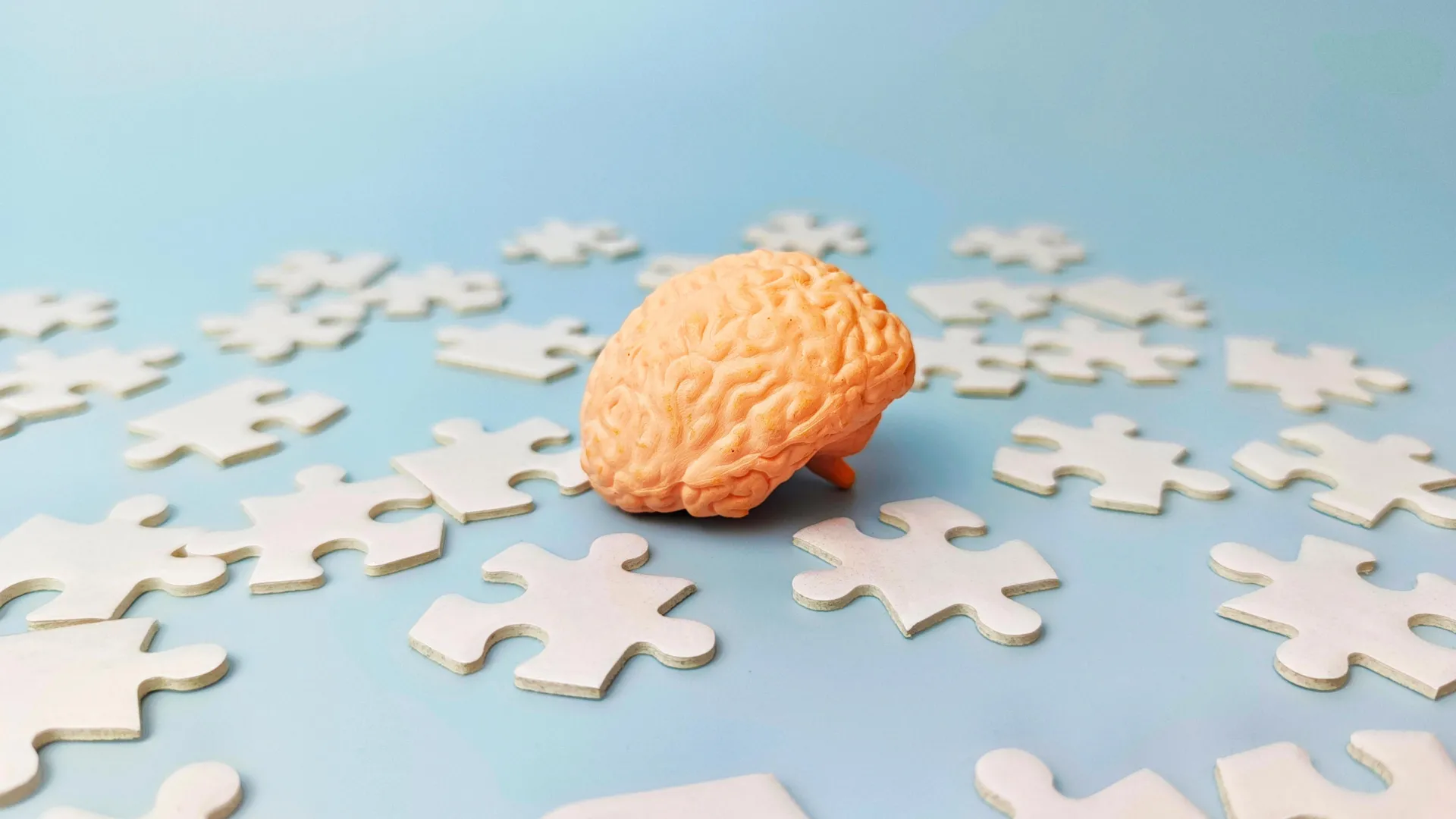
For memories to be useful, the brain must connect what happened with the situation in which it occurred. Researchers at the University of Bonn have now uncovered how the human brain handles this task. Their findings show that two distinct groups of neurons store content and context separately, then coordinate their activity to form complete memories. Instead of blending both types of information within the same cells, the brain keeps them apart and links them when needed. The results were published in the journal Nature.
People have an impressive ability to recognize the same person or object across very different situations. For example, you can easily tell the difference between having dinner with a friend and attending a business meeting with that same person. “We already know that deep in the memory centers of the brain, specific cells, called concept neurons, respond to this friend, regardless of the environment in which he appears,” says Prof. Florian Mormann from the Clinic for Epileptology at the UKB, who is also a member of the Transdisciplinary Research Area (TRA) “Life & Health” at the University of Bonn.
At the same time, the brain must connect this stored content with the surrounding context to create a meaningful memory. In rodents, individual neurons often combine both types of information. “We asked ourselves: Does the human brain function fundamentally differently here? Does it map content and context separately to enable a more flexible memory? And how do these separate pieces of information connect when we need to remember specific content according to context?” says Dr. Marcel Bausch, working group leader at the Department of Epileptology and member of TRA “Life & Health” at the University of Bonn.
Watching Brain Activity in Real Time
To explore these questions, the research team recorded electrical signals from individual neurons in patients with drug-resistant epilepsy. As part of their clinical evaluation, electrodes had already been placed in the hippocampus and nearby regions that are critical for memory. While doctors monitored their seizures to assess treatment options, the patients also took part in voluntary computer-based tasks.
During these experiments, participants viewed pairs of images and answered different types of questions about them. For instance, they might be asked whether an object was “bigger” when prompted with the question “Bigger?” “This allowed us to observe how the brain processes exactly the same image in different task contexts,” says Mormann.
Two Distinct Neuron Systems for Memory
The researchers examined the activity of more than 3,000 neurons and identified two largely separate groups. One group, known as content neurons, responded to specific images such as a biscuit, regardless of the task being performed. The other group, called context neurons, responded to the type of question being asked, such as “Bigger?,” regardless of the image shown. In contrast to findings in rodents, only a small number of neurons handled both roles at once.
“A key finding was that these two independent groups of neurons encoded content and context together and most reliably when the patients solved the task correctly,” says Bausch.
How the Brain Rebuilds Memories From Clues
As the experiment progressed, the interaction between these two neuron groups became stronger. Activity in a content neuron began to predict the response of a context neuron just a few tens of milliseconds later. “It seemed as if the ‘biscuit’ neuron was learning to stimulate the ‘Bigger?’ neuron,” says Mormann.
This interaction acts like a control system that ensures only the relevant context is brought back during recall. The process, known as pattern completion, allows the brain to reconstruct a full memory even when only part of the information is available. According to the researchers, this separation of roles helps explain why human memory is so adaptable. By storing content and context in separate “neural libraries,” the brain can apply the same knowledge across many different situations without needing a unique neuron for every possible combination.
“This division of labor probably explains the flexibility of human memory: the brain can reuse the same concept in countless new situations without needing a specialized neuron for each individual combination, by storing content and context in separate ‘neural libraries’,” says Bausch. Mormann adds: “The ability of these neuronal groups to link spontaneously allows us to generalize information while preserving the specific details of individual events.”
What Comes Next for Memory Research
In this study, context was defined by the questions shown on a screen. However, real-world contexts can also be passive, such as the environment you are in. Future research will need to determine whether the brain processes these everyday contexts in the same way. Scientists also plan to test these mechanisms outside of clinical settings.
Another important next step is to examine what happens if the interaction between these neuron groups is intentionally disrupted. This could reveal whether such interference affects a person’s ability to recall the correct memory in the right context or make accurate decisions.
The study was funded by the DFG, the Volkswagen Foundation, and the NRW joint project “iBehave.”