


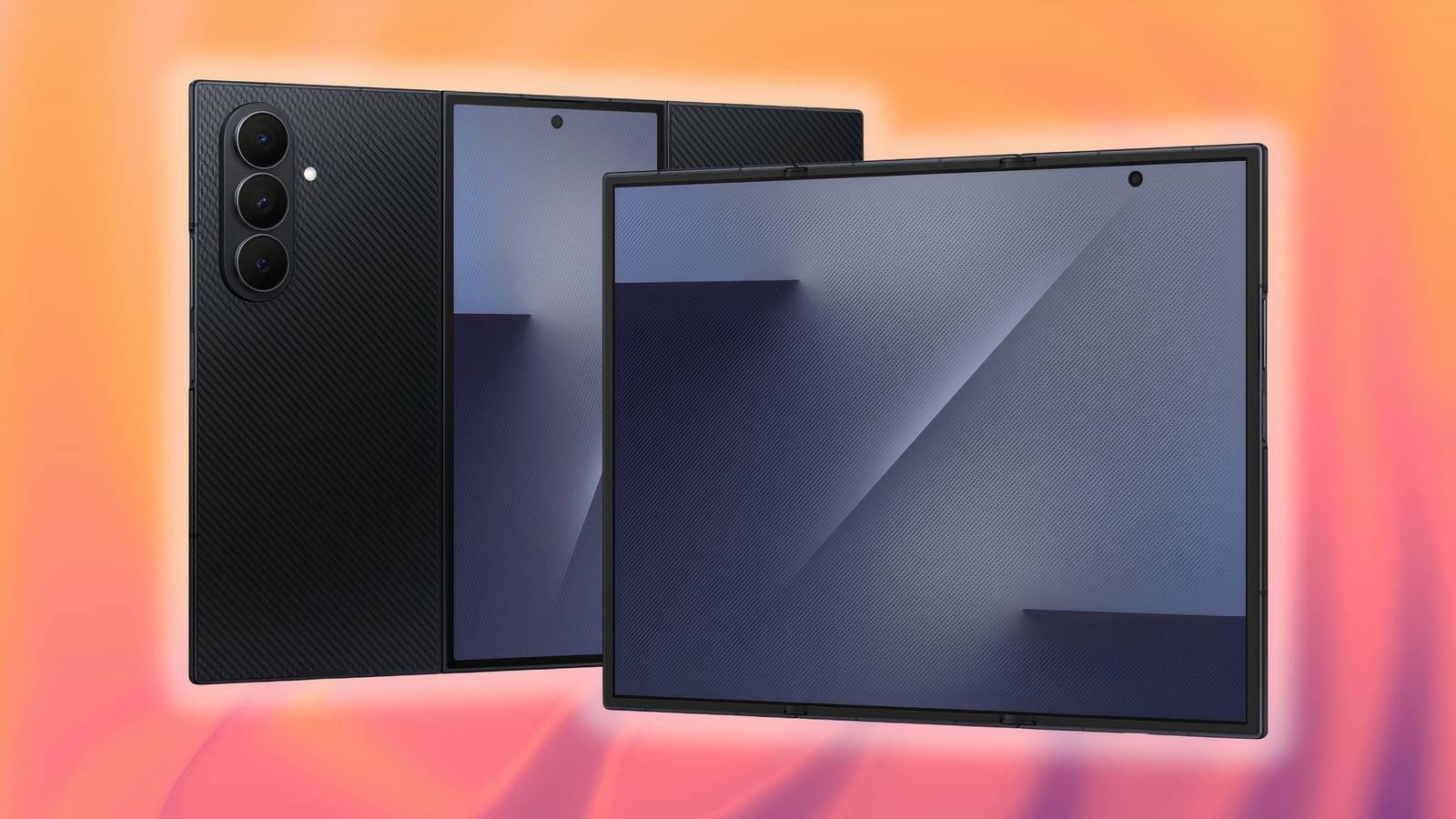
Samsung has officially confirmed that its much-anticipated Galaxy Z TriFild smartphone will go on sale this Friday, January 30 in the US, and that it’ll cost $2,900. The handset will be available for purchase at Samsung’s Experience Stores across the country, in addition to being purchasable through the company’s online storefront.
Samsung isn’t offering pre-orders for the Z TriFold, and so availability will be on a first-come, first-serve basis when stores open on Friday. The phone is available in a single configuration of 16GB of RAM and 512GB of internal storage, and in a single crafted black colorway.
Other key Z TriFold specifications include a Qualcomm Snapdragon 8 Elite processor, a 5,600mAh battery pack, 45W fast wired charging, 15W wireless charging, a triple rear-camera setup, two selfie cameras, IP48 water and dust resistance, a capacitive fingerprint sensor, and Android 16 with One UI 8 out of the box.
By virtue of its triple-fold nature, the Z TriFold is a relatively thick device when folded shut, measuring in at 0.51-inches (12.9mm) thick. When unfolded, however, the benefit is having access to a large, widescreen 10-inch OLED display panel, with a 120Hz refresh rate and a 1584 x 2160 pixel resolution to boot. The outer cover display, by contrast, measures in at 6.5-inches, with a 120Hz refresh rate and 1080 x 2520 resolution.

- Brand
-
Samsung
- SoC
-
Snapdragon 8 Elite
- Display
-
10-inch AMOLED main screen, 6.5-inch cover screen
- RAM
-
16GB
- Storage
-
512GB, 1TB
- Battery
-
5,600mAh
The Galaxy Z TriFold is Samsung’s first commercially available triple-fold smartphone, with a 10-inch inner display and a 6.5-inch outer panel.
Are triple-fold smartphones the way forward?
I have trouble imagining this form factor will take off

The arrival of the Samsung Galaxy Z TriFold marks an important milestone in the US mobile phone industry: the official ushering in of the triple-fold era. Globally speaking, Samsung isn’t the first to market with a tri-fold (that honor goes to the Huawai Mate XT), but it’s the first hardware maker to bring the form factor to North America.
In some ways, the triple-fold design makes a lot of sense as the logical evolution of book-style (single folding) smartphones, allowing for a much larger and wider inner display when fully unfolded. Most book-style foldables, by contrast, unfold into near-square aspect ratio displays, which isn’t ideal for video content consumption.
However, I’m just not sure the tri-fold form factor has legs. We’re nearing the limits of physics when it comes to foldable handset thickness, and while this allows for slim book-style mobiles, adding another crease necessitates a bulkier unit. Foldables also still suffer from durability and affordability issues, and tri-folds like the Huawei Mate XT and the Galaxy Z TriFold are only highlighting the scope of these problems.
My prediction is that as cool as tri-fold smartphones are, they’ll never become a mainstream product category.
Both Huawei and now Samsung have demonstrated that mass-market tri-fold smartphones are feasible from a production line, assembly, and, manufacturing perspective. That being said, neither company has made a truly compelling case for why a bulkier build, additional hardware vulnerabilities, and a significantly costlier MSRP are worth the trade-off for a slightly larger and wider inner display panel.
Samsung, for its part, is touting on-device DeX mode as a selling point for the Z TriFold, which is an improvement over the Galaxy Z Fold 7’s requirement of an external monitor to trigger the feature. While it’s undeniably nice to have the option to interact with the phone directly using a PC-style interface, I feel Dex’s limitation on the Z Fold 7 is an artificial one, and that the book-style form factor would work well enough with a bespoke on-device desktop mode of its own.
My prediction is that as cool as triple-fold smartphones are, they’ll never become a mainstream product category. Book-style foldables are simply more pragmatic, at least for the time being. That being said, I do feel that wider aspect ratios will ultimately prevail as opposed to square-like ones, perhaps spearheaded by Apple if it ultimately launches its highly-rumored iPhone Fold later this year.