



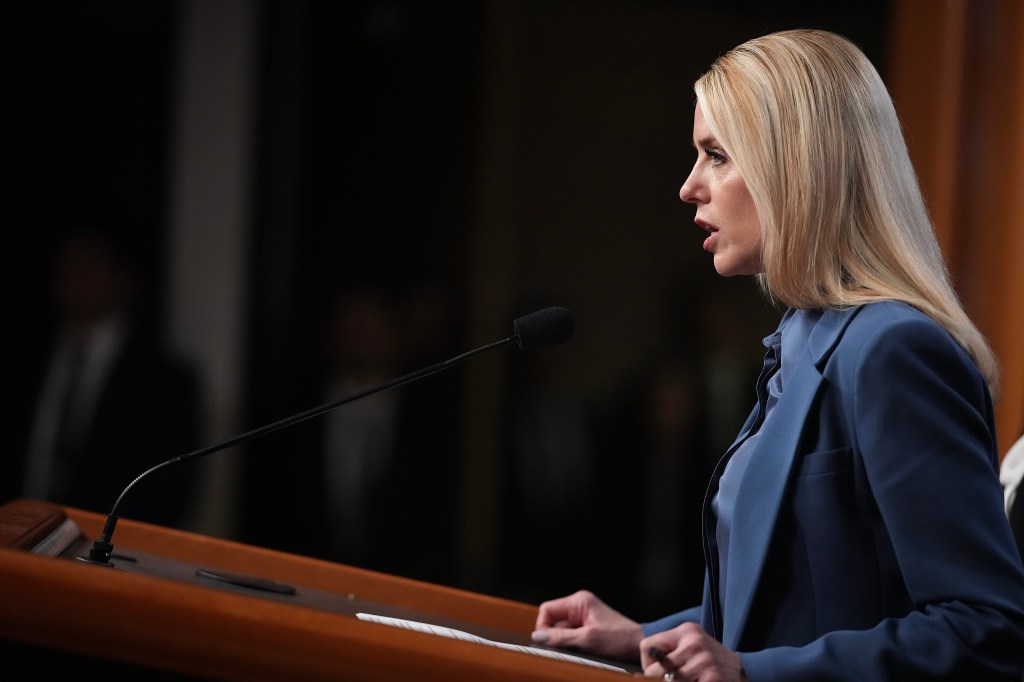
Attorney General Pam Bondi wrote in a letter to members of Congress that all of the Justice Department files on Jeffrey Epstein have been released in accordance with a law passed last year to disclose the millions of documents related to the the convicted sex offender.
Bondi wrote that the Department “released all ‘records, documents, communications and investigative materials” in their possession that relate to Epstein and eight other different categories. As directed by the Epstein Files Transparency Act, she also included a list of “all government officials and political exposed persons names or referenced in the released materials.”
But Bondi’s letter to lawmakers on Saturday, meant to comply with the Epstein Files Transparency Act, did not temper criticism that the Trump administration continues to withhold material through redactions or other means.
Rep. Thomas Massie (R-KY), who has been leading efforts pushing for the files release along with Rep. Ro Khanna (D-CA), told ABC’s This Week that “it is clear that their work is not done here yet.” He pointed to mistakes that have been made in redacting names that should not have been redacted, while he had questions about the motives behind shielding other names.
“They are citing ‘deliberative process privilege’ in order not to release some of the documents,” Massie said. “The problem with that is the bill that Ro Khanna and I wrote says that they must release internal memos and notes and emails about their decisions on whether to prosecute or not to prosecute, whether to investigate or not investigate.” He said that included insight into why the DOJ through the years did not prosecute some figures mentioned in the files, as well as on what led to a non-prosecution agreement with Epstein in 2008 in which he plead guilty to lesser charges.
Massie also said that the Justice Department had taken down “some of documents before we were able to go over to the DOJ and look at the unredacted versions.”
In Bondi’s letter, the list of names includes a “government official or politically exposed person,” or someone whose name appears in the files released at least once.
Bondi wrote, “Names appear in the files released under the Act in a variety of contexts. For example, some individuals had extensive direct email contact with Epstein or [his associate Ghislaine] Maxwell while other individuals are mentioned only in a portion of a document (including press reporting) that on its face is unrelated to the Epstein and Maxwell matters.” The list, which does not include the context of their mentions, includes a broad sweep of names, including Donald Trump but also most prominent political figures over the past two decades.
Bondi’s letter was first reported by Fox News Digital.
On Wednesday, Bondi clashed with Massie and Democrats on the House Judiciary Committee, as they pressed her with questions about redactions and prosecution decisions. She avoided answering a number of questions and instead had prepared attacks on individual lawmakers, and peppered her comments with insults.