


March 30, 2026
2 min read

NASA starts countdown clock to historic Artemis II moon mission launch
The space agency is targeting Wednesday, April 1, to launch a crew of four astronauts on a potentially record-breaking journey around the moon and back
NASA is gearing up to launch four astronauts on a pioneering journey around the moon—the Artemis II mission. Follow our coverage here.
NASA is a “go” for its upcoming Artemis II moon mission. The countdown to liftoff began at 4:44 p.m. Eastern time, said Charlie Blackwell-Thompson, NASA’s launch director for the mission, at a press conference on Monday.
The space agency is increasingly confident that it will launch Artemis II to space on Wednesday, April 1. The liftoff is currently targeted for about 6:30 p.m. EDT. If it gets the go-ahead, the agency’s 212-foot-tall Space Launch System (SLS) rocket will loft four astronauts on board the Orion crew capsule on a journey around the moon that’s expected to last some 10 days. If the mission takes off on April 1, splashdown will likely take place in the evening of April 10, Emily Nelson, the chief flight director, said at the same press conference.
“Everything continues to look good, and there are no issues preventing us from pressing ahead,” said Amit Kshatriya, NASA’s associate administrator, at the conference.
On supporting science journalism
If you’re enjoying this article, consider supporting our award-winning journalism by subscribing. By purchasing a subscription you are helping to ensure the future of impactful stories about the discoveries and ideas shaping our world today.
The flight is a test of the SLS and Orion, as well as a chance for the crew to try out several technologies and maneuvers that will ultimately inform NASA’s future moon missions and, one day, a permanently staffed lunar base. Kshatriya said that the agency is aiming to test uncrewed lunar landers as soon as next year.
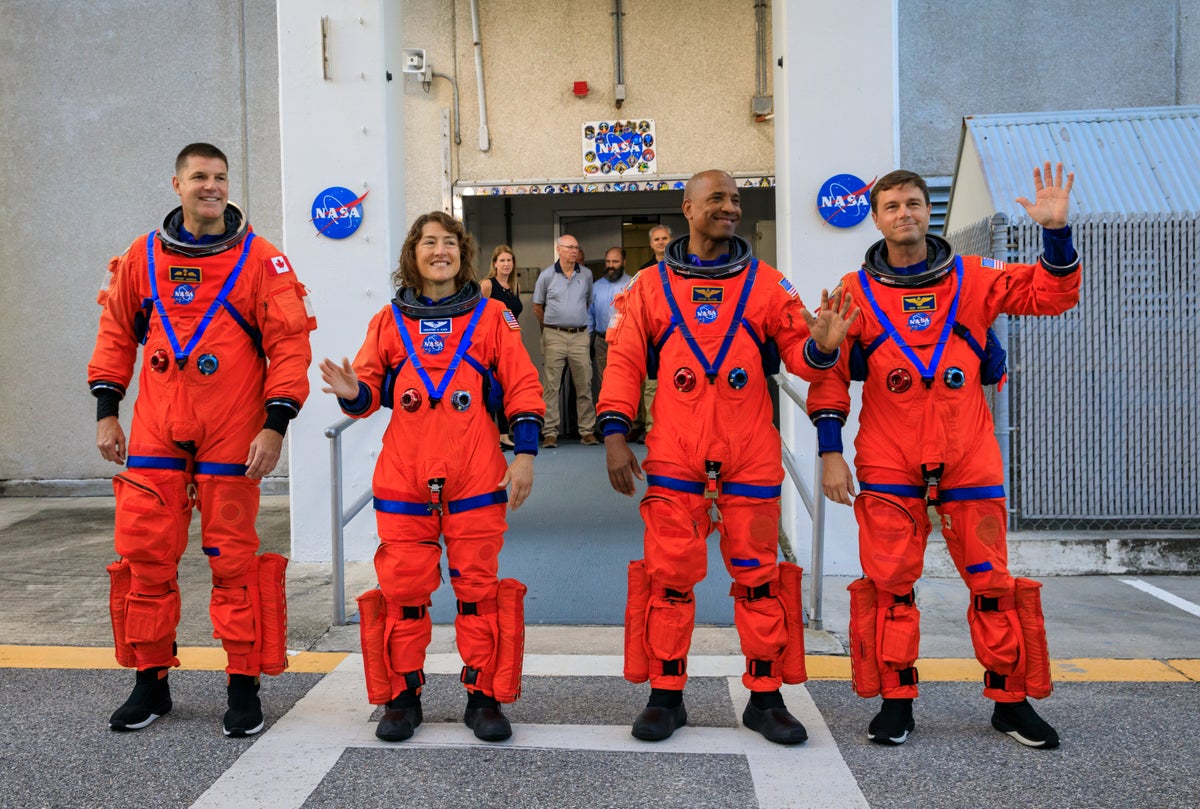
Depending on the exact launch time and flight trajectory, the four Artemis II astronauts—Reid Wiseman, Victor Glover, Christina Koch and Jeremy Hansen—could travel farther from Earth than any human before them. They may also see more of the moon’s mysterious far side than any human has ever observed. It will also mark the first time humans will have left our planet’s orbit in more than 50 years, since Apollo 17, in 1972, when two astronauts collected regolith from the lunar surface.
Before the mission can launch, the rocket and capsule need to be fueled up and powered on, a process that began on Monday and will continue over the hours in the run-up to launch. The astronauts will board Orion about four hours before liftoff time—until then, they have some final briefings and time to spend with their families, NASA officials said.
Artemis II has been delayed numerous times, including multiple times this year because of problems with the rocket and the crew capsule. It is still possible that the exact timing could slip further should an issue arise at any time during the countdown, Blackwell-Thomspon said. NASA has said April 2 through 6 could offer additional launch window opportunities.
NASA officials on Monday emphasized that many elements of Artemis II are either built on top of or directly borrowed from learning and even hardware from Artemis II’s uncrewed predecessor mission, Artemis I, and the International Space Station.
“Twenty-five years of flying space station has given us reliability and understanding of the elements of the machines that we’re flying around the moon, to a large extent, which is why we’re comfortable taking the risks,” Kshatriya said.
Editor’s Note (3/30/2026): This is a developing story and may be updated.
It’s Time to Stand Up for Science
If you enjoyed this article, I’d like to ask for your support. Scientific American has served as an advocate for science and industry for 180 years, and right now may be the most critical moment in that two-century history.
I’ve been a Scientific American subscriber since I was 12 years old, and it helped shape the way I look at the world. SciAm always educates and delights me, and inspires a sense of awe for our vast, beautiful universe. I hope it does that for you, too.
If you subscribe to Scientific American, you help ensure that our coverage is centered on meaningful research and discovery; that we have the resources to report on the decisions that threaten labs across the U.S.; and that we support both budding and working scientists at a time when the value of science itself too often goes unrecognized.
In return, you get essential news, captivating podcasts, brilliant infographics, can’t-miss newsletters, must-watch videos, challenging games, and the science world’s best writing and reporting. You can even gift someone a subscription.
There has never been a more important time for us to stand up and show why science matters. I hope you’ll support us in that mission.