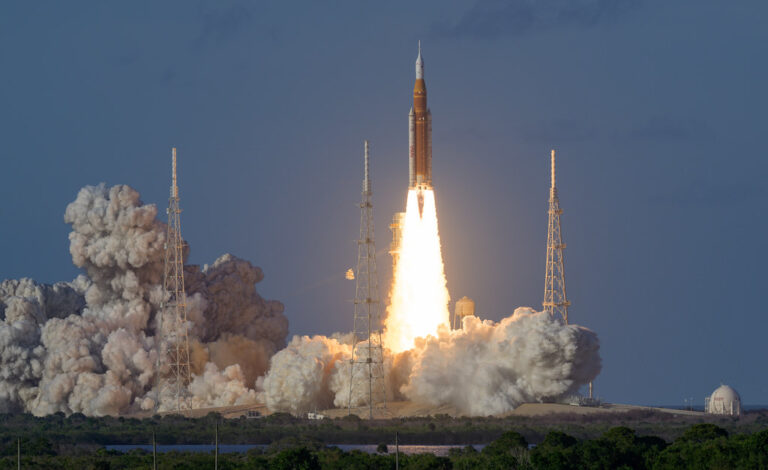

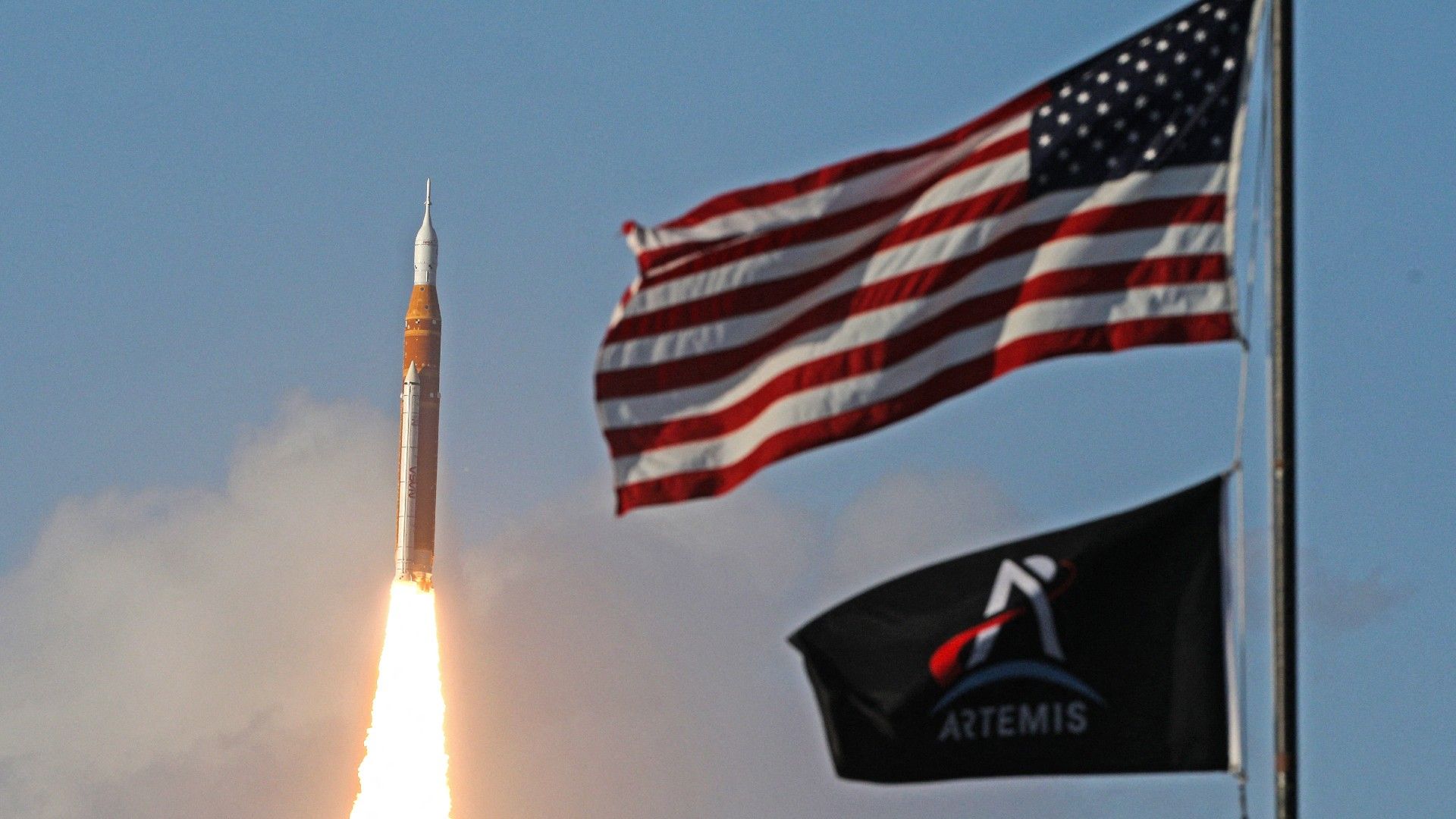
CAPE CANAVERAL, Fla. — For the first time in over 50 years, astronauts from Earth have launched to the moon.

“And, liftoff! The crew of Artemis 2 now bound for the moon,” NASA spokesperson Derrol Nail said during the agency’s launch webcast. “Humanity’s next great voyage begins.”
Orion’s crew includes NASA astronauts Reid Weisman, the commander; Victor Glover, pilot; Christina Koch, mission specialist; and Canadian astronaut Jeremy Hansen, mission specialist. All three NASA astronauts are veteran spaceflyers, with long-term stints aboard the International Space Station under their belts. Hansen is a rookie on his first mission, and will become the first Canadian to fly into deep space.
“We have the best crew that you can put together from NASA and the Canadian Space Agency here,” Wiseman told reporters just days before launch. “We’re going to go slow and we have the ultimate trust in each other, and that’s how we will get through this.”
You can follow their 10-day journey on our Artemis 2 mission updates page.

First to the moon in the 21st century
This mission is full of firsts. It’s the first time a Space Launch System (SLS) rocket and Orion spacecraft have carried astronauts. (They flew an uncrewed test mission to lunar orbit on Artemis 1 in 2022.) It’s the first astronaut launch to the moon of the 21st century. Artemis 2 is also carrying the first woman, the first Black astronaut and the first non-American to the moon. Orion carries the first toilet around the moon. The list goes on.
“Although it is something to celebrate a bunch of firsts, that’s definitely not necessarily telling the whole story, and it’s also not about celebrating any one individual,” Koch told reporters on Sunday (March 29). “If there is something to celebrate, it’s that we are at a time when everyone who has a dream gets to work equally hard to achieve that.”

The distance Artemis 2 will fly from Earth is also a spaceflight first. When they loop around to the far side of the moon, the astronauts will get farther from Earth than any humans in history. They’ll be 252,799 statute miles (406,841 kilometers) from Earth at the time, about 4,000 miles (6,400 kilometers) farther than the previous record set by NASA’s Apollo 13 astronauts in 1970. And while that record is remarkable, NASA is more focused on how the crew will spend their time during their journey around the moon.
“You want every mission to keep exploring and keep learning new things,” Artemis 2 flight director Emily Nelson told reporters before launch. “Getting farther from Earth than we’ve ever been before is a fun statistic, but there are a lot of other things we’re going to learn on this mission that are going to be a lot more exciting for me.”
The journey to space
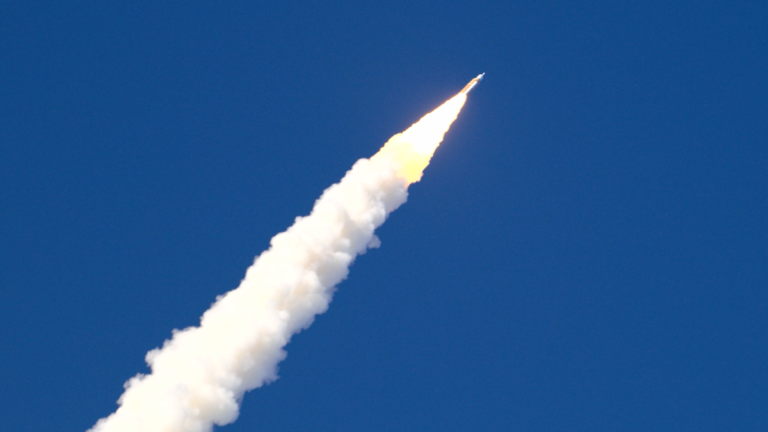
The Artemis 2 SLS lifted off from Launch Complex 39B here at NASA’s Kennedy Space Center, ascending into the sky as the setting sun shone a golden light onto the booster’s exhaust trail. A huge crowd watched this happen: More than 400,000 people likely descended on Florida’s Space Coast to view the moonshot, experts have estimated.
About two minutes into flight, SLS’ two powerful solid rocket boosters separated from the main stage, leaving the launcher’s four RS-25 engines to push Orion and its crew to space.
SLS is powered by the same RS-25 engines used by NASA’s space shuttle fleet, which have now supported the launch of 101 astronauts into orbit. Parts of the twin solid rocket boosters also flew on space shuttle missions. Unlike those missions, though, nothing will be reused from Artemis 2’s launch.
It took about eight minutes for the Artemis 2 SLS to reach orbit. The rocket’s upper stage will next execute a pair of apogee-raising engine burns in the hours after liftoff to put Orion on a path toward the moon.
Artemis 2, which is flying a free-return trajectory that loops around the moon, is in many ways a 21st century version of NASA’s Apollo 8 mission, which sent the first astronauts around the moon in 1968, and also marked the first crewed flight of the Saturn V rocket.

NASA’s vanguard for a moon return
Wiseman and his Artemis 2 crew may be the first astronauts in a generation to visit the moon, but NASA does not want them to be the last.
Just over a week before today’s launch, NASA Administrator Jared Isaacman unveiled ambitious changes to the agency’s plan for lunar exploration. That new plan aims to increase the pace of NASA’s Artemis missions in order to land astronauts on the moon by 2028, then build a moon base by 2032.
The goal is not just to accelerate an Artemis moon exploration program long mired in delays and setbacks, but also to showcase American “superiority in space” as laid out in an executive order by President Donald Trump in December 2025. Looming over the push is potential competition with China, which aims to land its own astronauts on the moon by 2030. Isaacman has generally not named China directly in this context, but it’s clear that nation is on his mind.
“We will return Americans to the moon before the end of President Trump’s term,” Isaacman said on March 24. “Our great competitor has said before 2030. The difference between success and failure will be measured in months, not years.”
NASA plans to follow Artemis 2 with Artemis 3 in 2027 — an Earth-orbit flight to practice rendezvousing and docking with one or both of the commercial lunar landers NASA has picked for the Artemis program. SpaceX is building a Starship moon lander for NASA, while Blue Origin has its own Blue Moon lander design. The first moon landings, on the Artemis 4 and 5 missions, would follow beginning in 2028, with regular flights to follow on Artemis 6 and beyond.

But first, to the moon
Of course, before the foundation of any moon bases can be laid, NASA’s Artemis 2 has to fly around the moon and make it safely back to Earth
With the crew now in space, the 10-day mission has entered a critical phase. Over the next day, the Artemis 2 astronauts will test the basic functions of their Orion spacecraft: Does its life support system work as planned? How about Orion’s toilet — the Universal Waste Management System, as NASA calls it? And how does Orion handle in flight? During Artemis 2, the crew will test rendezvous operations with their SLS upper stage in a trial of its manual flight controls for future dockings.
“We want to make sure that this system is ready and it could control the vehicle the way we expect it to, so that we can be comfortable letting an automated docking happen in the future, [on] more complex missions,” Glover said.
It’s not just the first crewed flight for the Orion capsule, but also its European Service Module, the cylindrical section that provides the power and propulsion for the moon ship’s flight. The module is built by the European Space Agency, and performed flawlessly on NASA’s Artemis 1 uncrewed mission in 2022.

If Orion’s initial shakedown tests check out, the stage will be set for another critical milestone, the TLI, or Trans-Lunar Injection burn — a maneuver set for Thursday afternoon (April 2) that will send the Artemis 2 crew on their final path around the moon.
It will be the first time NASA will give astronauts a “go” for the moon in 54 years. And getting to the moon will be key for reaching out even farther, Artemis 2 astronauts have said.
“It’s a stepping stone to Mars, where we might have the most likelihood of finding evidence of past life,” Koch said of the moon, which she compared to a Rosetta Stone for billions of other solar systems in our Milky Way galaxy.
“All of this starts to unlock when you go to the moon,” Koch said. “And for me, that’s one of the most important scientific reasons to go.”