



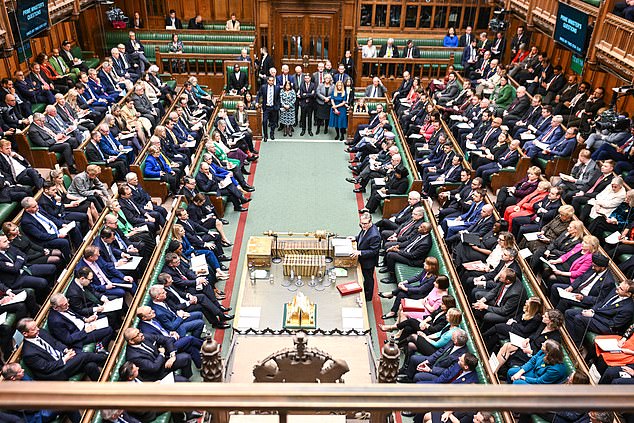
MPs are set for a 5 per cent pay rise in April – higher than for the NHS and most public sector workers.
The Commons watchdog has announced the increase to £98,599, insisting that the job is getting more ‘complex’.
The Independent Parliamentary Stadards Authority also signalled that salaries for politicians will continue to rise fast, to reach £110,000 by 2029.
Although Keir Starmer is likely to argue the decision is independent of government, it will inevitably cause fury from unions and other state workers getting less generous deals. It is also well above the anticipated level of inflation.
The hike for this year is made up of 3.5 per cent to cover cost of living pressures, and a 1.5 per cent ‘benchmarking adjustment’.
Peers are also set to benefit as their tax-free daily allowance is linked to the MP increase. It is in line to rise from £371 to £390.

MPs are set for a 5 per cent pay rise in April – higher than for the NHS and most public sector workers
Ipsa chair Richard Lloyd said: ‘The role of an MP has evolved. They are dealing with higher levels of complex casework, and abuse and intimidation towards MPs and their staff has been growing.
‘In reaching our decision for 2026-27 we have benchmarked MPs’ pay against other responsible, senior roles in civic society and similar worldwide democracies, as well as considering our own core principles and the wider economic context.
‘In future years we will continue to consider prevailing economic and fiscal conditions when confirming annual pay decisions taking into account the experience of people outside of parliament.’
The decision comes despite a recent ‘listening exercise’ by Ipsa finding more than half of Britons think MP salaries are too high.
This included establishing a ‘citizens’ forum’ – made up of 23 members of the public – on MPs’ pay and funding.
Ahead of the forum’s work, IPSA commissioned polling that found 58 per cent of respondents thought MPs’ pay and funding was either a little or far too high.
The YouGov survey, carried out in August last year, also showed less than a quarter (24 per cent) considered MPs’ pay to be about the right level.
MPs currently earn a basic annual salary of £93,904 for their parliamentary duties, more than twice the UK average salary for full-time workers of £39,000.
The polling results were revealed within a newly-published report by IPSA on its consultation exercise.
But, despite the YouGov findings, the watchdog suggested it would not be cutting MPs’ pay.
It pointed to a change in views once members of the citizens forum were given a ‘deeper understanding’ of the role of an MP.
In its response to the ‘What’s Democrary Worth?’ project, IPSA said: ‘There was a significant difference between the opinions gathered through polling and the opinions of the forum members after completing the process.
‘Following the forum’s completion, 67 per cent of members viewed MPs’ pay as about right.
‘For IPSA, this showed us the importance of continuing to work to raise awareness of what we do, our role in independently setting and regulating MPs’ pay and funding, as well as what MPs are responsible for.
‘As referenced in the post-forum report, the change in forum member opinion reflects deeper understanding of the role’s demands and complexities.’