


The number of meningitis cases linked to an outbreak in Kent has fallen after health officials revealed some people were wrongly told they had the disease.
Previously ‘confirmed’ cases have decreased from 23 to 20 after they were downgraded following further testing, the UK Health Security Agency said.
Meanwhile, suspected cases under investigation have also fallen from 11 to nine, meaning the total number of cases is now 29 – down from 34 a day earlier.
Nineteen of the 20 confirmed cases are the more deadly meningitis B strain and all cases have required hospital admission.
The update comes as dozens of eligible people, including students, queued around the county for the menB vaccine or antibiotics today.
However, the length of lines have dropped considerably since the rollout began on Wednesday, with no queue outside the University of Kent Canterbury campus vaccination site as of 10am.
Health officials sparked fury when they turned away hundreds of students earlier in the vaccination campaign so they could close the pop-up clinic’s doors at 5pm.
Term has now ended and many have returned home to family for Easter, with experts urging them to remain alert to symptoms and sporadic household outbreaks.

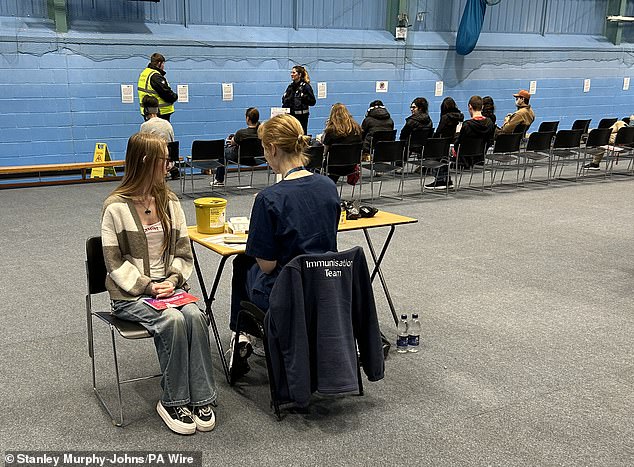
Students receiving vaccines and antibiotics from medical staff in the sports hall at the University of Kent campus in Canterbury
Wes Streeting today praised the ‘Herculean efforts’ to protect people from the unprecedented outbreak, which has been linked to super-spreader events at Club Chemistry nightclub in Canterbury, Kent.
The health secretary offered condolences to the families of the two students who have died and said his thoughts are with those in hospital ‘fighting this terrible disease’.
He said in the statement: ‘It has been an incredibly difficult week for those affected and for those working on the frontline response to this outbreak.
‘As we look ahead to another challenging week, I wanted to pay tribute to the Herculean efforts of everyone who has worked tirelessly to care for those affected and keep people safe.’
Mr Streeting thanked UKHSA officials and NHS teams, as well as school, college and university staff, and the ‘thousands of students, pupils and other members of the public who have so readily and responsibly come forward for antibiotics and vaccination’.
The UKHSA said it expects more cases to be downgraded in the coming days as further laboratory assessments are completed.
Dr Sherine Thomas, infectious diseases consultant at the UKHSA, said: ‘We continue to remain vigilant for new cases and work closely with NHS England and local authorities across the country to ensure that any new cases identified are responded to as quickly as possible.
‘It’s reassuring to have seen so many eligible young people come forward for antibiotics and vaccination, and we’d like to thank everyone involved in this effort so far.

Wes Streeting, Secretary of State for Health and Social Care arrives as students receive the Meningitis B vaccine at the University of Kent last week
‘Although the risk to the wider population remains low, it is still really important that people know the symptoms of invasive meningococcal disease and seek immediate medical attention if they or anyone they know develops them.
‘UKHSA continues to work with partners to identify contacts and offer necessary treatment.’
NHS Kent and Medway said more than 9,078 meningitis B vaccines had been handed out as of yesterday evening while 12,595 antibiotics had been administered.
The people who have died in the outbreak are sixth-form pupil Juliette Kenny, 18, who was described by her family as ‘fit, healthy and strong’ before her death, and a University of Kent student, 21.