


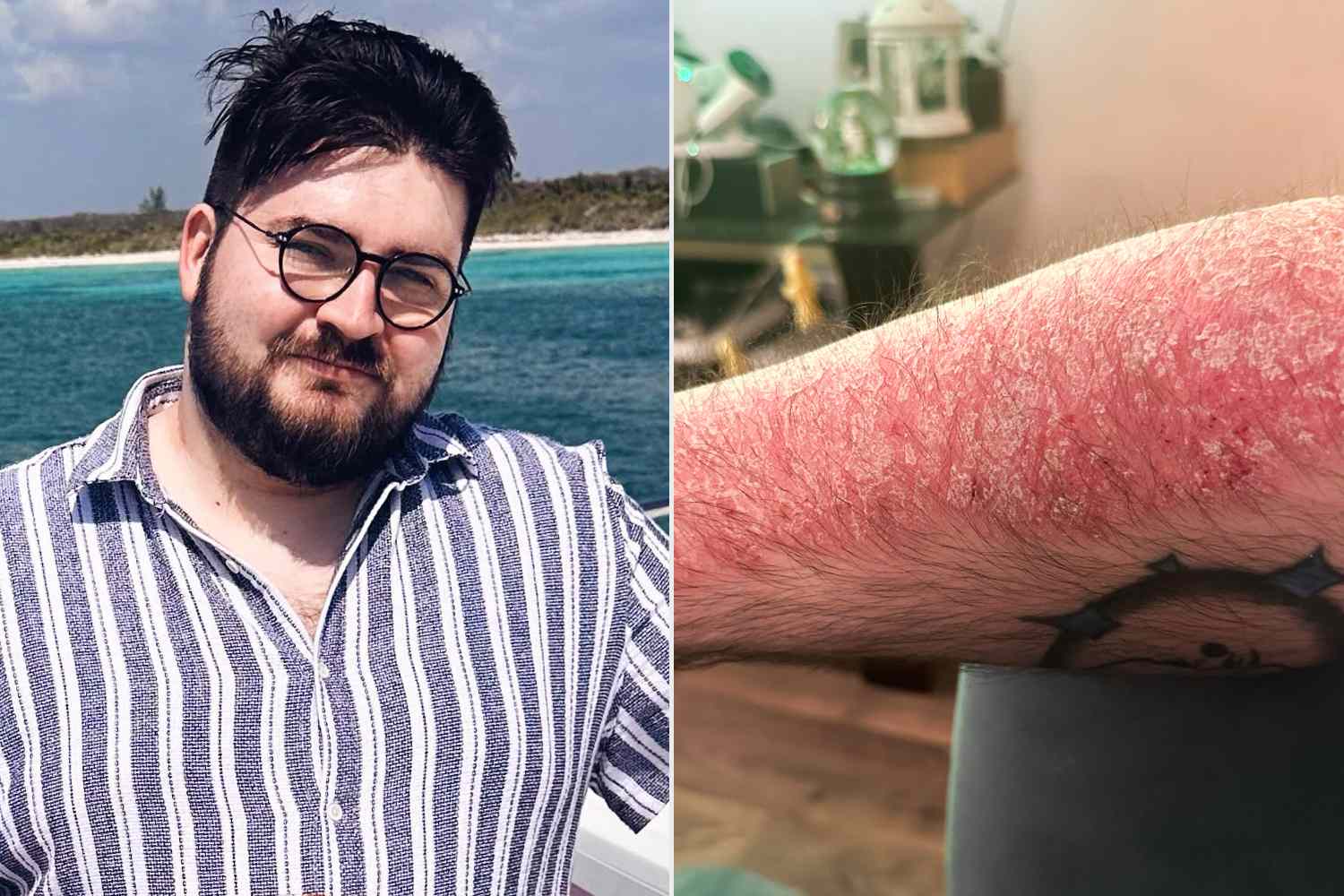
"Walking around with this very visible, very robust ailment has a pretty tremendous impact on your mental health," Maddox Patt tells PEOPLE
:max_bytes(150000):strip_icc():format(jpeg)/Maddox-Patt-psoriasis-031926-72c155838a8d452583b84003a79f5e82.jpg "Maddox Patt; Maddox Patt's psoriasis")
Credit: Courtesy of Maddox Patt
NEED TO KNOW
- A man recalls the emotional toll growing up with plaque psoriasis had on him as a teenager in an exclusive interview with PEOPLE
- “It was very difficult to walk around and have these large, scaly, red masses on my body and my face,” Maddox Patt, now 27, says
- The man’s ailments continued into his later years, but now, after joining a clinical trial for ICOTYDE, the first-ever oral option for the chronic autoimmune condition, he’s living his best life
In addition to dealing with, and juggling, all the challenges that come with being a teenager — from puberty and crushes, to college decisions and self-discovery — one man was also faced with another major obstacle: plaque psoriasis.
Maddox Patt was diagnosed with the chronic autoimmune condition, which causes thick patches on the skin, at age 12, right before his teenage years officially kicked off.
Recalling that his journey with psoriasis began on his leg, "in a spot where I got nicked by a rock," Patt, now 27, says, "From there, it kind of spread, and when I went through puberty, it started to appear on my arms and then on my back."
"Things were difficult as a teenager," he continues. "I was lucky, because I did grow up during a time of increased tolerance — where [it was understood that] words and stuff impact people, … but it didn't change having some inborn discomforts with looking like that and having those symptoms."
"It was very difficult to walk around and have these large, scaly, red masses on my body and my face," Patt adds. "It takes a large, emotional toll on you. It was very difficult to live and to be out in the world and experience things."
Never miss a story — sign up for PEOPLE's free daily newsletter to stay up-to-date on the best of what PEOPLE has to offer, from celebrity news to compelling human interest stories.

Credit: Courtesy of Maddox Patt
Plaque psoriasis, also known as psoriasis vulgaris, commonly affects areas such as the back, scalp, elbows and knees. The plaques are often itchy and can be painful.
According to Patt, who now works as an account manager, he often went out of his way to conceal his condition while growing up. "It was about hiding those plaques," he says.

Credit: Courtesy of Maddox Patt
Detailing that he would "wear long sleeves in the dead of summer," or specifically "go out at night more, because it’s easier to hide those plaques under the cover of darkness," Patt admits the hiding was a lot of work.
It also affected his fashion choices. "I always wore a lot of black, which kind of presented a difficulty, when you’re considering the flaking and all of that," he tells PEOPLE. "I'd get a lot of white spots all over my clothes."
The PEOPLE Puzzler crossword is here! How quickly can you solve it? Play now!
As Patt continued to age, his psoriasis became harder to manage. Plaque psoriasis is the most common type of the condition, affecting about 80% to 90% of people with psoriasis, and there is no cure.
"By the time I was probably 25, it was at its worst," he recalls. "It was all over. I had really large plaques all over my arms, my back, my legs — everywhere."

Credit: Courtesy of Maddox Patt
"Walking around with this very visible, very robust ailment has a pretty tremendous impact on your mental health. With acne, there are options for that — it’s very clear, the steps that you take, and they’re accessible. For psoriasis, those steps are not very clear, and a lot of that is not very well understood," Patt continues.
He adds: "It really does have an impact on a lot of aspects of your quality of life. Psoriasis is so visible, you could pick it out in a crowd. It can’t be hidden."

Credit: Courtesy of Maddox Patt
Eventually, Patt was introduced to ICOTYDE, an oral peptide medication designed to treat moderate-to-severe plaque psoriasis, and he joined a clinical trial. The U.S. Food and Drug Administration (FDA) approved the first-ever oral option for the condition, from Johnson & Johnson, on March 18.
"I’m feeling great. It’s like a night and day difference," he tells PEOPLE. "I’m not walking around with big, bloody sores and feeling itchy all the time. I’m able to leave that whole component of my life behind and move forward and start tackling other things."
Looking back at his journey joining the clinical trial for ICOTYDE, Patt says, "We live in a country where medical care is not really accessible for a lot of people, so clinical trials do offer a way for people to access these cutting-edge medications."
"Psoriasis is a quality-of-life thing, it’s not a life-ending disease, but being able to participate in clinical trials can be really, really helpful for a lot of people," he adds.
"It could be life-altering," Patt continues. "Obviously, this is a really revolutionary drug."