


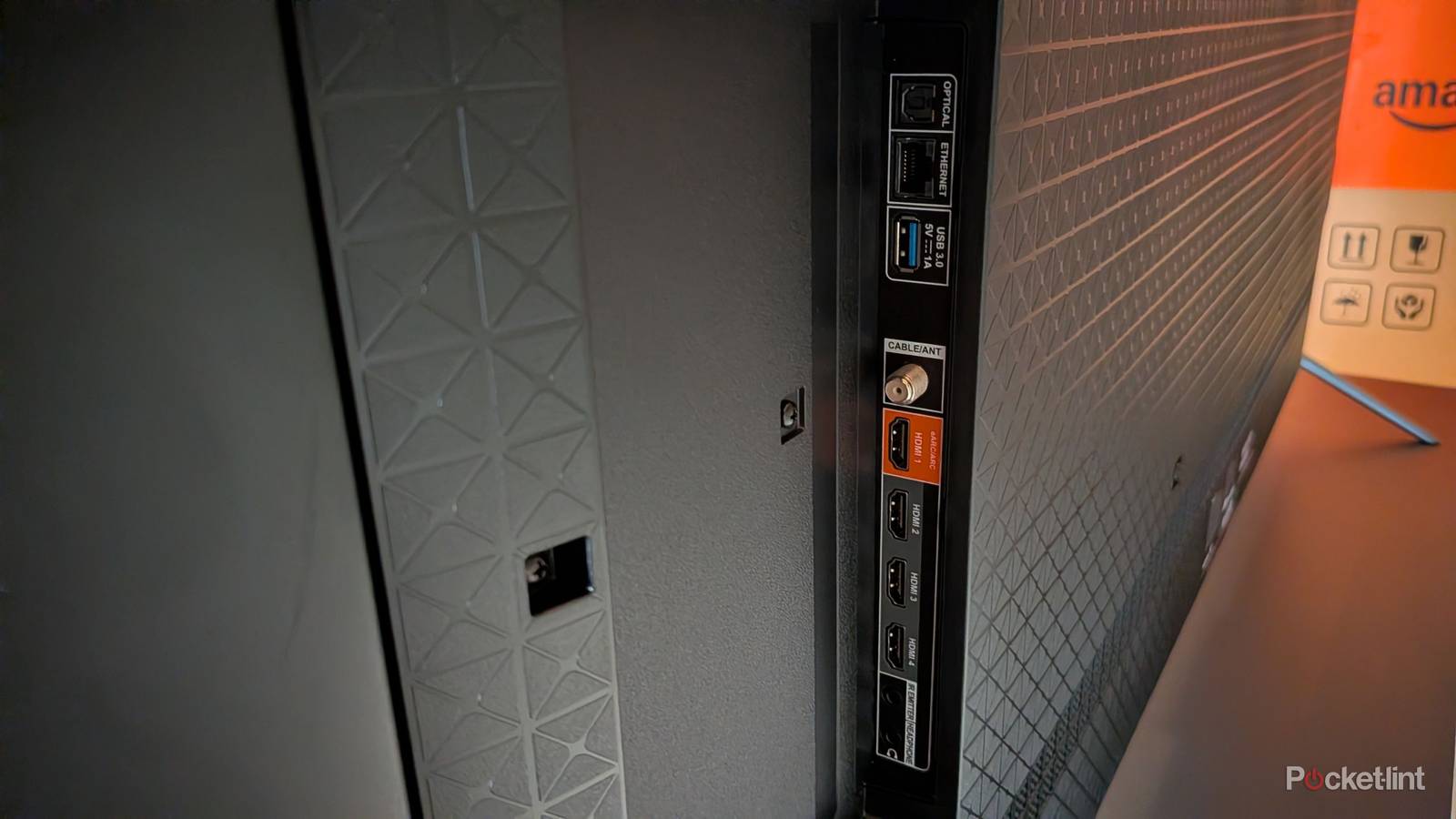
Your TV has quite a few HDMI ports available, and they aren’t all created equally. Depending on its age, you probably have a mix of HDMI 2.0 and 2.1 ports. While these ports will work no matter what you plug into them, that doesn’t mean everything has the same performance.
The HDMI 2.1 port is the key to getting the most performance out of your new devices. As you might’ve guessed by the name, 2.1 is newer than 2.0, and it means you can get some more bandwidth out of the port. This only applies if you’re using an HDMI 2.1 cable with the port, so make sure that you are.
With that out of the way, the only thing left to do is plug the correct devices into the port. Not everything will inherently see the benefits a 2.1 port provides, despite working in the port. A good rule of thumb is that your newer devices benefit from the port, so there’s really no going wrong if that’s the advice you follow.
Plug your game consoles into this
Your Xbox and PlayStation will thank you

If you have an Xbox Series X or PS5, you should plug them into your HDMI 2.1 ports. You don’t even have to think about whether your cable is a 2.1 one or not, because both of these consoles come bundled with one. All you have to do is make sure it’s plugged into the 2.1 port.
Game consoles see some of the biggest gains from using an HDMI 2.1 port. Both the Xbox Series X and PS5 have 120 FPS support, and the only way you can take advantage of that is by using one of these ports. Of course, you have to make sure your TV also supports 120 Hz. On top of that, VRR is a real game-changer, and the only way to use it is through HDMI 2.1, and again, a TV that supports it. If that’s the case, then make sure you use these ports. If your TV doesn’t have that functionality, then it’s not as important, but I’d still recommend using the ports since it’s just good practice. Something you should avoid, however, is the eARC port. That’s a port that’s meant for your sound system instead of a game console.
Older video game consoles, on the other hand, don’t get much from using this port. Your PS4 Pro and Xbox One X work with an HDMI 2.1 port, but there’s no real benefit from doing so. If your TV is packed with just HDMI 2.1 ports, then there’s no downside — but you won’t be seeing any gains.
Your audio receiver or soundbar should use this port
eARC, more specifically

Many modern TVs have an ARC or eARC port, and those also double as a 2.1 port. Before you get carried away and plug a game console into this port, understand what the port is for. An eARC port ensures you get the best audio quality flowing through your device. This means if you have a soundbar or audio receiver, you should plug these into the eARC port.
They will still work in another port, and there’s even a chance you might not notice the difference. However, if you went through the trouble of upgrading your audio already, you might as well make sure you’re using the correct port. If your sound system is old enough to not even have HDMI support, then you can just ignore this advice.
Your PC will enjoy it
High refresh rate gaming

As it turns out, a lot of the benefits that HDMI 2.1 provides enhance your gaming experience. Gamers, especially those on PC, value high refresh rates since PCs typically allow you to go much higher than what a console provides. In order to see those improvements, you need to make sure your HDMI cable is up to snuff. This means plugging an HDMI 2.1 cable into an HDMI 2.1 port.
This is nice if you’re gaming on a TV, because your TV probably has several of these ports available, but it’s a little more complicated when you take into account a traditional PC setup. I would imagine most people have their PC set up at a desk, and if they have a modern GPU, there’s a good chance they have several DisplayPort ports and just a single HDMI one, if that. DisplayPort just seems way more common on PC, so more people gravitate toward it.
There’s nothing wrong with using an HDMI cable with your PC, so don’t fret if you’re an outlier. If you want the best performance, make sure you’re plugged into an HDMI 2.1 port. The problem is that multi-monitor setups are a hassle using HDMI cables only due to the lack of ports. It’s a big reason I’ve largely abandoned HDMI on PCs, which is a shame to say. However, if you have just a single monitor, you’re sitting pretty.