



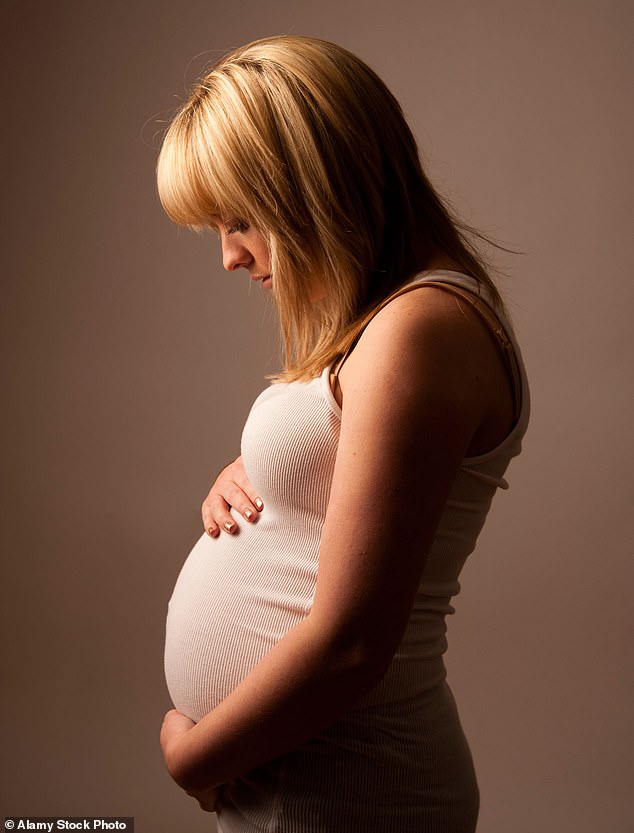
Soaring levels of obesity among pregnant women have seen the rate of caesarean births rise to a record high in Scotland.
New figures show that nearly half of all babies are now delivered by C-section.
At the same time, more pregnant women in Scotland than ever before are officially obese.
Amid warnings that maternal obesity is jeopardising the health of not just mothers but their children, a leading medical body is now calling for urgent measures to tackle the crisis.
The Royal College of Physicians (RCP) said: ‘Obesity in women is an urgent and growing public health concern, and action must be taken to reduce preventable risks to women and babies.’
In a new report, the RCP spelled out the risks associated with maternal obesity – including the fact that pregnant women who are obese are twice as likely to have a caesarean section.
Although it can be a lifesaving operation, it carries risk – like any surgical procedure – for both mothers and babies.
According to the latest update from Public Health Scotland (PHS), 45 per cent of all babies were delivered by C-section between July and September last year. In 2017, the rate was less than a third – just 32 per cent.

New figures show that nearly half of all babies are now delivered by C-section
Separate figures from PHS reveal that some 42,463 women in Scotland gave birth in the year ending March 2025. Of these, a record 28.5 per cent were obese, while a further 29.2 per cent were classified as overweight.
As well as being more likely to require a caesarean, obese women run a higher risk of suffering other complications during pregnancy and birth.
According to the RCP, they are three times more likely to develop gestational diabetes – a temporary form of high blood sugar which can make the foetus grow too big and lead to birth problems.
They are 2.8 times more likely to develop pre-eclampsia – pregnancy-related high blood pressure. And obese mothers, the RCP said, are almost twice as likely to suffer postpartum haemorrhage – a dangerous loss of blood after birth.
The RCP report highlighted that obesity among pregnant women is also linked to health problems for their children, with babies born to obese women more prone to obesity themselves, as well as respiratory infections, asthma and cardiovascular disease.
As well as cracking down on the sale of unhealthy foods, the RCP is calling for the government to improve education to ensure the impacts of obesity on pregnancy and birth are better understood.
Dr Kath McCullough, RCP special adviser on obesity, said: ‘Maternal obesity is one of the clearest signs that we need to tackle the root causes of obesity and weight gain.
‘We need bold, joined-up action across the system – from food policy and education to healthcare services, professional training and research to better prevent obesity in the first place and better support women living with obesity in the prenatal and postnatal periods.’
We need bold, joined-up action across the system – from food policy and education to healthcare services, professional training and research to better prevent obesity in the first place and better support women living with obesity in the prenatal and postnatal periods.’
The Scottish Government said it was cracking down on foods high in fat, salt and sugar as a way of preventing obesity.
A spokesperson said: ‘We are also successfully embedding early conversations on preparing for pregnancy into routine healthcare to optimise preconception health and care.’