



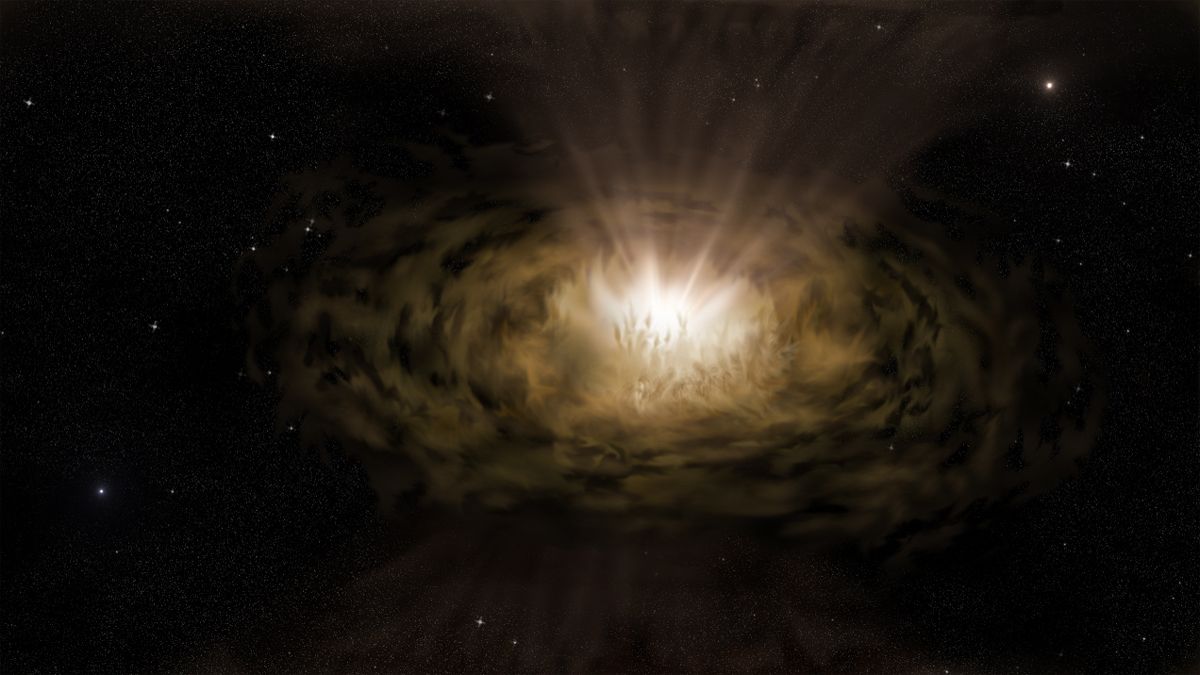
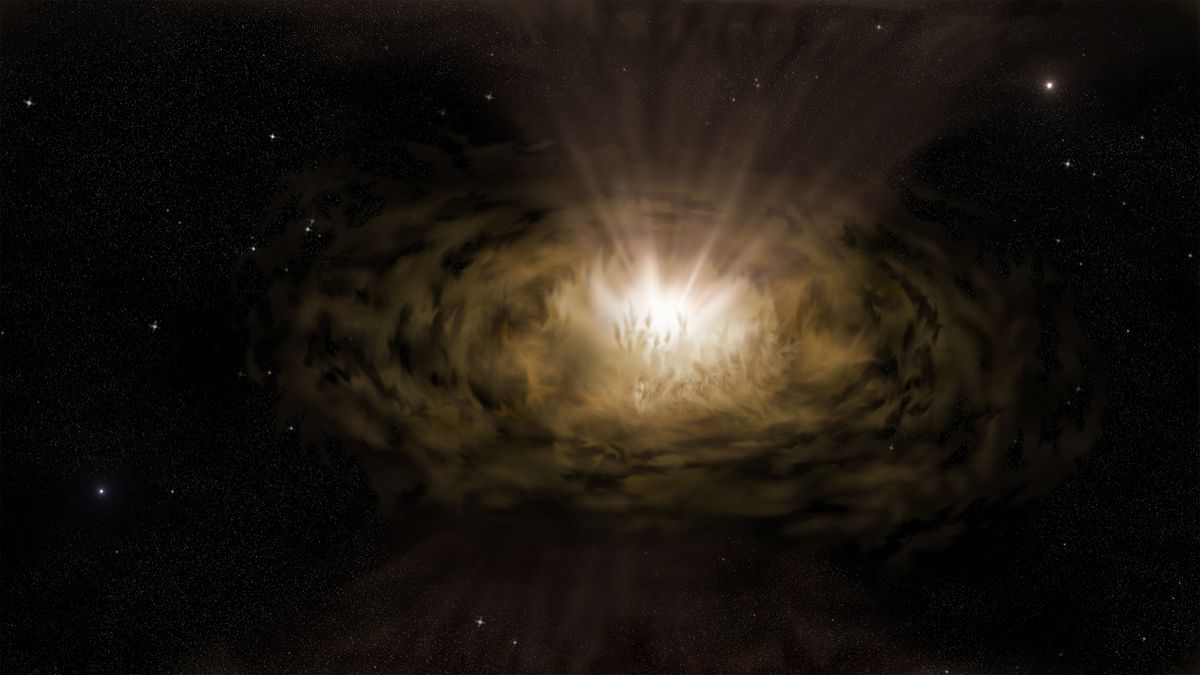
Woven through the universe are forces, often unseen, that dictate its grand design. For example, at the very heart of nearly every galaxy, we find a supermassive black hole. This isn’t just some cosmic void — it’s a powerful engine.
Even in its quieter moments, this engine profoundly shapes its surroundings. We call black holes with this kind of behavior Low-Luminosity Active Galactic Nuclei, or LLAGN. Picture galactic engines, just idling. They’re running, doing their thing, but at a much slower pace. Still, they influence entire galaxies. The quest for scientists? Deciphering the unique infrared language these galactic nuclei speak.
To listen to these quiet galactic whispers, scientists need the right tools. The James Webb Space Telescope is perfectly suited.
JWST sees in the infrared, light with wavelengths longer than what our eyes see. This is absolutely crucial. Gas and dust swirling around a black hole block visible light, but infrared light can punch right through. When gas gets energized by the black hole, its atoms get excited. The atoms then settle back down, releasing light at very specific colors — what we call emission lines. These are like a fingerprint for the gas, telling us what it is made of, how hot it is, and even how fast it moves. This energy often comes from the ionizing continuum, a powerful, high-energy flashlight from the black hole that strips electrons from atoms. These are the critical clues astronomers collect, piecing together the story of what happens near these massive black holes.
The celestial language spoken by LLAGN offers significant insights into how these quiet giants operate. JWST observations reveal how these black holes, even with less power, eject material and energize gas, influencing star birth and galactic evolution. These are known as kinetic feedback processes.
The black hole also actively pushes and stirs the galactic gas and dust. It is not a passive bystander. This can clear out regions, stopping new stars from forming, or sometimes compress gas, triggering a burst of star formation. It’s a complex dance these quiet engines perform regularly. A striking discovery is that these galaxies with LLAGN have unusually warm molecular hydrogen gas. Excitation temperatures are systematically higher than in other galaxies. This suggests that even an idling black hole can really heat its surroundings.
The team also measured the “full width at half maximum,” or FWHM, of these emission lines. FWHM tells us how wide a light spike is. A wider spike means the gas moves around a lot, or it is very hot. These FWHM measurements provide crucial data on the chaotic motions and conditions within the gas, showing just how much activity there really is.
Understanding these cosmic architects helps us grasp how galaxies evolve. Historically, astronomers assumed the supermassive black holes in LLAGN were largely inert. Just kind of … there. They thought the objects weren’t much, their power having sunk to the background. But this work shows that even these quiet engines have a profound impact on their galactic homes. The fact that they can eject material, energize gas and create unusually warm molecular hydrogen means they are active players. They influence new star formation and dictate how galactic gas moves around.
These LLAGN influence the cosmos, even when they are not roaring at full power.
This research is just one piece of a much larger puzzle. It opens up new questions about how common this warm molecular hydrogen is. It also prompts scientists to consider what other subtle effects these quiet black holes might have. The universe holds many mysteries, and scientists, with instruments like JWST, are quickly learning to speak its many languages. The quest for understanding these architects of the cosmos, it continues. Always.
Our journey through the infrared whispers of LLAGN reveals a universe far more interconnected and dynamic than we often imagine. The supermassive black holes at the heart of galaxies, even when seemingly dormant, exert a powerful, quiet influence. This latest research, powered by the vision of JWST, provides detailed measurements that paint a clearer picture of their ionizing continuum and kinetic feedback processes.
We have learned these cosmic engines actively sculpt their surroundings, impacting star formation and galactic evolution. The discovery of unusually warm molecular hydrogen in these LLAGN is a testament to the unexpected complexity hiding in plain sight. It is a reminder that the universe always has more to teach us.
With every new emission line we decipher, we get a little closer to understanding the grand cosmic story. The work of scientists, using advanced tools, is made up of these small, significant steps. They are pushing the boundaries of human knowledge, one quiet whisper at a time. And we will keep listening, because there is a whole lot more to hear.
The study is currently viewable on the pre-print paper repository arXiv.