

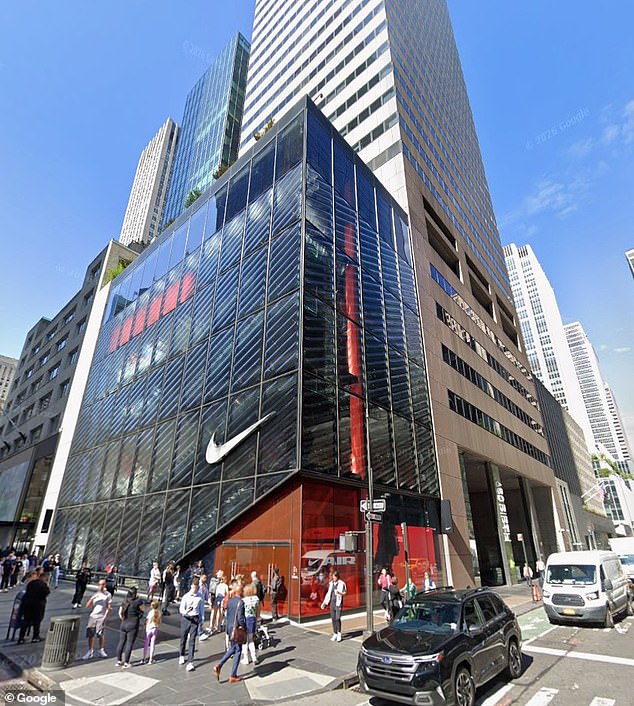
It towers over Midtown Manhattan like a monument to global capitalism.
Home to Nike’s flagship store and other corporate tenants paying millions in rent, 650 Fifth Avenue looks like a symbol of New York commerce.
But critics warn the building, owned by the Iranian Alavi Foundation, harbors a far darker story behind its glossy exterior.
It is the financial and symbolic heart of a network that stretches from the corridors of power in Tehran to mosques, classrooms and community centers across the US – a network now under renewed scrutiny as war between the US, Israel and Iran pushes tensions to a boiling point.
And in a twist that has stunned critics, a legal battle that once threatened to dismantle it has this month allowed it to survive.
The Alavi Foundation has been linked to radical Shia education centers, mosques and schools across the country – including a controversial complex in Houston, Texas, which erupted into outrage in 2022 after a video showed children waving green flags and wearing red martyrdom headbands while chanting praise for Iran’s leadership.
Its 36-story Manhattan tower remains a prized asset, valued at hundreds of millions – possibly more than $1 billion – with revenue from its corporate tenants reportedly flowing back to the regime in Tehran.
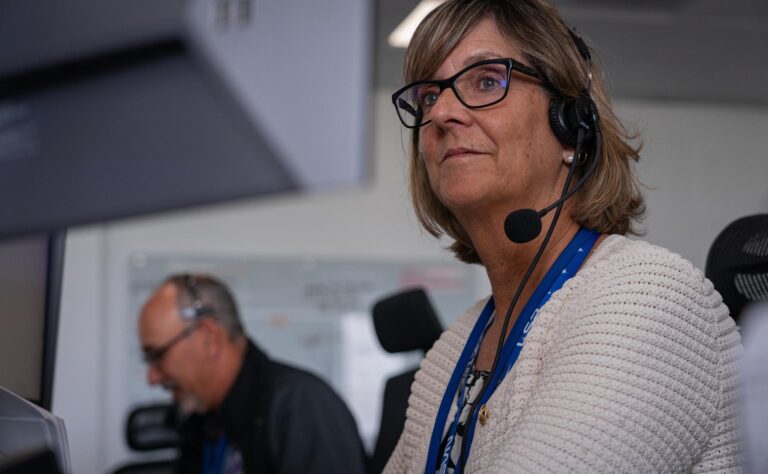
Among those raising concerns about Alavi’s influence is retired FBI agent Lara Burns, a veteran counterterrorism specialist who spent more than two decades tracking extremist networks inside the US.

The shoppers who frequent 650 Fifth Avenue are often unaware of the skyscraper’s long-standing ties to Iran’s mullahs

The foundation owns a a mosque complex in Houston where children were seen wearing martyr-style headbands and chanting support for the Supreme Leader in a 2022 video
She said the foundation aims to bolster support for Iran and fuel anti-American sentiment.
The US government first moved against Alavi in 2008, accusing it of acting as a front for the Iranian government and violating sanctions laws tied to the Fifth Avenue property.
For years, prosecutors pressed their case. In 2017, they appeared to win decisively when a jury found the foundation guilty of sanctions violations and money laundering.
But the victory collapsed on appeal and the ruling was overturned. The case was sent back and what followed was a grinding legal marathon – years of motions, delays and spiraling costs.
By the time a settlement was finally reached at the tail end of the Biden administration, the outcome surprised insiders, even as much of the paperwork remains sealed.
Instead of dismantling the organization, the agreement imposed financial penalties totaling hundreds of millions of dollars – funds earmarked for victims of Iranian-linked terror attacks and the US government.
After paying these, the settlement allowed Alavi’s vast assets – including the Manhattan skyscraper – to be transferred to a new entity: the Amir Kabir Foundation.
On paper, the new foundation was designed to operate independently, with revised governance and stricter safeguards. But critics say it is Alavi in a new form.

A George Washington University report showcased the Alavi Foundation’s network of mosques and schools across the US

Among them is the Islamic Education Center is seen in Rockville, Maryland, a center for the local Shia community

The Iranian network is under renewed scrutiny as war between the US, Israel and Iran pushes tensions to a boiling point
Organizers, for their part, insist the Alavi foundation is no propaganda operation – they say it promotes Islamic culture, the Persian language and humanitarian causes.
In a statement, Alavi’s attorney Daniel Ruzumna said the foundation would wind down and ultimately ‘cease to exist,’ rejecting claims it had acted on behalf of Iran.
Hamid Yazdi, the long-time president of Alavi and one of several leaders set to run the Amir Kabir Foundation, did not answer our request for comment.
But critics are unconvinced. They point to Yazdi and other familiar names in leadership roles, the same address, the same infrastructure, and they fear the same mission.
Jason Brodsky, policy director at United Against Nuclear Iran and a former White House policy fellow during the Obama administration, has questioned whether the new entity is truly independent.
‘It still retains many of the existing Alavi leadership team,’ Brodsky told the Daily Mail.
Others go further, describing the transition as little more than a cosmetic overhaul – a change in branding rather than substance.
Burns, now a terrorism researcher at George Washington University, is among the skeptics.
She believes the settlement may have failed in its most basic objectives. If the same network continues under a different name, she argues, then neither punishment nor deterrence has truly been achieved.

A shocking 2022 video showcased how the Islamic Education Center of Houston encouraged children to be ‘martyrs’ for the Islamic Republic

The Islamic Institute of New York and Razi School in Queens, New York City, are also linked to Alavi
After nearly two decades of legal warfare, Burns points to what she calls ‘litigation fatigue’ – cases that stretch over years become harder to prove – as a likely factor in the government’s decision to settle.
Few voices have been as blunt as Adrian Calamel, who studies Iranian influence networks in the West.
He described institutions linked to the foundation as potential ‘breeding grounds’ – environments where ideology is cultivated and reinforced.
In his view, such spaces can function as recruitment hubs, fostering loyalty and in some cases producing individuals willing to act in support of the regime.
He does not claim direct links to terrorist attacks. But he warns that the risk – however small – becomes more significant during periods of geopolitical tension.
The real concern, he suggested, is not organized cells carrying out coordinated operations. It is individuals. People who have absorbed years of messaging and may one day act alone.
Texas-based Iranian-American activist Reza Soltani has visited the group’s Houston facility, and described it as a state-controlled front, maintaining close ideological, political and operational ties to Tehran.
He said the institutions replicate the same messaging, leadership structures, and propaganda he witnessed in Iran – creating environments that feel less like places of worship and more like government outposts.

The IEC Houston boasts the K-12 Al-Hadi School for some 600 students at two sites across the Texas city

The Islamic Education Center Houston has repeatedly attracted protests by Iranian Americans who want to see their homeland revert to secular rule
‘As soon as I walked in, it felt like I’m walking into an Iranian government office,’ Soltani told the Daily Mail. ‘This was not a religious institution.’
The timing of the settlement has only heightened concerns. The war between the US, Israel and Iran has already claimed thousands of lives, rattled global markets and raised fears of retaliation far beyond the Middle East.
Security officials have warned of a range of potential threats – from cyberattacks to influence campaigns to isolated acts of violence.
Anti-American sentiment is rising in some regions. Intelligence agencies are on alert. And in that climate, the idea that a long-scrutinized network could continue operating – even in altered form – has sparked unease.
For Burns and others, the Alavi case is more than a legal saga. It is a warning. A demonstration of how resilient such networks can be – how they adapt, endure and outlast the efforts to dismantle them.
Buildings can change hands. Organizations can change names. But influence, once established, is far harder to uproot.
And as the world edges deeper into conflict, the questions raised by that tower on Fifth Avenue may only grow more urgent.