


I have to admit, I’m a sucker for new ways of interacting with devices. I recognize that some methods are mostly or entirely gimmicks, as anyone with a phone that supports air gestures will tell you. But as a teenager, I was big on using flightsticks for all the flight and space sims I was playing, and I’m a staunch supporter of AR and VR, even though the tech is only now starting to reach a point where the average person might be interested. Some of my favorite gaming memories come from Pavlov on my Quest 2.
I have nothing against touchscreen laptops, strictly speaking. But the more I think about them, the more I realize they don’t contribute that much to usability for most people, and they’re ultimately a compromised form factor, at least until things slim down even further. We’ll see if that happens, whether in Apple’s rumored touchscreen Mac or something after it.
The biggest problems with touchscreen laptops
From my perspective, anyway

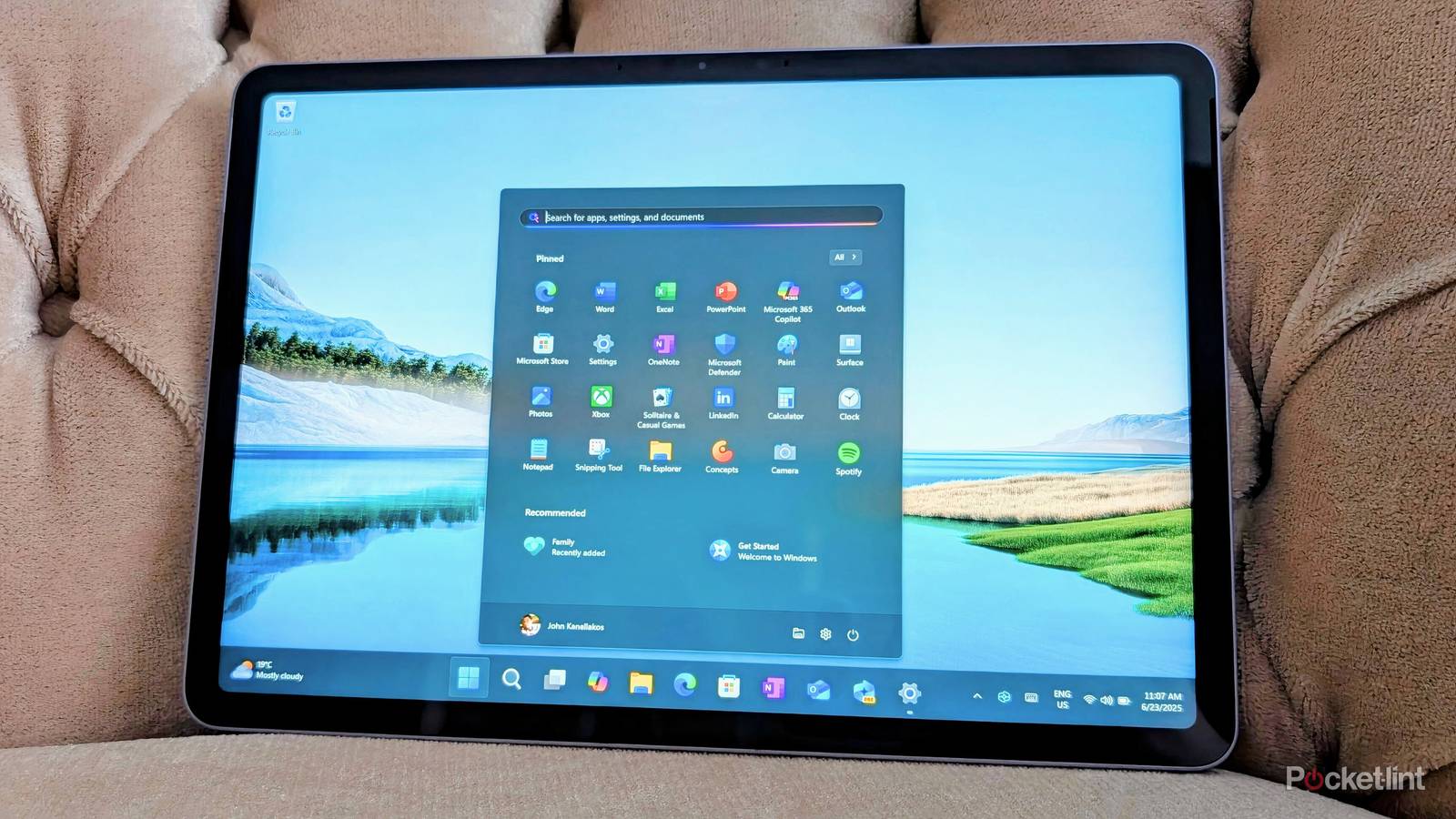
Perhaps the most fundamental issue is that Windows is not and has never been well-adapted to a touch interface. Microsoft briefly made a big push with Windows 8’s tile system, convinced that iPad-style devices were about to take over. It retreated when that OS was poorly received however, leaving us with Windows 11 as it stands today. There are still touchscreen accommodations in the software, such as multi-finger gestures and onscreen keyboards — yet much of Windows 11 is full of tiny icons and menus that are far easier to control with a mouse or trackpad than your finger. Often, even keyboard shortcuts are faster, say if you want to flip between apps or bring up Task Manager.
For everyday tasks, then, the only reason to touch the screen is usually large and obvious app controls, such as media playback buttons. This of course depends on developers building in these controls, and most Windows devs don’t bother designing with touch in mind, since they can’t assume a PC will be properly equipped. It’s the same reason why every desktop operating system is relatively plain — not every machine is going to be equipped with a monster GPU.
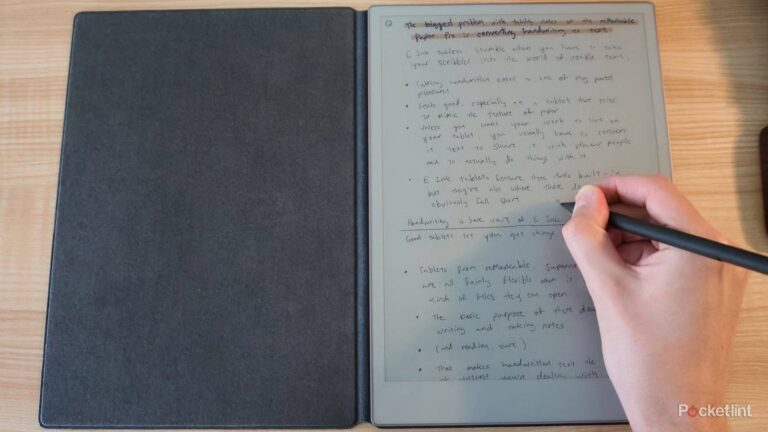
There are some areas where touchscreen laptops excel, naturally. For sketching, illustration, design, and photo editing, pairing a stylus with a laptop can be invaluable. Touchscreens in general can also be great for presentations, or “lean-back” entertainment, the latter mostly if you can flip a laptop into a tent mode. That’s one of the things I appreciate about Lenovo’s Yoga devices.
For tasks like illustration, you’re probably better off with a dedicated tablet of some sort. For entertainment that isn’t gaming, a laptop tends to be overpowered and unnecessarily bulky.
Those use cases are the exception rather than the rule, though, and actually highlight the form factor compromises I was talking about in the intro. For tasks like illustration, you’re probably better off with a dedicated tablet of some sort, whether it’s an iPad or a Wacom. A laptop is inherently heavier and more awkward to draw on. For entertainment that isn’t gaming, meanwhile, a laptop tends to be overpowered and unnecessarily bulky. There’s a reason why I bring an iPad on flights instead. Heck, if you are into gaming on planes, you should probably be picking up a handheld like the Steam Deck or ROG Ally X.
Something newcomers are dismayed to discover about having a touchscreen is relatively mundane — if you actually do make use of it, it quickly becomes a fingerprint magnet, covered in oily smears. That’s true of phones and tablets too, but the difference is that few people spend hours at a time on those devices. Unless you keep on top of cleaning every day, you’re going to be staring at a lot of smudges while you write an article or build out that spreadsheet.
The price-to-performance tradeoff
Money should always go where it counts

All this might be academic if it weren’t for the price premium touchscreens command. The tech can potentially add a few hundred dollars to the price of a laptop, owing not just to the touch layer, but other design elements needed to support it. A display might need reinforced glass, for example, or an elaborate hinge. Then there are battery concerns — though a touch sensor isn’t a massive power drain, it is a constant one, and that can matter if you’ve been on the road all day without a chance to stop and recharge.
For me, at least, it just makes far more sense to invest in other specs, like extra storage or a faster GPU. These may not be as impressive in the short run if your needs are relatively basic, but they can open up more apps, and keep a machine running smoother for longer. A laptop with an integrated GPU can sometimes struggle with graphics-heavy productivity tools, let alone 3D games. Simply stepping up to a model with a dedicated AMD or Nvidia GPU will make a world of difference. With the cost of RAM being what it is under the strain of AI datacenters, the cash savings from skipping touch could be necessary to make buying any laptop viable, in some circumstances. I wish I was kidding — what a dystopia we live in at the moment.
Technology should, hopefully, make some of these complaints moot in the next several years. Silicon-carbon and solid-state batteries are poised to make laptops thinner and lighter while they retain or expand battery life, and touch components should hopefully keep dropping in price.
If these problems are valid, you might be asking why laptop makers keep pumping out touch models for more than just niche interests. I’m assuming that they do have mass-market appeal — just that it’s lost on me. Many people can’t justify both a PC and a dedicated tablet, for instance, in which case a touchscreen laptop may be a way of getting some of the benefits of each form factor, no matter that there are compromises. And I shouldn’t discount the appeal to people who’ve grown up on touch interfaces, or otherwise find it less intimidating to tap on what they want instead of navigating with a mouse and keyboard. Still other people may have the budget for whatever they feel like, and prefer having the option of touch, regardless of how frequently they actually use it. My PEV can travel far further and faster than I need for now — but it’s nice knowing that if I want to join a group ride across town, I’m not stuck.
Technology should, hopefully, make some of these complaints moot in the next several years. Silicon-carbon and solid-state batteries are poised to make laptops thinner and lighter while they retain or expand battery life, and touch components should hopefully keep dropping in price. It is on companies like Apple and Microsoft, mind you, to make their operating systems more touch-friendly without sacrificing features the way most tablets do. Apple’s touchscreen Mac could be a pivot point in that regard. Typically, Apple designers have a knack for solving the interface problems that rivals fail to grasp.