


These days, we take internet-based chatting for granted. We’re spoiled by a massive (and admittedly fragmented) ecosystem of direct messaging (DM) services on our phones and PCs, ranging from WhatsApp, to iMessage, and everything in between.
Just about every modern social networking platform features its own DM’ing service, too, and the web-based Rich Communication Services (RCS) standard has even begun to supplant cellular-powered Short Message Service (SMS) texting in the North American market.
Of course, today’s mobile-first messaging scene is a product of the modern internet age we live in. To get to this point, plenty of competing services have come and gone, with some proving more influential and iconic than others. These early platforms facilitated what was known at the time as IM’ing (instant messaging), with the ‘instant’ moniker hinting at the then-novelty of immediate text delivery.
Here are six of the most beloved instant messaging services from back in the day, each of which has achieved legendary status due to its outsized legacy, its influential set of features, and its previously massive user base.
AOL Instant Messenger (AIM)
Launched in 1997, retired in 2017

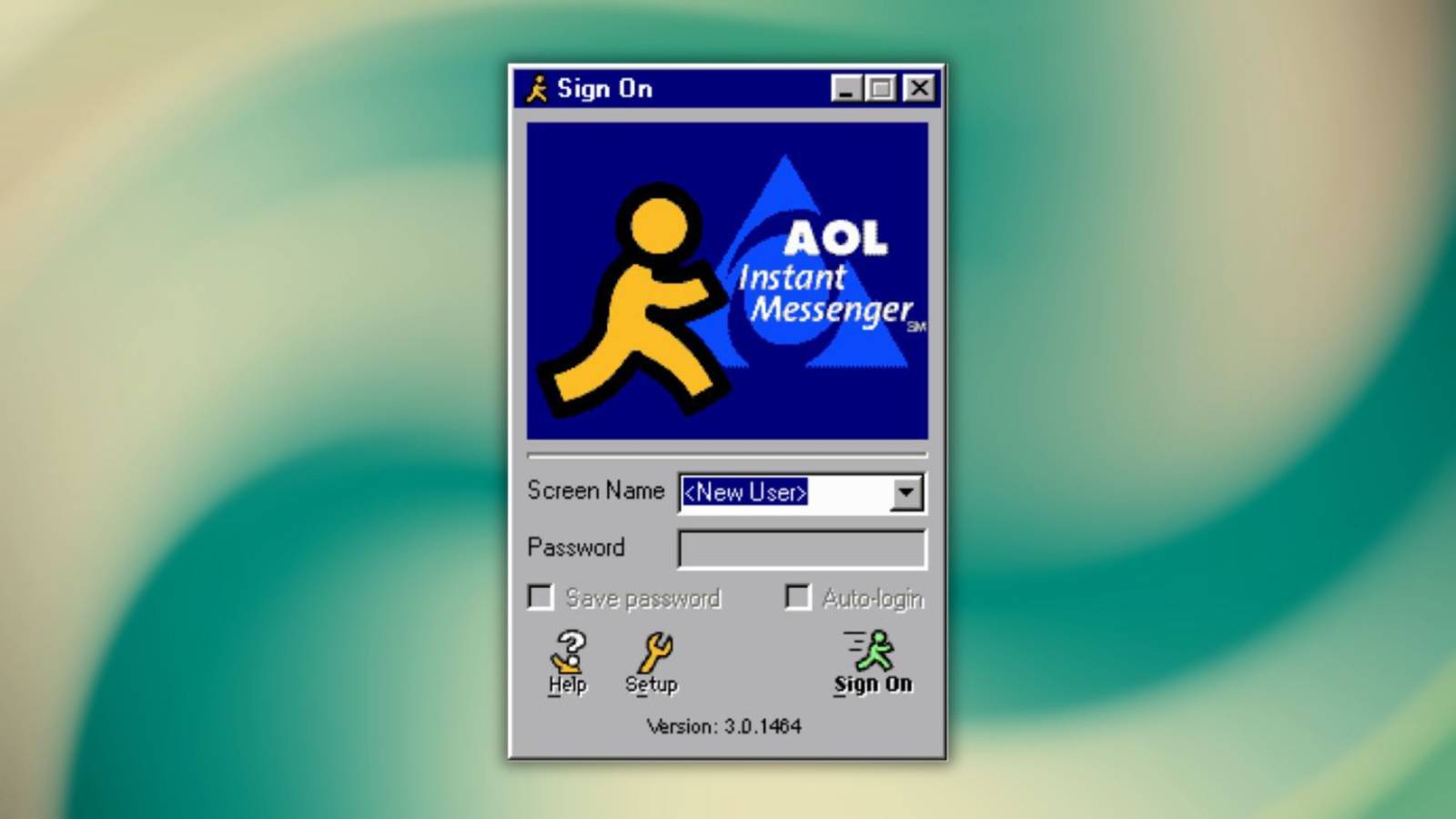
For many, America Online (AOL) is synonymous with the early days of dial-up internet. The company was also a pioneering force in the instant messaging era with its AIM service, which became extremely popular in the late 1990s and into the early 2000s. Notably, AIM offered a unique ‘away’ feature that allowed users to post their current status, which was often used to provide updates in the same vein as a modern social media post.
Yahoo! Messenger
Launched in 1998, retired in 2012

Yahoo! Messenger, originally known as Yahoo! Pager, was another pioneer of instant messaging. By creating a Yahoo ID — which also unlocked access to Yahoo! Mail — users could send text, photos, and other files to one another in real time, with Custom Status Messages, chat room integration, webcam video calling capabilities, and more. Yahoo! Messenger was also quite customizable, with various skins and official themes available to jazz up the main interface’s look and feel.
MSN Messenger
Launched in 1999, retired in 2014

MSN Messenger, which would later be rebranded to Windows Live Messenger, is yet another iconic instant messaging platform that dates back to the late 1990s. With support for both text and video conferencing, MSN Messenger was particularly popular amongst Windows PC users during its heyday. Notable features included the unique ‘nudge’ effect to get someone’s attention, as well as the collection of animated ‘winks’ that could be sent to users for a splash of quirky wholesomeness.
Skype
Launched in 2003, retired in 2025

Skype was once the de facto internet-based voice and video calling service for PC users, and it also included powerful instant messaging capabilities to boot. Later purchased by Microsoft, Skype went on to supersede MSN Messenger, becoming the company’s flagship messaging service. Uniquely, Skype offered debit-based access to landline and cellular phones, making it a highly functional videotelephony product. Ultimately, Skype was sunset in favor of Teams, which offers modernized conferencing features designed for hybrid work conditions.
BlackBerry Messenger (BBM)
Launched in 2005, retired in 2019

Back when SMS / MMS texting was the only way to message other people via mobile, BlackBerry’s internet-based BBM service was a revelation. Using a unique BlackBerry PIN system, BBM was originally exclusive to first-party BlackBerry handsets. Over time, BBM became a killer app, and it went hand-in-hand with the company’s sought-after physical phone keyboards. Many modern messaging niceties, including read receipts and typing indicators, were first popularized during the BBM era.
Google Talk
Launched in 2005, retired in 2015

Google has a long and complicated history when it comes to consumer-facing messaging products. The company has debuted and killed numerous services over the years, but perhaps none are quite as notable and iconic as Talk. Google Talk was a popular utility during the early days of the Android mobile operating system, and its integration into Gmail made for a near frictionless end-user experience. Eventually, Talk was sunset in favor of Hangouts, which would later split into separate Chat and Meet experiences.