
When I was growing up, one of the ways I knew a friend’s parents were rich — relatively speaking — was if they had a decked-out surround-sound system hooked up to their TV. At the time, just about any home theater included not just separate satellites and a subwoofer, but a rack with several other pieces such as a VCR and a multi-disc CD player. At the heart of it all was a receiver, acting as the highway for audio and video to get where it needed to go. Back at my own home, I was happy enough just to have a TV that wasn’t built into furniture.
Receivers certainly haven’t vanished from the home theater market. But they’re not nearly as essential as they used to be, and I’ll explain why in this guide. I’ll also explain when you might want to step up to the big leagues, so to speak. The quick answer is that fewer and fewer people need to play ball.
Why you probably don’t need a receiver anymore
The march of progress, or at least simplicity

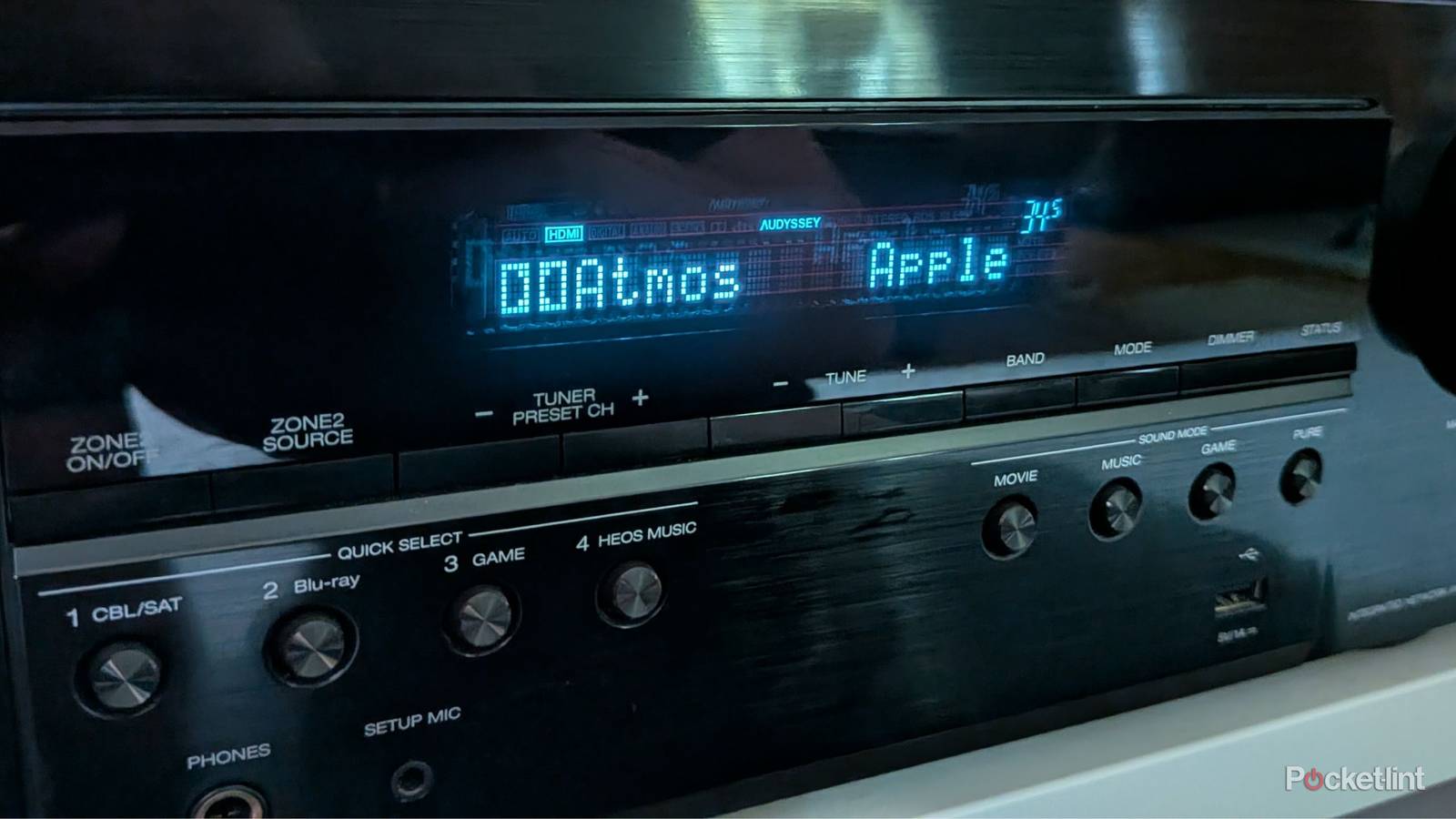
For decades, a receiver served some very basic functions. It was how you joined multiple speaker channels together, and handled codec processing once the first digital formats emerged. It also made it easier to centralize and switch input sources. It’s common for many receivers to have integrated amplifiers and radio tuners, the former allowing the use of passive speakers.
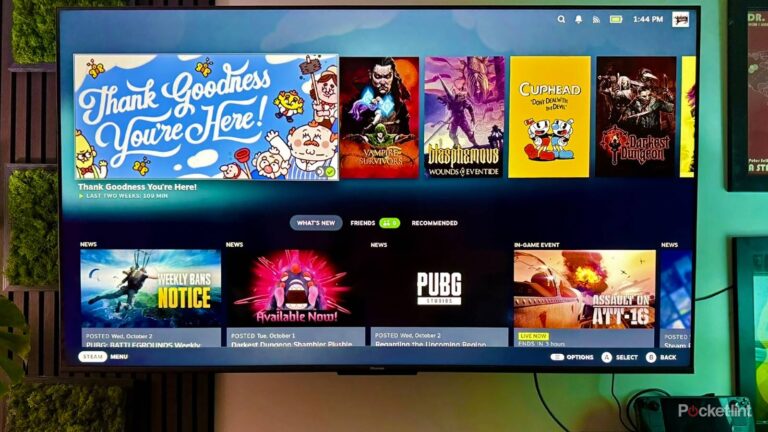
It’s not one factor that reduced the need for receivers, but several, including the rise of smart TVs. A receiver is no longer required for codec processing — your TV can handle many formats on its own. Most TVs don’t have the speakers to do justice to 3D audio formats like Dolby Atmos, of course, but they can at least handle the data natively, or serve as a passthrough.
Related to this is the continuing evolution of HDMI. With many peripherals, there’s no longer any need for separate audio and video cables — your console or Blu-ray player can hook up to a single port on your TV. With the arrival of HDMI 1.4 in 2009, TVs gained ARC, short for the Audio Return Channel. This allowed not just HDMI-based speakers, but the ability to share audio with any other HDMI device plugged into the same set. Your TV became the receiver, in effect. HDMI 2.1 introduced eARC, including support for lossless audio and improved CEC functionality.
Even if you do care about high-end audio, there are soundbars that cater to this, equipped with drivers firing at your ceiling and walls to replicate Atmos or DTS:X.
If there’s one thing that’s “killed” the receiver, though, it’s probably the soundbar. For a lot of people, a vanilla 2.1- or even 2.0-channel bar is a meaningful upgrade to their TV’s sound, so it would be ridiculous from their perspective to spend more on a receiver-based system. Even if you do care about high-end audio, there are soundbars that cater to this, equipped with drivers firing at your ceiling and walls to replicate Atmos or DTS:X. The Sonos Arc Ultra includes a whopping 14 drivers, and it’s far simpler to set up than a 9.1.4 system with separate channels would be. I know I’d rather hook up a couple of cables and be done with it than spend a day mounting and wiring satellites.
Speaking of Sonos, some multi-channel speaker systems have gone (mostly) wireless by adopting Wi-Fi. My Sonos Ray connects to my TV via optical — but if I wanted to build out a 5.1-channel surround system, all I’d have to do is link compatible products with it via the Sonos app. Some Apple TV 4K owners buy a pair of HomePods for Dolby Atmos, with no intention of ever asking Siri about the weather or turning down their thermostat. If you can afford these kinds of setups, it may feel downright archaic to insert a receiver into the mix.
So when do you need a receiver?
The quest for perfection

There are still advantages to having a receiver, mainly if you’re an audiophile. Distinct channels will always beat a soundbar for accurate sound placement, all else being equal, and it’s frequently cheaper to buy and install a wired receiver-based system than to go with an equivalent Wi-Fi product. Going wireless may not be an option at all if you want to build a cinema-quality Atmos setup with a single speaker per channel — even Sonos makes you use a few multi-channel components.
A receiver also opens up access to passive speakers, as I mentioned. That can be a big deal for enthusiasts. There are models costing thousands of dollars, yet they’re all useless without a sufficiently powered amplifier and a way of joining them.
Distinct channels will always beat a soundbar for accurate sound placement, all else being equal.
Along similar lines, a receiver can also be a way of recycling old hardware. A 30- or 40-year-old speaker might not have all the latest bells and whistles — but it can still sound amazing with the right specs and a receiver to decode incoming signals. There’s no sense dropping $1,000 or more on a new setup when you can spend far less to reuse your parents’ old equipment.
In some circumstances, you may get better processing from a receiver, and/or other unique features. If nothing else, a receiver can help organize an unruly configuration, letting you stack multiple peripherals in one place while connecting them to your TV with a single HDMI cable. It’s no secret that TV makers can be stingy with their built-in ports, limiting you in either quality or quantity. A receiver will expand your input options, although a switch can potentially accomplish the same feat for less cash.
Are receivers on their way out?
Wait, I’m not quite dead yet

It doesn’t seem like they’re about to exit anytime soon. There are still many brands and models on the market, and you can find dedicated news sites and user communities talking about them online. I’d also note that no matter how niche a product becomes, if someone’s willing to pay for it, someone will be willing to make it. Consider one of my main hobbies, electric unicycles. There are several major brands out there despite the fact that even the biggest cities may only have a few dozen riders.
The convenience of a soundbar seems to be irresistible, even among people who do consider themselves audiophiles.
That said, the writing may be on the wall. Receiver sales have been on the decline in recent years, and there’s no sign of an impending reversal. The convenience of a soundbar seems to be irresistible, even among people who do consider themselves audiophiles. On a technological level, there’s also no particular reason why receivers can’t be replaced completely. Affordable, fully wireless 3D audio is no doubt coming at some point, along with higher-quality wireless video. By 2030, many people will probably look at receivers the same way people born in the ’90s or 2000s look at vinyl record players — as a relic from a bygone age that might be fun to indulge in, but has no purpose from a practical perspective.