


Voracious readers need devices that can keep up with their TBR piles. I’m the first to appreciate the hundreds of books I’ve read thanks to the convenience of my trusty Kindle Paperwhite. But don’t be fooled — not every book I read lives behind that handy E Ink display.
In fact, there are several types of books I downright refuse to read on my Kindle. Sure, my favorite hardcovers and beautiful box sets adorn my shelves, but so do a variety of other books that will never see the light of an e-reader’s screen. Kindles make binge-reading sessions much easier and more comfortable, but there are some very specific cases that I reserve for physical paper pages. Here they are.

- Storage
-
16GB
- Brand
-
Amazon
- Screen Size
-
7-inch E-ink (300ppi)
- Connections
-
USB-C
Personal development books
That I actually want to annotate

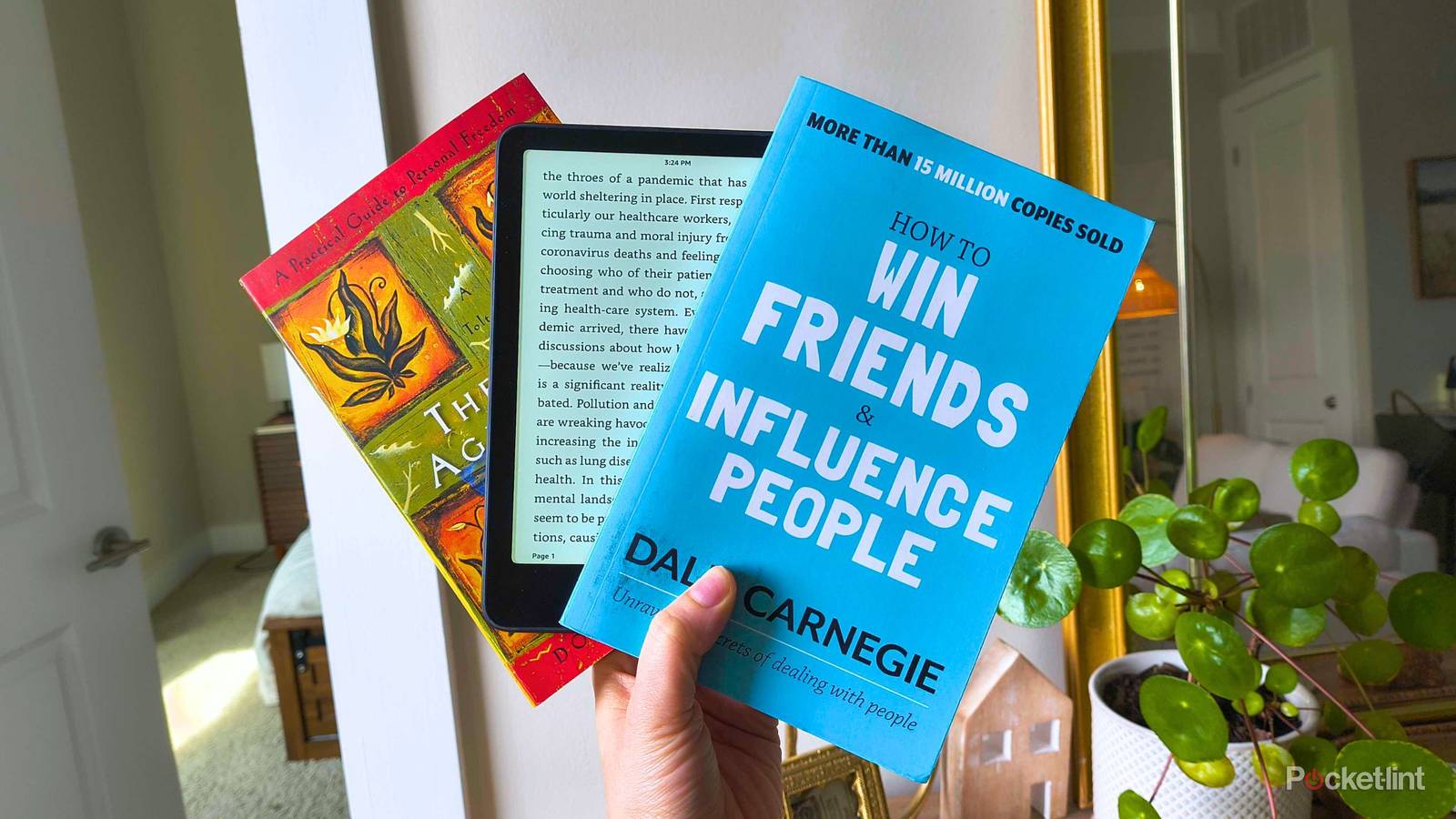
It’s rare that a self-help book earns its way into my rotation, but once or twice a year, I decide to read something that might improve my personal or professional life. My favorites over the years include anything by Dr. Joe Dispenza, Atomic Habits by James Clear, and the classic How to Win Friends and Influence People by Dale Carnegie. Because the selections are far and few between, that’s the first reason I’ll buy their physical versions: they don’t take up much space on my shelf at all.
And if I love them, they earn their rightful place as trophies among my beloved fiction novels and box sets. I tend to reread my favorite self-help books over the years, and when I do, I always discover something new in them. Personal development never ceases.
There’s nothing quite like seeing how far you’ve come through your own thoughtful handwriting.
Reading self-help books on an e-reader doesn’t feel authentic. You can take notes and make annotations on a Kindle, sure, but it’s not the same as making handwritten notes on paper pages. Each reread, I choose a different colored pen to make annotations — that way, when I flip through years after I bought it, I can see the ideas or observations previous versions of myself made. There’s nothing quite like seeing how far you’ve come through your own thoughtful handwriting.
Books I might want lend
Share the love (even if you don’t get them back)

Especially if they’re short. I think lending or sharing a book with someone is the ultimate way to say “This made me think of you.” This goes for self-help books to pass along to friends or family who might need them, and especially fiction stories I’m desperate to share with my bookish friends. What better way to convince my friends to commit to all eight Throne of Glass books without losing a few inches off their wallet?
Lending e-books just isn’t the same. Passing a physical book from one hand to another (bonus points if it’s cracked and worn) just feels so innately human that I’d never try to outsource it to a digital format. Also, it’s just so much simpler than finding a way to share e-books by transferring files from one device to another.
And if I don’t like a book, I can always donate it to my neighborhood lending library. Nothing stays there long, thanks to my local community’s seemingly insatiable reading habits.
Satire, poetry, and essay collections
Things you pick up sporadically

Like coffee table books, these works aren’t just pages between two covers. Rather, they’re bits of interactive art you scatter through your home with the hope that they’ll catch a guest’s eye and inspire them to pick one up. Satire, poetry, and essay collections are meant to be consumed over months, years, or even decades — no one really sits down to binge-read a collection of poems by William Wordsworth or Robert Frost. In fact, those poets would personally beg you not to do so.
Satire, essays, and especially poetry are supposed to catch your eye during different seasons or when you need them, which is why I opt to place them around my home where they might stand a chance to call out at me. If I were to add them to my Kindle library, I can almost guarantee I’d never once open them.
Children’s books
Need I say more?

At the ripe age of 25, I’m not buying many children’s books to read for myself (ones that double as profound coffee table books are the exception, thank you very much). Instead, I buy them as time capsules for what I hope to read to my own children someday. With AI-illustrated and written literature for children on the rise, I want to make sure I get my hands on as many authentically created stories as I can.
But for those of you with children, I think there’s no replacing the feeling of helping your parents turn the page after they’ve read it out loud to you. Tapping or swiping feels like deviating from something sacred, and making your little one stare at a screen instead of a paper page before bed can’t be the best idea — even if it’s gentle E Ink.
Plus, artwork won’t be nearly as vibrant or large on an e-reader’s screen. This may seem obvious to most readers (though some parents may disagree, and I’m open to friendly discourse), but I’ll never purchase a children’s book if it isn’t in physical format.