
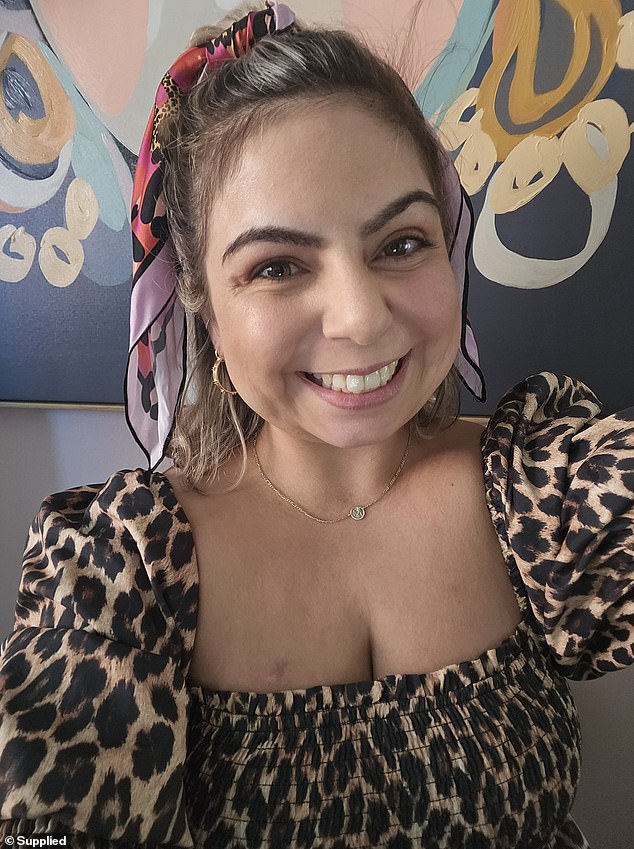
When 32-year-old Chantelle Asciak went to her doctor in February 2022 with a scratchy throat and chest pain, she was sent away with a prescription for antibiotics and a diagnosis of a chest infection.
’I’d been getting really tired in the weeks leading up to it, but I had a busy job as a visual merchandiser, I was on my feet all day, and I thought it could be related to that, or possibly anaemia,’ she tells Daily Mail.
But when, after a month, the pain in her chest hadn’t got any better, Chantelle went back for a second opinion.
’By this stage, it was so bad at work that I was having trouble catching my breath,’ she says. ’I just broke down at work and went straight to a respiratory clinic.’
In spite of Chantelle’s obvious distress and past history, the respiratory clinic was more worried about Covid than anything else.
’I told them I’d tested myself and was negative, but they tested me again anyway. In the end, they sent me away with more antibiotics for a chest infection.’
This pattern of dismissal from doctors continued over the course of the next few months, even in the face of worsening symptoms.
’It was suggested that it could be stress, or a hangover from having Covid,’ says Chantelle, from Melbourne, Australia.

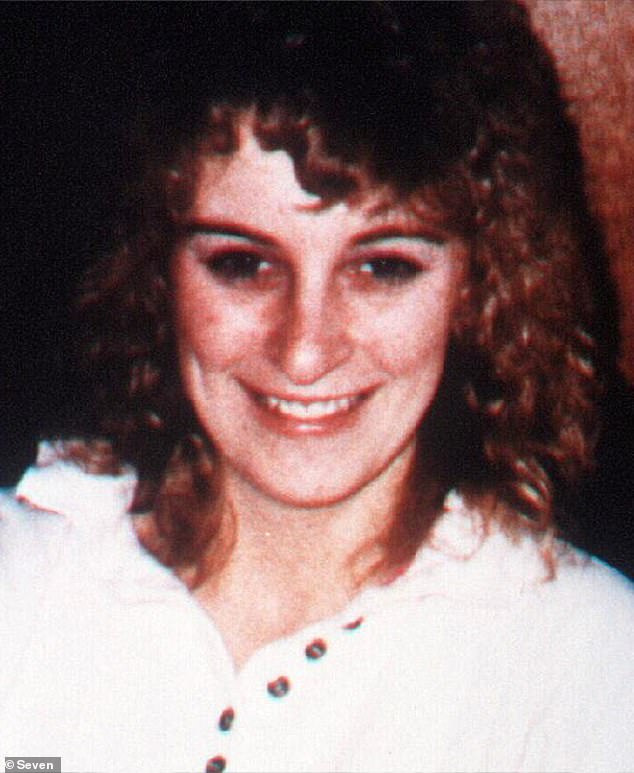
In 2022, 32-year-old Chantelle Asciak went to the doctor with a persistent scratchy throat and chest pain. She was diagnosed with a chest infection and sent home with antibiotics

‘I couldn’t sleep all night. I was in tears… I could barely draw breath and it felt like someone was choking me,’ Chantelle said of the symptoms doctors repeatedly dismissed
After tests with her gynaecologist for her endometriosis treatment revealed alarmingly low iron levels, Chantelle returned to her doctor and was told she was anaemic – but still not offered any follow-up.
By late August, with her face now swelling on top of relentless cold and flu‑like symptoms, Chantelle again sought medical help,
’By this stage, I couldn’t lie flat in bed – it felt as though something was crushing my chest,’ she recalls.
’I told my mum, “I have to go to the doctor.” I couldn’t sleep all night. I was in tears… I could barely draw breath and it felt like someone was choking me.
’When the ambulance arrived, they put it down to an anxiety attack, and put me on a telehealth call with a doctor who, again, diagnosed a chest infection.’
After another couple of weeks of anti-inflammatories and antibiotics, Chantelle’s condition continued to worsen.
Her face swelling was now so severe that she could barely see, her entire upper body was full of fluid, and she could not lie flat at all for the crushing pain in her chest.
Desperate, Chantelle and her mother went back to the doctor’s clinic, by which stage her old general practitioner had moved on.

Chantelle underwent a CT scan on September 8. The next day, she was told she had lymphoma, a blood cancer, and was sent directly to hospital for treatment

Chantelle was eventually diagnosed with primary mediastinal B-cell lymphoma (PMBCL), a rare and aggressive non-Hodgkin lymphoma. ‘I found out later that the growth in my chest – that was causing the pain and pressure – was the size of a small watermelon’
’They finally ordered a chest X-ray, which I had, and then it was four days of me calling for the results and begging for an answer before they told me, “OK, come in.”’
When she presented again to the clinic, the only doctor available was a paediatrician – who Chantelle says might just have saved her life.
’He told me to stop taking the anti-inflammatories and go for a CT scan right away,’ she says.
’I think he knew then what it was, but if he hadn’t sent me for that scan when he did, I don’t think I’d be here right now.’
Chantelle had a CT scan on September 8. The next day, she was told she had lymphoma, a blood cancer, and was sent directly to hospital for treatment.
’My mum and I just broke down in tears when the doctors told us,’ she explains, ’and then, it was all go. I had to organise my dog, Bobby, to be cared for, and I didn’t know how long I’d be in there, or even what kind of lymphoma I had.’
From there, things kicked into overdrive.
’They couldn’t get needles into my arms because my upper body was so swollen, so they had to put them in my groin and feet,’ Chantelle says.
Soon after being admitted to Royal Melbourne Hospital, then to the Peter MacCallum Cancer Centre, Chantelle was transferred to ICU, because her back had stiffened up and her condition had deteriorated.
’I had two nurses behind me now from the Royal Melbourne holding me up on ten pillows to stabilise me for them to get a biopsy from the lymphoma that was in my chest.’
Before Chantelle’s team even had a definitive diagnosis, they knew they had to do everything they could to reduce the growth.

Chantelle has now been in remission for almost three years and says: ‘The one lesson I’ve come out of this with is how important it is to advocate for yourself medically’
’It was 2am, and the specialist came in, and they’re like, “OK, we’ve got two options. We can intubate you to help you breathe, but we’re not sure if it’s gonna crush your heart. But then if we don’t intubate you, you could still die, because we don’t know if the chemo that we’re going to give you will be the right one because we still don’t know what kind of lymphoma you have.”’
As a result, Chantelle spent the following four days intubated, slipping in and out of consciousness. For her, it was the lowest point.
’It was so awful. It’s probably the most traumatic part, and ever since then, any time I have the thought of tubes going down my throat I panic.’
Chantelle was eventually diagnosed with primary mediastinal B-cell lymphoma (PMBCL) – a rare, aggressive non-Hodgkin lymphoma.
’I found out later that the growth in my chest – that was causing the pain and pressure – was the size of a small watermelon.’
The next few months were a blur of treatment, where Chantelle’s family, friends and faithful dog Bobby all gathered around to support her.
’Honestly, they were there every day. My brother would leave work and come over every time I had a panic attack. I just had so much support around me.’
It was during her first round of treatment that Chantelle also met fellow patient Sarah, a connection that felt like a ‘guardian angel’ appearing at her lowest point.
’Sarah had been diagnosed with non-Hodgkin lymphoma the week after me,’ she recalls, though Sarah’s disease had been caught much sooner after the onset of symptoms.
Despite the differences in their clinical stages, they became an essential support system for one another, leaning on each other to navigate the fear and exhaustion that defined their daily lives.
After seven rounds of treatment – from multiple forms of chemo to immunotherapy, CAR‑T therapy and even pioneering micro‑robotic surgery – Chantelle finally received the call she had been manifesting: on September 19, 2023, she was told she was 100 per cent cancer‑free.
’I just burst into tears, because there had been times throughout treatment where I really didn’t think I was going to make it.’
Chantelle has now been in remission coming up to three years, and in spite of being in and out of hospital during 2024 for pneumonia and lung infections, and a relapse scare at the end of 2025 that ultimately proved to be a false alarm, she is hopeful about the future – and dedicated to making life easier for others in her position.
Chantelle now dedicates her time to Lymphoma Australia, helping create the Aggressive Lymphoma Roadmap – the resource she desperately wished she had during her six months of misdiagnosis.
’The one lesson I’ve come out of this with is how important it is to advocate for yourself medically, whether it’s a health issue you feel just isn’t right, or even in the middle of treatment, if you think you need more answers, or more options,’ she says.
’I know that if I hadn’t spoken up for myself, I might not be here. If I can make my experience matter to someone else’s journey, I’m going to keep speaking up.’