


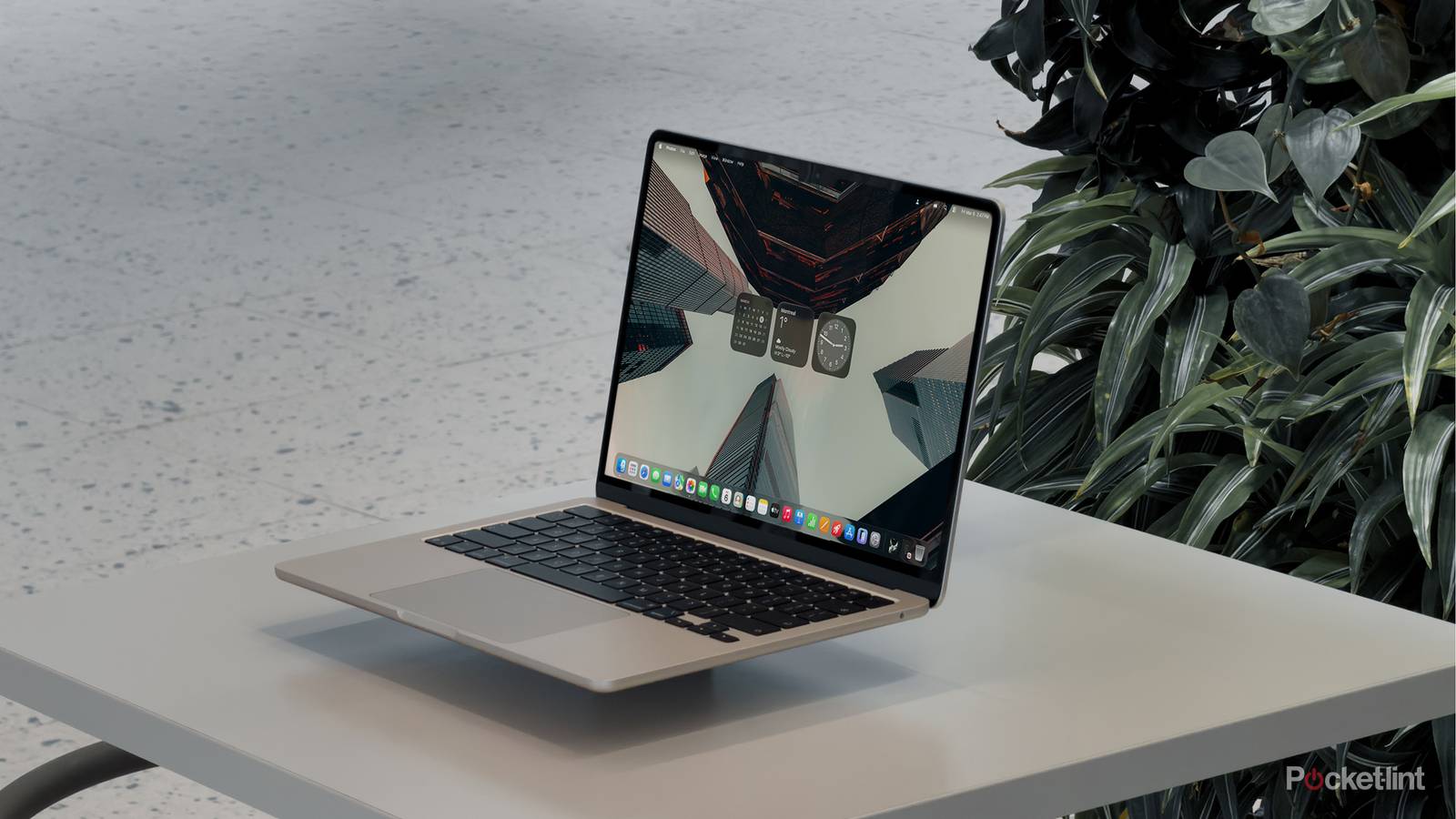
The MacBook Air has, at this point, become something of a rhetorical problem for me. With every incremental upgrade to this laptop, Apple leaves nearly nothing left to talk about in a meaningful way aside from the new silicon. The formula Apple locked in with the M2 generation has proven so durable that each successive update doesn’t really feel justified, and the new M5 MacBook Air does not break from that tradition, but it is, without question, still the best laptop in its category.


4.5/5
- Operating System
-
macOS 26
- CPU
-
M5
- RAM
-
16GB, 24GB
- Storage
-
512GB, 1TB, 2TB
- Excellent performance
- Base storage now at 512GB
- All-day battery life
- More expensive base price
- Still limited port selection
What stayed the same

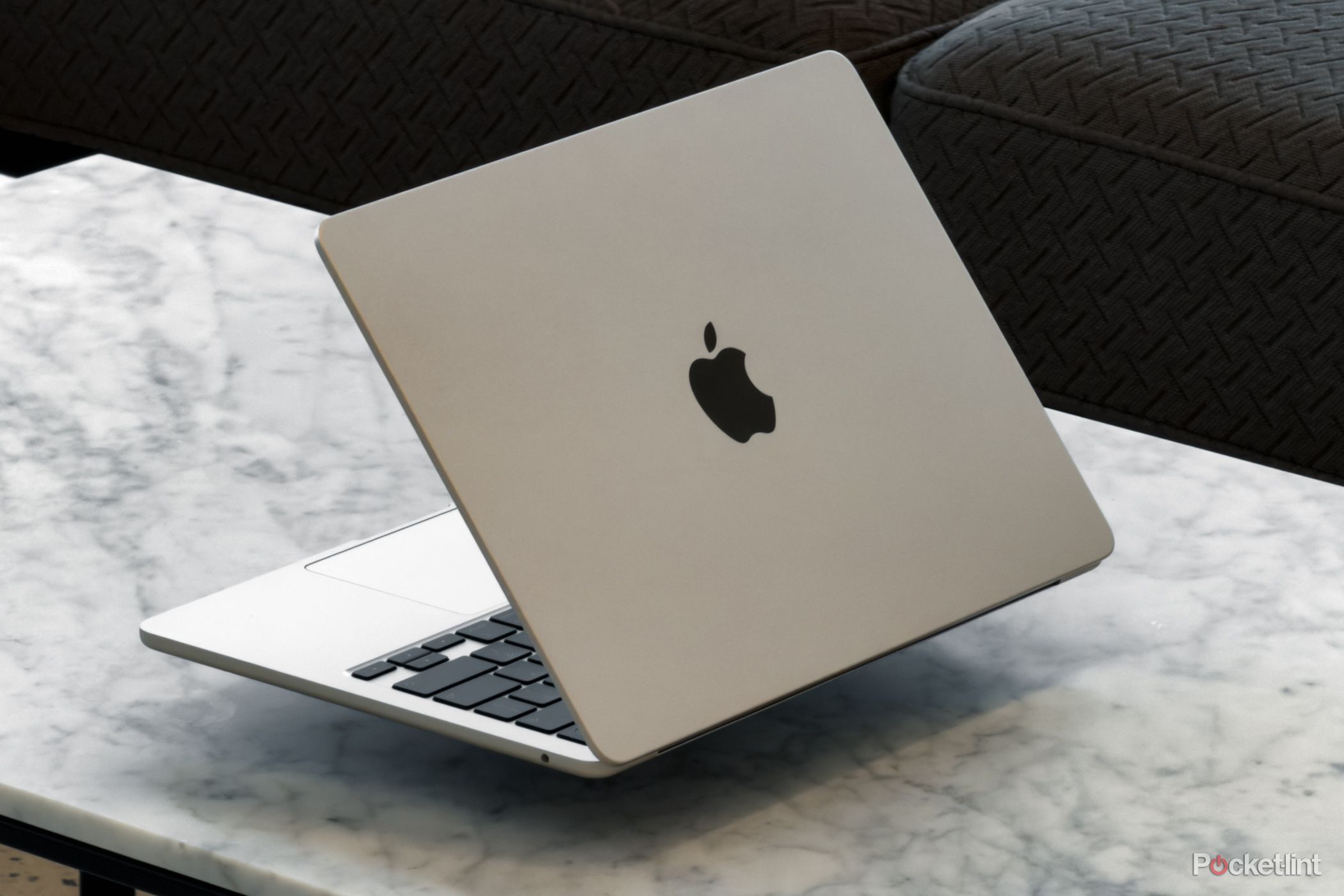
The M4 MacBook Air was already an exceptional machine; I called it the best consumer laptop in its category when I reviewed it last year, and nothing since has altered that conclusion. The M5 variant carries the same aluminum unibody enclosure, the same 13.6-inch and 15.3-inch Liquid Retina displays with P3 wide color, the same 12MP Center Stage camera, and the same four-speaker and six-speaker audio systems tuned for Dolby Atmos and Spatial Audio. If you picked up an M4 or M3 Air within the past year or two, this is essentially the same machine.
The display remains the one area where the aging of this design really shows. Coming from my M5 MacBook Pro, the absence of ProMotion and the panel’s shallower contrast compared to mini-LED and OLED alternatives remains the gap that separates the Air from Apple’s more capable machines as well as competing Windows laptops like ASUS’ Zenbook lineup. That said, color accuracy for photo and video work continues to be excellent, and for the overwhelming majority of tasks anyone would buy this laptop to perform, the screen is more than sufficient.

The 12MP Center Stage camera is unchanged from the M4 generation, which itself brought the ultrawide sensor and machine learning-driven framing to the Air for the first time. My assessment from last year applies here without revision; the image quality is decent and markedly better than most other laptops, but CenterStage’s face-tracking still hunts noticeably with minor movement, and Desk View continues to produce awkward perspective distortion that diminishes image quality in low ambient light. These limitations are not new, and Apple has not addressed them here.
The I/O, trackpad, and keyboard, all remain identical to last year’s model, which is no surprise. While there are two Thunderbolt 4 ports that support up to two external displays, the M5 Air still has quite a limited selection of ports when similar laptops offer more versatile I/O, like an SD card slot or HDMI.

The new chip
The M5 chip is where the story gets more interesting, at least selectively. Apple’s fifth-generation silicon features a 10-core CPU with four high-performance cores and six efficiency cores, an up to 10-core GPU with an enhanced shader core and a third-generation ray-tracing engine. More importantly, the new chips bring faster unified memory with up to 153 GB/s of bandwidth, a nearly 30 percent increase over the M4’s 120GB/s. Apple also claims multithreaded CPU performance improves by roughly 18 percent over the M4, and graphics performance climbs by up to 55 percent in visually intensive workflows and about 35 percent in gaming scenarios.

Day-to-day, the performance gap between the M4 and M5 is not substantively noticeable. Casual browsing on Arc, working in apps like Slack, Notion, Figma, and Teams, as well as photo editing in Lightroom, don’t feel perceptibly different from what the M4 delivered. Where the M5 distinguishes itself, however, is in sustained, compute-heavy use cases.
Running local models like Qwen 3.5-9B on the M5 Air is slightly faster than the M4 at the same tasks as coding, memory recall, and general tinkering, and I suspect that is largely due to the increased memory bandwidth and faster RAM on this generation compared to last year’s model. The M5’s Neural Accelerators, now embedded in the GPU core rather than being centralized, also accelerate AI workloads in a way that actually scales with the software you’ll use, which should future-proof this chip for newer local models as they come out.

I also spent time coding with Google’s Antigravity and the new Xcode to vibe code some Swift mockups of an iPhone app for one of my personal projects, and the M5 Air handles this perfectly fine, even if it is fanless; the performance I was getting was generally good, but I do think for these types of workflows, I would opt to get this laptop in a higher configuration of RAM, just so I’m not hitting the memory ceiling as quickly when running multiple apps at once.
Overall, the M5 generation MacBook Air really emphasizes AI workflows on the silicon level, which can be beneficial, but the improvement here shouldn’t solely warrant an upgrade over the M3 or M4 generation Macs. That said, for anyone who plans to run local models or incorporate some type of significant on-device AI workflow, the memory bandwidth increase, embedded Neural Accelerators, and an overall more efficiently-packaged chip make a tangible difference over the pre-3nm M-series Macs, and certainly over the Intel-based machines.
Other changes

The most concrete improvement for users on the M5 Air has nothing to do with the chip. The new Air ships with 512GB of base storage, doubling the 256GB floor of the M4 at launch. Apple has priced the M5 to match where the 512GB M4 configuration sat, which means the entry price has effectively risen for anyone who could previously get away with the 256GB option, but I think the trade-off is fair.
256GB was already tight for a primary machine in 2025, and shipping 512GB to the floor in 2026 reflects a more honest assessment of what users actually need out of a device they’ll be using for at least the next four years. Storage can now be configured up to 4TB for the first time on a MacBook Air, which matters less for the average buyer but meaningfully expands the machine’s viability for users with large media libraries like small business users.

Wireless connectivity receives an update as well through Apple’s new N1 chip, bringing Wi-Fi 7 and Bluetooth 6 to the MacBook Air. While these upgrades are both solid additions to keep this generation up with the MacBook Pros, most places and most homes aren’t Wi-Fi 7 equipped yet, but it’s good future-proofing that adds to the longevity of this laptop. I hope Apple brings its cellular connectivity chips to the MacBook lineup in the future.
Battery life continues to be one of the MacBook Air’s most compelling draws, and the M5 generation is no different. Apple claims 18 hours of video playback and 15 hours of wireless web browsing, and my testing mirrors what I observed with the M4 last year. A demanding full day of mixed use, including FaceTime, Lightroom, Notion, programming across different IDEs, and extended media consumption at maximum brightness and volume, closed with around 15–20% charge remaining. I can’t speak to any tangible battery improvements the M5’s efficiency is providing over the M4, but the Air’s endurance was never really a problem to solve, and I’m glad Apple continues to show consistent battery life this year.
Who should buy the M5 MacBook Air?
This is one of my shortest reviews to date, so answering the question of who should buy the M5 MacBook Air is quite easy. If you are using an M4 or M3 generation MacBook, do not upgrade; the performance delta does not justify the cost unless your workflow becomes tangibly more complex, in which case, I think the upgrade would mainly stem from upgrading the RAM.
If you are using an M2 Air or older model, this is where you should consider upgrading if your workflow requires it. The M5 offers a meaningful enough improvement in chip headroom, memory bandwidth, and storage baseline to make the generational jump worthwhile if your current machine is showing strain. For anyone on an M1 Air or an Intel-based MacBook, the M5 represents a transformation in everyday responsiveness, AI capability, and longevity that no incremental update framing can adequately capture.

For Windows switchers and first-time Mac buyers, the M5 MacBook Air remains the most unambiguous recommendation I can make. I’ve said a version of this across three consecutive Air reviews now, and the conclusion is the same; other laptops in this price bracket might do one or two things better than the MacBook Air, but there is no equivalent competitor on ARM that delivers this particular combination of performance, battery life, portability, and software support as a complete package.
The competition has narrowed the gap on individual axes, but not on all of them simultaneously, and that distinction is what the MacBook Air has consistently defended. If anything, the new M5 generation makes way for the M4 Air to be an excellent buy for people who can find it at a lower price; it is still an exceptional machine and the performance gap is narrow enough that you’ll be happy either way. For anyone buying new without a specific reason to reach for last year’s model, the M5 is the new default.
4.5/5
- CPU
-
M5
- RAM
-
16GB, 24GB
- Storage
-
512GB, 1TB, 2TB
- Display (Size, Resolution)
-
13.6-inch, 15-inch