


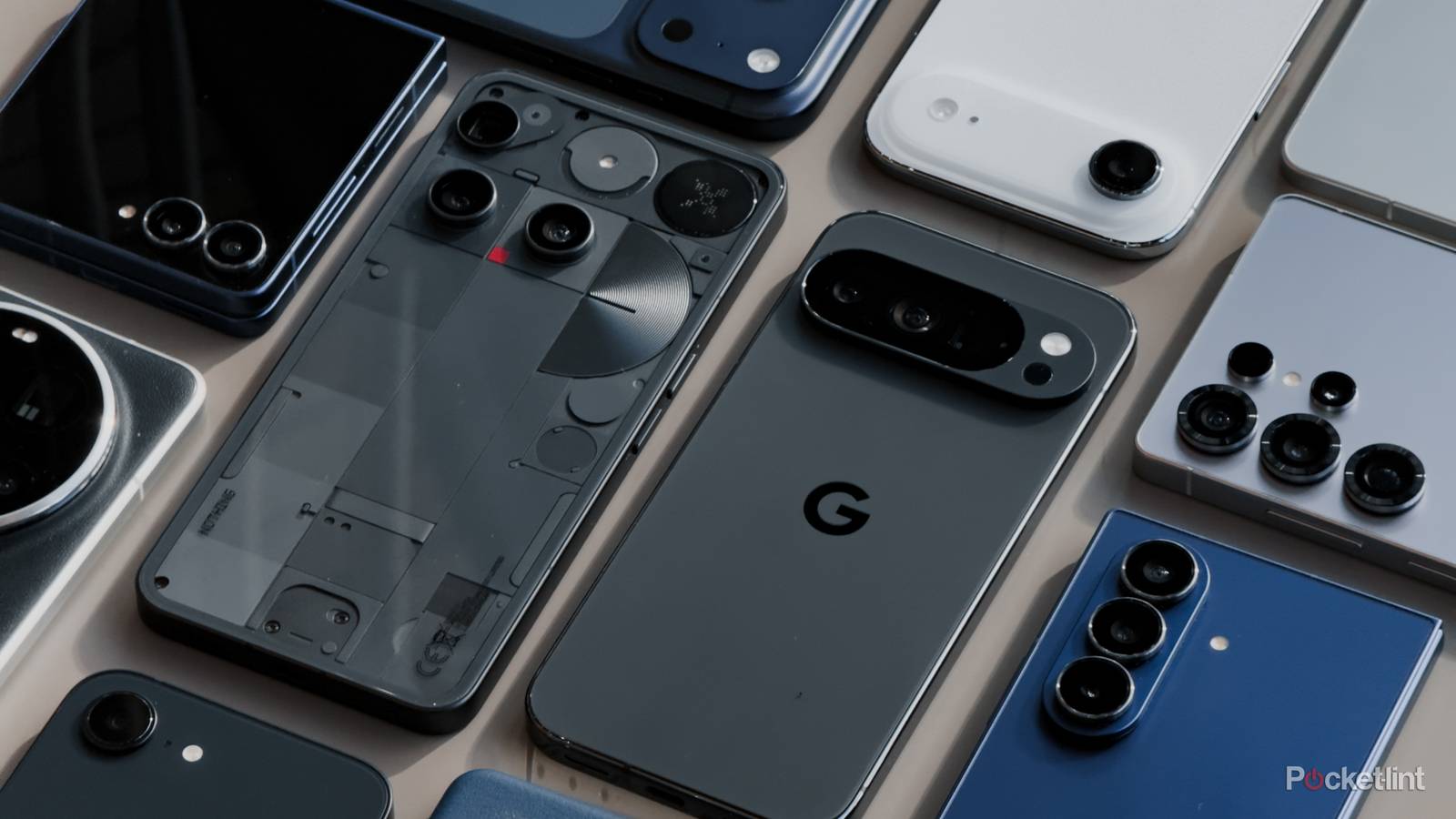
Over the past year, I’ve shot more than 10,000 photos across 13 different flagship smartphones, and having put each device through the full spectrum of real-world use, I’ve had the chance to look at the smartphone landscape beyond our typical review period windows.
This won’t be an exhaustive list, but these are the devices that caught my attention and are worth considering if you’re planning to buy a phone specifically for photography.
My top picks

Samsung Galaxy S25 Ultra

The Galaxy S25 Ultra was one of the most iterative phones in 2025, and that was both its greatest strength and its most persistent limitation; the major hardware change to the camera system was the jump to a 50MP ultrawide sensor, which replaced the aging 12MP unit from its predecessor.
Carried over were the 200MP main sensor, 50MP 5x telephoto, and 10MP 3x telephoto, rounding out a system that, on paper, remains one of the most versatile in the industry. With its breadth of focal lengths and sensors, Samsung continues to distinguish itself in consistency across its cameras, rivaled only by the iPhone.
Switching between the ultrawide, main, and telephoto lenses produces images with remarkably cohesive color science; the white balance and exposure rarely shift in ways that feel jarring, a problem too many competing flagships still haven’t resolved.
Sharpness and detail from the ultrawide and telephoto lenses are generally strong, and the overall experience of moving between zoom levels feels considerably smoother compared to the likes of Google, OnePlus, or Xiaomi.
The main sensor

What makes the Galaxy S25 Ultra particularly strong is its main 200MP sensor, which, while technically impressive, is ultimately carried by Samsung’s exceptionally consistent computational photography; for auto-mode reliability, it remains one of the most dependable shooters I’ve tested. In ideal lighting, the main sensor produces richly detailed shots with punchy contrast and vibrancy in warm tones, remaining natural without getting too oversaturated.
It’s not without faults, however. The 200MP main sensor carries forward some frustrating baggage such as occasional focus hunting, especially in moderate and low-light conditions where center-frame subjects still come back soft and grainy. I experienced a similar issue on the Galaxy S24 Ultra, and the fact that Samsung has had a full product cycle to address it makes its persistence harder to forgive.
Shutter lag compounds this problem where there can be a noticeable delay between pressing the capture button and the actual image being recorded, which means any slight hand movement in that half-second gap can produce unwanted blur.This has improved across software updates, but it remains an annoyance, particularly when shooting at 50MP or higher on the main sensor.
Regardless, the 200MP main sensor paired with Samsung’s processing has made the Galaxy S25 Ultra one of the most reliable devices to shoot on, and this benefit also extends to the Galaxy S25 Edge and the Galaxy Z Fold 7, which carry these meaningful implications over for their respective camera systems.
The main camera on the Galaxy S25 Edge and Z Fold7 look much better over the base Galaxy S25 and S25+, and is a significant upgrade over the Z Fold 6, though the supporting focal lengths diminished noticeably in quality. If you’re in the market for either and don’t generally rely on the ultrawide or telephoto, you’ll find the main sensor on these phones more than satisfying.

Overall, the Galaxy S25 Ultra remains an excellent photography package, and with the launch of the Galaxy S26 series, I look forward to seeing if Samsung maintains the same fit and finish with the camera.
Xiaomi 15 Ultra

If Xiaomi sold this phone in North America, it would easily take the top recommendation across the board for photography performance; the 15 Ultra carries what is, in my assessment, one of the most capable camera systems available on any smartphone, anchored by its 1-inch Sony LYT-900 main sensor that captures images with a depth and authenticity that most flagships simply cannot replicate.
Where Google and Samsung lean heavily on computational processing to produce images that are technically flawless, with frames sharpened edge to edge, bright, and evenly exposed, Xiaomi leans into what the hardware naturally captures, and that differentiation produces results unlike anything else in this category.
Shadows stay deep and dark, and the contrast is punchy without feeling over-processed. The natural depth-of-field from that massive sensor produces shots that look like they came from a dedicated camera, free of the fringing or focus irregularities that large sensors sometimes introduce.
Xiaomi layers in Leica color profiles that reinforce the images’ character further, and the manual Pro mode produces RAW files that hold up against Apple’s ProRAW in both fidelity and editability. That said, I do find the Leica presets can be a little jarring from time to time, and would much prefer a regular shooting mode outside of Pro mode to take photos that lets the hardware speak for itself.

The telephoto system is equally impressive, consisting of a 200MP periscope sensor that handles the long range while a 3x telephoto handles macro shots down to 10cm, filling the mid-range very well. The periscope unit pulls in significantly more light than its predecessor, and while Xiaomi sacrificed the mechanical aperture from the 14 Ultra to accommodate the larger sensor, the trade-off is well worth it; the telephoto is sharper, more versatile, and far more practical for everyday shooting than what came before. Xiaomi’s processing is not flawless.
My main gripe with this camera system is the white balance shifting unexpectedly between shots and between lenses. Additionally, edge detection occasionally falters in ways that Google’s or Samsung’s computational pipeline does not. These inconsistencies prevent the 15 Ultra from matching the shot-to-shot reliability of a Pixel or Galaxy or iPhone, but they are minor blemishes on a system that produces the most visually compelling images of any phone I tested. For anyone who values how a photo looks and feels over how technically precise its processing is, the Xiaomi 15 Ultra is in a class of its own.
Apple iPhone 17 Pro

The iPhone 17 Pro is the phone I spent the most time with, and that time has made the case for what Apple has been quietly building toward. Apple has spent years making very conservative and incremental refinements to its camera system, and the iPhone 17 Pro is the device where all of those individual improvements converge into something that feels genuinely complete.
The significant new upgrade is the new 48MP telephoto lens, which replaces the 12MP sensor from the 16 Pro, and this fundamentally changes what this phone can do at distance. The 16 Pro’s telephoto images would visibly degrade when cropped and reveal aggressive computational work trying to compensate for a smaller sensor; the 17 Pro’s larger sensor means less processing intervention is required, and the difference shows.
Zoom shots are cleaner and more natural-looking, particularly at the full 8x reach where lens compression creates remarkable depth separation between foreground and background. At night, the difference is dramatic; the 17 Pro’s telephoto pulls in enough light to produce genuinely usable low-light zoom shots that the 16 Pro simply could not manage.
The new camera does have a couple quirks though. The iPhone will let you activate 8x zoom at any distance, but if your subject is closer than roughly a foot and a half, it silently switches to a crop from the main sensor rather than using the telephoto. The quality difference is visible, and it can be confusing if you’re not aware of it, but more stark is the change in compression, which cannot be faked as easily. Stepping back slightly solves the issue, but it is the kind of unintuitive behavior Apple should surface more clearly.
The main and ultrawide sensors have not changed dramatically in hardware, but Apple’s updated processing pipeline handles challenging lighting scenarios with noticeably more finesse this generation.
My favorite aspect of the Pro iPhones is the smooth editing pipeline that ProRAW enables, and it’s only stronger now that all three sensors are of similar resolution. The iPhone 17 Pro consistently holds up better through post-editing thanks to the full 48MP data across all three lenses. ProRAW produces images that are remarkably flexible in post-processing, offering a level of latitude in exposure recovery and detail preservation that no other phone matches as seamlessly.
If editing is part of your photography workflow, this is the phone that makes the editing workflow feel like a real camera. The camera system has finally reached a point where every lens contributes meaningfully, and the result is the most balanced, most edit-friendly mobile camera I have used.
Best AI suite: Google Pixel 10 Pro

Google’s camera hardware has always played second fiddle to its computational capabilities, and the Pixel 10 Pro doubles down on that philosophy with the most comprehensive AI-powered photography suite available on any phone.
Features like Camera Coach can read the scene in real time and offer composition suggestions, lighting adjustments, and mode recommendations before you even take the shot. These nudges, while sounding gimmicky, can be genuinely useful in practice, particularly for less experienced photographers who want to improve their eye without having to think too deeply about it.
The Pixel 10 Pro is perhaps best known for Auto Best Take, which refines an already practical feature by automatically combining multiple group shots into a single image where everyone looks their best. Add Me has also been expanded to work with larger groups, ensuring the photographer doesn’t have to sacrifice their place in the frame; this was particularly useful during my trips with a large group of friends.
While these are not flashy hardware upgrades like on some of the other flagships, they address the kinds of real-world frustrations that most camera systems ignore entirely. There’s also the plethora of additional software features inside Google Photos and Pixel Studios, with tools like Magic Eraser, Move, and Zoom Enhance extending the editing pipeline considerably.
The main frustration with these features, however, is how dependent the phone can be on the post-processing; many shots carry a noticeable processing delay because the post-processing is offloaded to Google’s servers, which requires an active Wi-Fi or data connection.
Best night camera: Honor Magic8 Pro

The Honor Magic8 Pro is another standout surprise of this test, and it makes the case for why North America needs better competition in the flagship space. Its camera stands above the rest specifically for telephoto performance, and nowhere does that advantage show more clearly than in low-light environments.
The combination of a large 1/1.4-inch sensor, 3.7x optical zoom, and CIPA 5.5-rated stabilization produces results that genuinely outperform more established flagships, like the Samsung Galaxy, iPhone, and Pixel.
Where the Galaxy S25 Ultra and iPhone 17 Pro both lean on noise reduction that tends to smear fine texture at extended zoom ranges, the Magic8 Pro retains a level of detail and natural color that is immediately visible in side-by-side comparisons. Honor’s AI Adaptive Stabilization system allows for handheld long-exposure captures that other phones would need a tripod to replicate, and the resulting images carry a texture and fidelity that caught me off guard given how little attention this phone has received relative to its competition.
Xiaomi’s 15 Ultra offers a comparable hardware profile, with its 200MP telephoto representing the other serious contender in this category, but Honor is delivering this caliber of zoom performance in a device that does not position itself exclusively as a camera phone. For photographers who care about telephoto reach and low-light zoom above all else, the Magic8 Pro deserves serious consideration.
Best selfie camera: Apple iPhone 17 series

The entire iPhone 17 lineup received a significant front-facing camera upgrade, and it’s the kind of improvement that changes how you use the phone rather than simply making selfies marginally sharper. The new 18MP front camera uses an ultrawide, meaning you can capture wider framing without physically moving the phone further away.
This also enables the iPhones to change the orientation of the selfie itself, so you don’t need to rotate the device to change the composition. Also, it goes without saying, Apple continues to be one of the best in terms of handling skin tones in tough lighting situations.
The resulting versatility of this new selfie camera makes it substantially more useful. Even for people who rarely take selfies, this is where the upgrade matters most, because the wider field of view and compositional flexibility open up the front camera for other things like video calls, and casual photography in situations where flipping to the rear camera is impractical.
The one I want improved: Nothing Phone (3)

Painful as it is, the Nothing Phone (3) is an excellent device that stumbles in the camera department. While the rest of the phone feels polished and competitive, nearly indistinguishable from more expensive flagships in daily use, the camera system is the weakest link in an otherwise cohesive experience.
The main 50MP sensor performs quite well and produces detailed images that hold up well in good light with solid contrast, tone, and color science. The 3x optical zoom telephoto follows close behind, maintaining reasonable sharpness and detail in bright scenes with a usable in-sensor crop to 6x, though it trails noticeably behind the Galaxy S25 and falls further still from the Pixel 10.
The ultrawide, however, is the most disappointing of the three. Images look fine at full view, but any attempt to zoom in reveals a lack of detail and noticeable warping at the frame edges. The larger issue, though, is consistency. Switching between the three rear cameras produces visible shifts in color balance and tonal character, and indoor shooting is particularly unreliable; some shots land perfectly while the next comes out flat with no change in conditions.
This inconsistency makes it impossible to trust the camera in the way you can trust the iPhone 17 at a similar or lower price point. Nothing built an exceptional phone around a camera system that simply cannot keep pace with the iPhone 17, Galaxy S25, and Pixel 10 at similar or lower price points, and that gap defines the experience.
Final thoughts

2025, and the early half of 2026, has been one of the most competitive years for smartphone photography in recent memory. The gap between the best and worst cameras on this list is narrower than ever, which makes the differences that do exist more meaningful. Samsung’s versatility, Xiaomi’s raw imaging character, and Apple’s editing-first approach each represent genuinely different philosophies about what a camera phone should prioritize, and none of them is wrong.
What shooting 10,000-plus images across these devices makes clear is that the computational processes applied by each of these devices matter much more than individual hardware specifications, but better hardware with the right software still yields these overall results. The Xiaomi 15 Ultra and the Google Pixel 10 Pro sit at opposite ends of that spectrum; one trusts its hardware more to deliver authentic images while the other trusts its software more to perfect every shot, and both produce excellent results through fundamentally different means.
The phones that struggled most this year were the ones that could not commit to either approach with enough conviction. If I had to choose one phone as my only camera for the next year, the Xiaomi 15 Ultra would be it, limited availability and all. For those of us buying phones through conventional North American channels, the iPhone 17 Pro’s combination of hardware completeness and post-editing flexibility makes it the most practical choice, while the Samsung Galaxy S25 Ultra remains the safest bet for versatility.