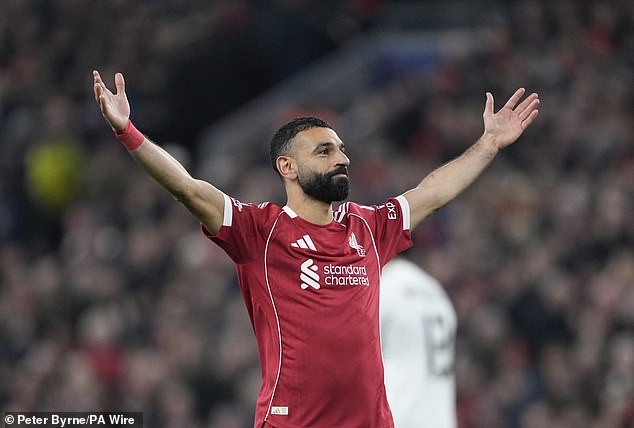


It was the morning after one of many statement goals. The previous afternoon, during a thumping 4-0 win at Bournemouth, Mohamed Salah had become the first Liverpool player since Ian Rush in 1988 to reach 20 before Christmas.
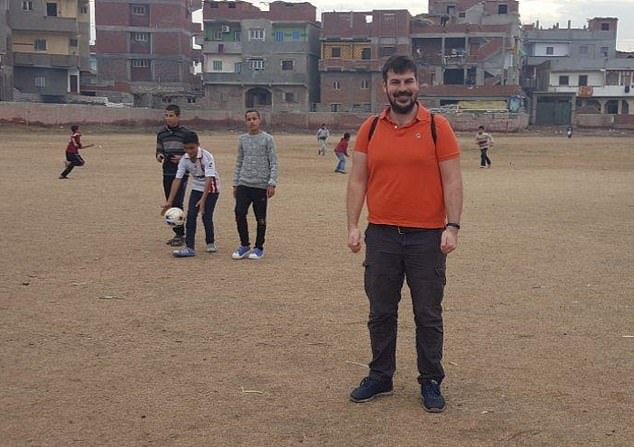
The secret was out that Liverpool had a special player on their hands but, standing on a dusty pitch in the Egyptian village of Nagrig, with the scent from a field of jasmine hanging heavily in the air, it was impossible not to think about the obstacles he had cleared to take his talents onto the global stage.
Daily Mail Sport were the first western media outlet to visit this part of Northern Africa to retrace his earliest steps. Back in England, his journey to being an icon for a global fanbase was underway, burning as quickly and brightly as a comet, but how did he get there?

Dominic King visited Nagrig, Egypt, in 2017 after Mohamed Salah’s move to Anfield

Salah forged his relentless mentality in Egypt before moving to Europe to pursue football
Really, it shouldn’t have been possible. Nagrig is squirreled away in between the road that connects Alexandria and Cairo; the infrastructure is challenging, the facilities basic. Salah, the eldest of four children, was talented from an early age but the odds of him breaking free were a million-to-one.
But he became one in a million through application, a relentless desire and a refusal to quit. He wore a black T-shirt before the fabled Champions League comeback against Barcelona in May 2019 (he missed the game with concussion) proclaiming ‘never give up’, and that has been a motto for his life.
Salah was determined he would be a footballer. For a 14-year-old boy, a daily five-hour, 200-mile round return trip from Nagrig to Cairo could have had a souring effect but it only made him resolute in the idea that he would get to the top, whatever it took.
He was used to dealing with knockbacks. When he found himself playing for Fiorentina, having been jettisoned by Chelsea in 2014, Salah used to have coffee afternoons with Micah Richards, who had moved to Florence from Manchester City.
‘I’m going to play for Liverpool one day,’ Salah would tell his pal, explaining how a move that failed to materialise in January 2014, when Brendan Rodgers was manager, had only stiffened his resolve that he would get back to the Premier League and show what he could do.
That is what has separated him. Carrying the burden of being Liverpool’s main source of goals isn’t easy and you need certain characteristics to flourish, possibly some characteristics that you would find off-putting, such as selfishness and arrogance.
He has absolutely displayed that in his game at times but, without it, he wouldn’t have scored 255 goals for Liverpool. Say that again: 255. He zoomed up the charts at a staggering speed, putting the names of giants into the shade.
The fact only Ian Rush and ‘Sir’ Roger Hunt are ahead of him in the all-time list is the biggest endorsement for the scale of what he has achieved and it’s likely he will stay in third place forever; what he has done hasn’t been normal and it should never be taken for granted.

Salah told Micah Richards he would play for Liverpool – and he did, winning two league titles
Salah, simply, is Liverpool’s best of the Premier League era. Yes, this year has come with challenges and the incendiary comments he made in the tunnel at Elland Road in December were unnecessary and out of keeping with how he is regarded in the dressing room.
When Salah holds court at the coffee bar in Liverpool’s training ground, he’s down to earth, the essence of how he was raised in Nagrig. He’ll do anything to help his team-mates in the same way he still helps his community, such as paying for an astroturf pitch to built in his old school.
So when he went on the attack after being dropped at Leeds, it caught those who know him well by surprise. It suggested, though, that Salah was starting to rage against the dying of the light, the realisation his superpowers were starting to wane.
Now this story is poised to reach its conclusion and while parting may be for the best, given the economics and his form, it doesn’t change the fact it is still a shock. He was the boy from nowhere who chased a dream and, ultimately, made dreams come true.