


When I was shopping for a new TV recently, I’ll admit, even as someone who regularly writes about TVs, the experience was a bit overwhelming. In the world of smart TVs, there are countless brands, confusing panel names, and prices ranging from $200 all the way up to $1,000 or even $3,000.
After going through the process myself, I realized there are a few features that are absolutely essential in 2026 — things a TV needs to be worth your investment, especially if you’re spending over $1,000.
So if you’re planning to buy a new smart TV soon, these are the features I recommend looking out for, particularly if you want a set that will last for years and offer the best experience. And if you’re looking to save some money, there’s an easy way to do that, too.
It all starts with the ports
You’ll want to make sure it has plenty of HDMI 2.1 ports

The first thing I looked at when shopping for a new TV was the port selection. Most smart TVs come with an Ethernet port and a USB port, but the number of HDMI ports — and the specification each supports — can vary a lot.
HDMI 2.2 is the newest specification, but HDMI 2.1 is still the most common on recent models, and some TVs still even come equipped with the much older HDMI 2.0 standard. The main differences between these versions come down to bandwidth, resolution support, and refresh rates.
HDMI 2.2 is still too new to worry about, but HDMI 2.1 has been the gold standard for a few years now. It supports features people rely on, like 4K at 120Hz, even up to 8K at 60Hz, Dynamic HDR (like Dolby Vision or HDR10+), plus gaming-focused perks like VRR (Variable Refresh Rate) and ALLM (Auto Low Latency Mode). What makes this all possible is HDM 2.1’s 48 Gbps bandwidth, which enables it to support all this extra data. Compared to HDMI 2.0, which has a maximum bandwidth of 18 Gbps, HDMI 2.1 has more than double the bandwidth, making it significantly faster.
So with that in mind, my advice is simple: if you can, look for a smart TV with at least three or four HDMI 2.1 ports. That way, your TV is future-proof, and you’ll have plenty of high-powered HDMI ports for all your devices, like a Fire TV Stick 4K Max, Apple TV 4K, PS5, or Switch 2. Personally, I went with the LG C5 on sale, which has four HDMI 2.1 ports. That means I don’t have to worry about whether a port can properly handle the device I’m using, and I have enough ports for every device I regularly use without constantly unplugging or needing an HDMI switcher.
A high refresh rate is game-changing
Most TVs typically have a 60Hz refresh rate

The next big factor I look at when shopping for a smart TV is the refresh rate. This really matters if you plan to game on your TV, since a higher refresh rate makes everything feel noticeably smoother. I have my gaming PC hooked up to my TV, and because I often play at frame rates above 144 FPS, a high-refresh-rate panel makes a world of difference in how fluid and responsive games feel.
And it’s not just for PC gaming either. A higher refresh rate also pairs with VRR on the PlayStation 5 and Xbox Series X, thanks to their 120Hz output modes, making console games feel much smoother, too.
Most TVs still come with a 60Hz panel, so it’s worth checking the specs to see what you’re actually getting. Many newer models offer 120Hz, and some can even reach 144Hz with VRR enabled.
The display changes everything
OLED TVs deliver the best experience, but QLED is a worthy trade-off

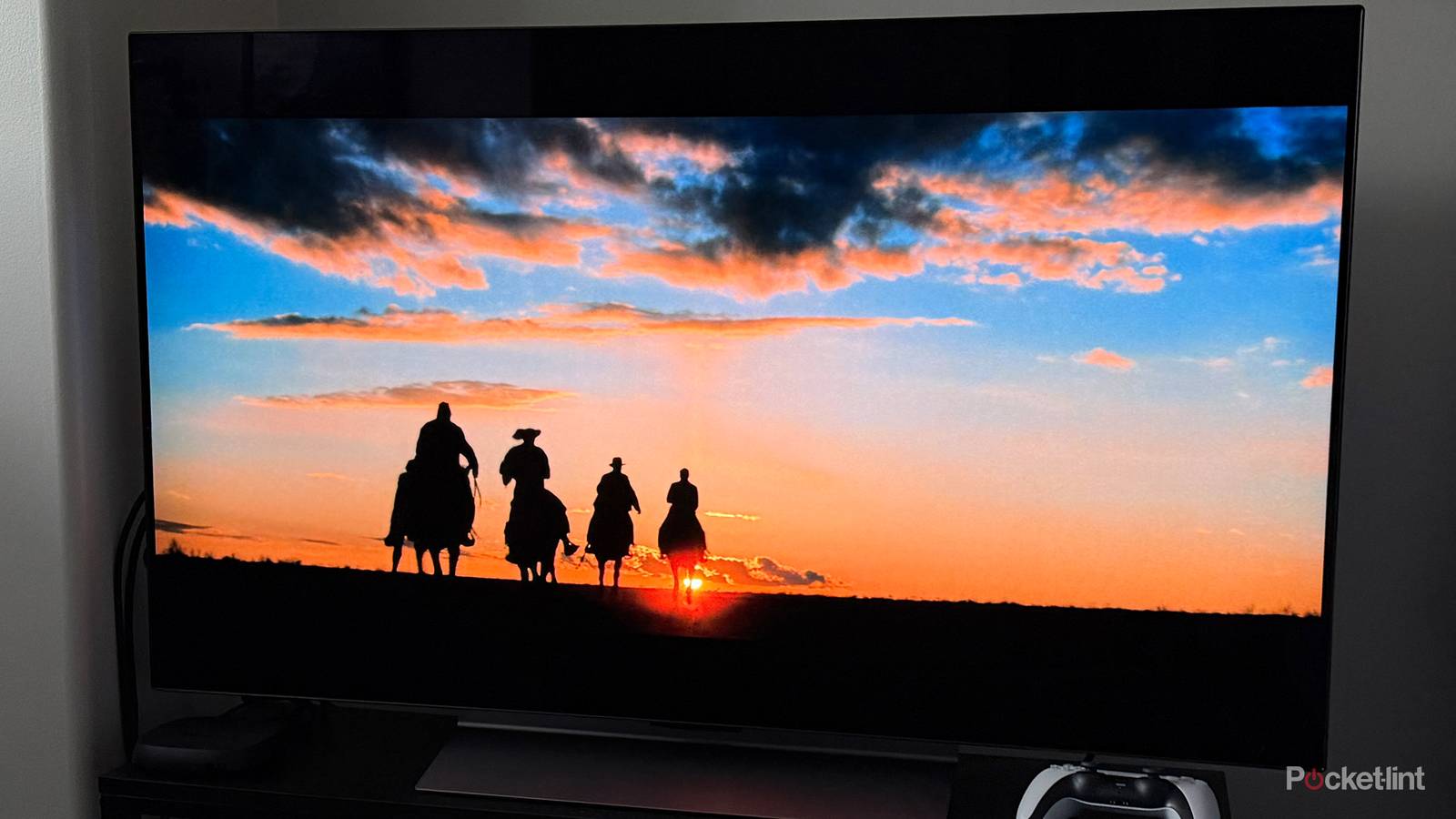
Next up is the type of display, which can be a little confusing, and depending on the type you choose, prices can vary widely. Personally, I went with an OLED panel. Compared to the standard LED panels you’ll find on most smart TVs, OLED is brighter, has more vibrant colors, and just looks fantastic.
If you’re unfamiliar with OLED, the main difference compared to LEDs is how the pixels are lit. On an OLED, each pixel lights up individually and can turn completely off depending on the scene. That means better contrast, deeper blacks, and more vibrant colors. OLED panels are usually thinner too and offer better viewing angles.
The main downside of OLED TVs is the cost…
LED TVs, on the other hand, use a backlight to illuminate all the pixels. Because the light comes from behind, colors aren’t as vivid, blacks can look a bit gray, and contrast isn’t as sharp.
The main downside of OLED TVs is the cost, as they’re more expensive than LED models. But if your budget allows, it’s definitely worth considering, as the picture quality is exceptional and your TV will be a lot more future-proof.
But if OLED isn’t in the budget, a good compromise is QLED (Quantum Dot LED). QLED TVs use a quantum dot layer that makes colors brighter and more vivid. They still use a backlight, but the picture quality is noticeably better than that of standard LED TVs, and they don’t carry the higher price tag of OLED TVs.
So my recommendation ultimately is to find a well-priced OLED if you can, but if you can’t, QLED is still perfectly fine and worth buying in 2026.
Finding the best deal
Tons of 2025 TVs are on sale right now

Now that I’ve covered the features I think actually make a smart TV worth buying — including having plenty of HDMI 2.1 ports, a higher refresh rate, and an OLED or QLED panel — it’s just as important to talk about how to find a good deal.
My biggest piece of advice: don’t be afraid to look at last year’s models. Brands like LG and Samsung are about to roll out their 2026 TVs with improved brightness and newer features, but they definitely won’t come cheap.
With new models on the way, there’s a lot of old inventory being cleared out right now, and that works in your favor.
Right now, tons of 2025 models are on sale, including the LG C5 I recently picked up, and there are some genuinely great deals out there. The best part is that, since these TVs are still relatively new, you’re not giving up much in terms of performance or features.
For example, the 55-inch Samsung S90F OLED has dropped to around $1,100 from its original $1,800 launch price. The LG C5 can also be found for as low as $900, depending on the size.
There are deals across Amazon, Best Buy, Walmart, and Target, so if you find a TV that checks all the right boxes, it’s worth comparing prices across retailers. With new models on the way, there’s a lot of old inventory being cleared out right now, and that works in your favor.

- Display Size
-
42, 48, 55, 65, 77, or 83 inches
- Operating System
-
webOS
- Display Type
-
OLED