


Fire safety rules that forced British sofas to be packed with potentially harmful chemicals are finally being overhauled.
The move follows years of campaigning by mother Delyth Fetherston-Dilke, who has warned the regulations are exposing families to harmful chemicals inside their homes.
An investigation has revealed how for almost 40 years the rules, far stricter than in any other country, have made it near impossible to pass furniture fire safety tests without using large amounts of chemical flame retardants.
A typical UK sofa contains about 2kg of these toxic substances.
Dilke has repeatedly called for reform, arguing that the current standards have created a hidden health risk, particularly for young children and pets who come into close contact with treated materials.
The World Health Organisation announced last month in the latest Lancet Oncology journal that the most common flame retardant in UK sofas, TCPP, was ‘probably carcinogenic to humans’.
Scientists and campaigners have also warned that these chemicals do not stay locked inside furniture.
Instead, they can escape into household dust and be inhaled or ingested, with studies suggesting young children are particularly vulnerable due to their closer contact with floors and soft furnishings.

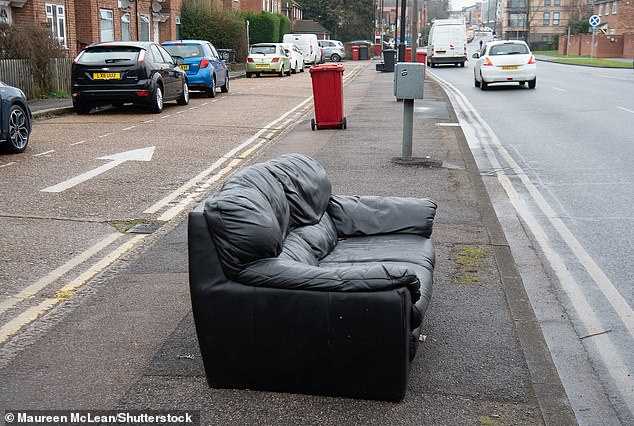
Fire safety rules that forced British sofas to be packed with potentially harmful chemicals are finally being overhauled after a years-long campaign by a mother who warned they posed a risk to families. Pictured: A sofa dumped on a pavement in Chalvey

The policy U-turn comes after a long campaign by Delyth Fetherston-Dilke (pictured), a former lawyer from Richmond, south-west London, who uncovered the issue after retraining as an upholsterer
Officials now say they will replace the open flame test with a ‘smoulder test’, which more closely reflects real-life fire risks such as a lit cigarette, the Sunday Times reports.
The change is intended to maintain fire safety standards while significantly reducing reliance on chemical treatments.
The government has acknowledged growing evidence linking flame retardants to a range of health concerns, including cancer, neurotoxicity, developmental issues and disruption to hormones.
There are also fears the chemicals increase the toxicity of smoke in a fire and make recycling furniture far more difficult.
The policy U-turn comes after a long campaign by Ms Fetherston-Dilke, a former lawyer from Richmond, south-west London, who uncovered the issue after retraining as an upholsterer.
While studying furniture construction, she found extensive scientific research suggesting the very chemicals designed to slow fires could be harmful to humans and animals.
She has argued for years that Britain’s rules left households exposed to unnecessary risks without clear evidence they saved lives.
Her concerns were echoed by the fact that major retailers produce different versions of sofas for different markets, with flame retardants added only to those sold in the UK and Ireland.
The regulations themselves date back to late-20th century reforms brought in after a series of fatal fires, including a blaze at a Woolworths store in Manchester that killed 10 people.
But critics say the rules have remained largely unchanged despite evolving evidence about health impacts.
Warnings are not new. As far back as 2017, experts were raising alarm over a possible link between flame retardants and rising cancer rates.
Former government adviser Terry Edge claimed at the time that the chemicals could be contributing to thousands of illnesses, particularly affecting children.
Separate research from Duke University found higher levels of certain flame retardants in the blood and homes of thyroid cancer patients.
Although some of the most dangerous compounds have since been banned, they remain present in older furniture and continue to circulate in household dust.
Ministers will now consult on the proposed changes, with campaigners hailing the decision as a major breakthrough after years of inaction.
Ms Fetherston-Dilke said the shift marked a turning point, after more than a decade of pressure to bring Britain in line with international standards while better protecting public health.


