
Everyday Australians are following doomsday preppers’ ‘wisdom’ as the Middle East conflict continues.
From stockpiling months’ worth of food and water to installing backyard fallout shelters and purchasing satellite phones, traditional ‘survivalists’ say rising geopolitical tensions and economic instability are key drivers.
But beyond the billionaire bunker builders, a growing number of Australians are doing something simpler: topping up basic supplies at home.
Survival Supplies Australia general manager Alan Wood said the biggest concern for most Australians isn’t geopolitical conflict, but losing access to critical services.
Petrol mania
With petrol prices surging and supplies tightening, one prepper, who did not want to be named, told Daily Mail he has long kept a backup supply of fuel.
‘I’m not greedy nor do I support the shenanigans I’ve seen online with people hoarding ridiculous amounts of petrol,’ he said.
‘I’ve kept 60 litres of fuel in reserve for some time now. It’s simply a part of my life and no, I don’t feel guilty for doing this.

On the Australian Preppers Facebook group, members swap tips and share their preparations
‘The majority of those who hoarded toilet paper during Covid are the same dimwits who are buying hundreds of litres of petrol over and beyond the capacity of their fuel tank.
‘If you aren’t prepped, don’t whinge and get green with envy. Rather learn from this and do your best until this current crisis abates.’
Global oil flows have been greatly disrupted after Iran shut down the Strait of Hormuz, which normally carries about one‑fifth of the world’s oil supply.
The move has already prompted oil prices to surge as high as $2.40/L in metropolitan areas, while parts of regional Australia have run dry.
Prepper network
For others, prepping is as much about community as stockpiles.
John Scarinci, founder of the Australian People’s Survival League, wants to build mutual‑aid groups to support people through major crises.
Survival kits and ‘bug‑out bags’ are useful, he said, but long‑term survival depends on community.

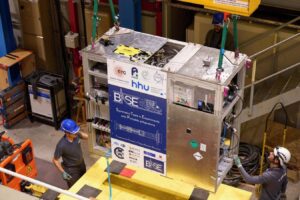
Workers install an underground bunker for a client built by Hardened Protective Technologies

Inside the underground bunker designed by a company in Western Australia
Mr Scarinci has warned of ‘The Marauder Effect’ – individuals with weapons and supplies turning on others to survive in the aftermath of a societal collapse – but stresses this is exactly what his organisation works against.
‘We don’t promote that side of things,’ he said.
‘We don’t promote breaking the law as a prepper. We are not America. We’re Australia. It’s something to be proud of.’
Underground living
Some Australians are taking their preparations further underground – literally.
Western Australian‑based Hardened Protective Technologies director Louis Clarke has built everything from modest backyard shelters to a $100million bunker complex in New Zealand.
‘Ultra high net worth families from around the world are looking to buy property and build bunkers in Australia and NZ as their Plan B bolthole,’ he said, with the region regarded as one of the safest places in the world in the face of global instability.
Mr Clarke said the bunker industry has become a barometer for public anxiety, with unchecked AI, deepening political polarisation, major tech failures such as Optus, and extreme weather events eroding public faith that governments and institutions can keep people safe.

Survival Supplies Australia general manager Alan Wood (pictured) said orders had doubled since the war in the Middle East began
‘The recent flare-up in the Middle East is only one part of the story,’ he said.
‘Many are feeling that they are on their own, and have to take matters into their own hands to secure their family’s safety.
‘What does it say about the current state of the “Lucky Country” that so many people – from billionaires to young families – are turning to bunkers and prepping for peace of mind?’
Stocking up
Survival Supplies Australia general manager Alan Wood said orders have doubled since the Middle East conflict escalated on February 28.
‘What we’re seeing right now is people topping up the basics rather than panic buying – things like water storage and purification, first aid, long-life food, lighting and power but the overall mood is cautious rather than urgent,’ he said.
‘It’s nowhere near Covid levels, when demand was closer to 10 times the usual.’
Mr Wood said the biggest concern for most Australians isn’t geopolitical conflict, but losing access to critical services.

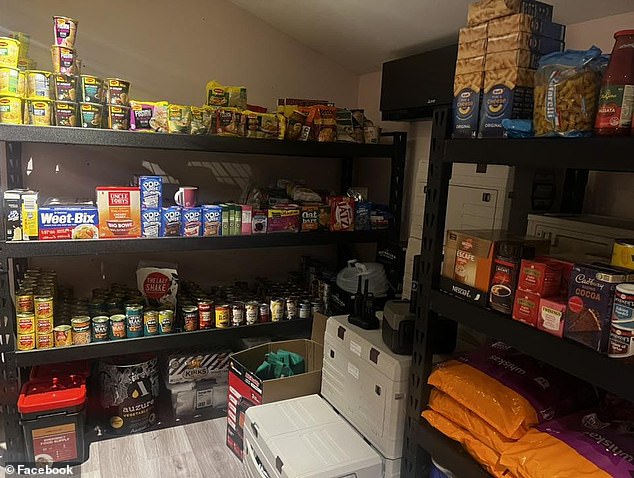
Prepper Switch Stephens (pictured) recommended 14 to 30 days of food at home
‘People are increasingly conscious that once power is out, you quickly lose refrigeration, internet/mobile charging, EFTPOS/ATMs, and sometimes fuel access,’ he said.
‘That’s the fear that turns “I should probably have a kit into I’m ordering today”.’
Mr Wood recommended households keep a basic home-preparedness kit during short disruptions.
A sensible three-day kit includes 4 litres of water per person per day and a way to treat water if supply is disrupted; three days of shelf-stable food; a torch and spare batteries; power bank with charging cables; and a battery radio with a written list of key phone numbers.
He also recommended a proper first-aid kit, a few days of essential medications, sanitiser, basic toiletries, rubbish bags, and cash and key documents including small amounts of cash, copies of important paperwork and spare keys.
Prepper Switch Stephens said preparedness isn’t about doomsday.
‘It’s about removing fragility from your life so that if disruptions happen whether it’s fuel shortages, natural disasters, economic pressure, or supply chain issues your household stays calm and functional,’ he said.
Why Australians are prepping
University of Wollongong sociology professor Jordan McKenzie said Australian prepper culture is expanding and will likely continue if fuel shortages worsen.
‘I don’t expect that this will become violent or hostile, though we may see tensions rise among panicked drivers at the petrol station,’ he said.
‘After Covid, people realised that dramatic supply chain disruptions were possible.
‘Now we are seeing people stockpile fuel as a result of the conflict in the Middle East.’
But unlike the heavily armed prepper stereotype in the US, Prof McKenzie said Australian prepping is ‘less ideological and political’, prioritising food, medicine and energy over weapons.
About 10 per cent of Australians make basic disaster preparations, he estimates, though only a small fraction would qualify as dedicated preppers.
‘I’m reluctant to think of even the most extreme preppers as “mad”,’ he said.
‘The reality is that the world is increasingly dangerous and unpredictable. It makes a lot of sense to be prepared.’