

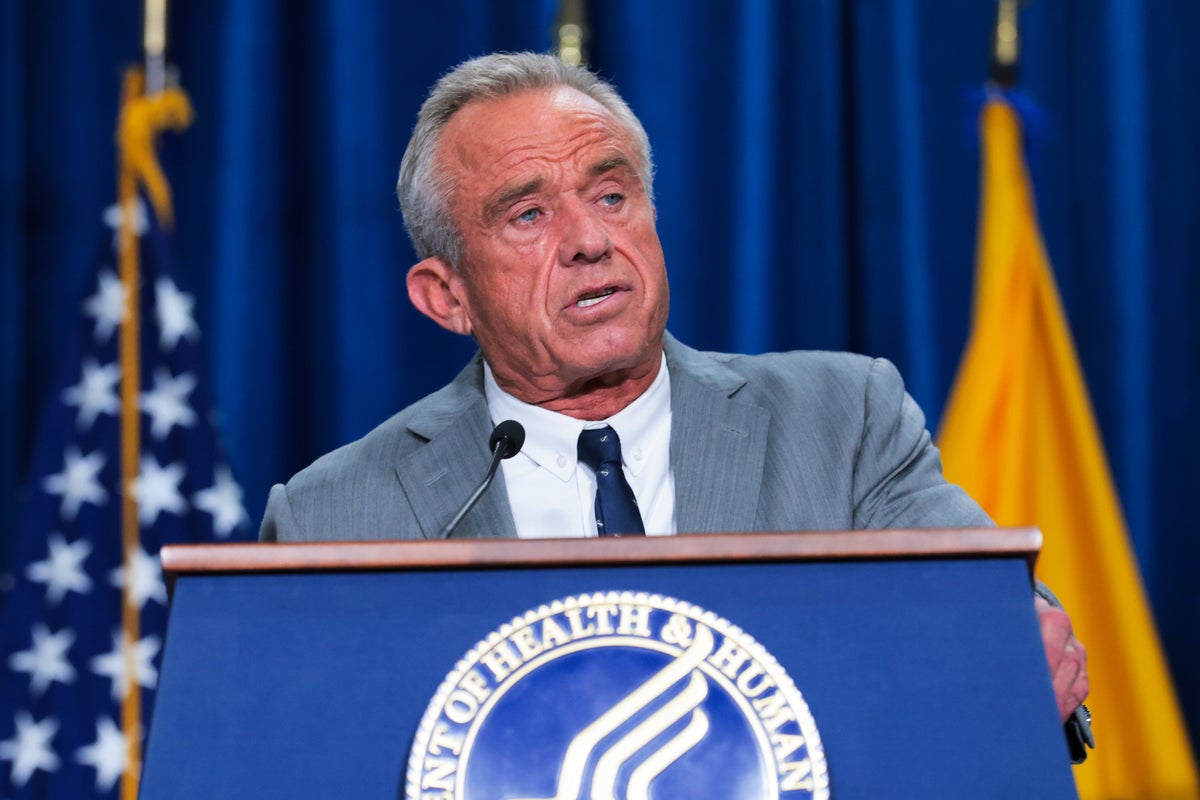
One year ago this week, the U.S. Senate voted to confirm vaccine opponent, environmental lawyer and politician Robert F. Kennedy, Jr., as head of the $1.7 trillion U.S. Department of Health and Human Services. The vote was split 52 to 48 on party lines, with the one Republican “no” vote coming from Senator Mitch McConnell of Kentucky, a polio survivor.
At his confirmation hearing weeks earlier, Kennedy made a number of pledges under oath to those U.S. senators:
“I will commit to not firing anybody who’s doing their job.”
On supporting science journalism
If you’re enjoying this article, consider supporting our award-winning journalism by subscribing. By purchasing a subscription you are helping to ensure the future of impactful stories about the discoveries and ideas shaping our world today.
“I support vaccines. I support the childhood schedule.”
“My approach to HHS, as I said before…, is radical transparency.”
“I’m pro-good science.”
Health experts say Kennedy has made sweeping reversals on these statements. His HHS tenure has seen the U.S. childhood vaccine program reduce the number of recommended shots to protect against 11 diseases instead of 17, thousands of public servants (many of them scientists) have been fired, standard-setting scientific practices at the Centers for Disease Control and Prevention, Food and Drug Administration and National Institutes of Health have been replaced with “gold-standard” dictates that scientists call dishonest, and judges have blocked funding cuts as illegal. Kennedy and HHS officials did not respond to requests for comment.

The secretary has spoken broadly about his goals this year to Congress and the public. In September, before a Senate panel, he described his “big-picture” mission as “enacting a once-in-a-generation shift from a sick care system to a true health care system that tackles the root causes of chronic disease.” His “Make America Healthy Again” (MAHA) agenda, now wedded to President Donald Trump’s “Make America Great Again” movement, puts Kennedy atop a new, unorthodox American political coalition. It unites a partisan distrust of science with a deep-rooted skepticism of medicine and the food industry. Roughly four in 10 parents are supporters of the MAHA movement, according to a KFF survey.
“Who can argue with the foundational goal of ‘Making America Healthier Again’? We want parents to want healthier lives for their children,” says Washington University in St. Louis School of Public Health dean Sandro Galea, author of the book Within Reason: A Liberal Public Health for an Illiberal Time. Many of the goals of the MAHA movement—including increasing stalled U.S. life expectancies, bettering childhood health and addressing overmedicalization—are shared by public health experts.
“It would be great to see MAHA be a force for good,” Galea says. “But some of its ideas, frankly, will end up hurting people.” Notably, Kennedy’s decisions on vaccines will inevitably lead to outbreaks, Galea says, and the return of preventable infectious diseases such as measles. “We really haven’t seen an HHS tenure like this in our lifetimes.”

HHS is largely the national social insurance arm of the U.S., with a sideline in medical research and public health. It oversees the massive Social Security, Medicare and Medicaid programs, as well as the FDA, CDC and NIH. In many ways, the colossal agency today continues to function as normal: Social Security checks, Supplemental Security Income or both still lands in nearly 75 million mailboxes every month, one in five Americans receives Medicaid coverage, and the Affordable Care Act that the department administers still covers more than 24 million people nationwide despite Trump administration cuts to health insurance and food assistance. On February 2 Kennedy announced a $100 million pilot program to fund outreach, medical treatment and other support for homeless people and those with substance use disorders in eight cities—in the kind of bipartisan response to the overdose crisis long sought in the public health world.
The move, however, came after layoffs at HHS’s Substance Abuse and Mental Health Services Administration and the whipsaw cancellation and restoration of $2 billion in funding for its programs in January.
This kind of tumult is now standard fare at HHS. In his first year, Kennedy fired his own handpicked CDC chief, linked Tylenol to autism with little evidence and urged farmers to let bird flu “run through” their flocks (an idea that could blow chicken prices skyward and spur spread of the virus, experts say). All told, the agency lost more than 17,000 civil servants through firings and resignations in 2025—including many scientific leaders at the FDA, CDC and NIH. An HHS spokesperson defended Kennedy’s cuts to “bloated bureaucracies that were long overdue” to ProPublica in August.
In the September Senate hearing, Kennedy accused one critical lawmaker of “crazy talk” and took out his phone and began scrolling through it while another spoke. “We’re denying people vaccine,” said senator Bill Cassidy of Louisiana, the physician chair of the Senate health committee. “You’re wrong,” Kennedy replied to Cassidy, who provided a crucial Republican vote last February for Kennedy’s confirmation.
Kennedy “comes across as a privileged rich guy with an air of entitlement,” says American Public Health Association executive director Georges Benjamin, whose organization called for Kennedy to resign in April after the mass layoffs at the CDC, FDA and other health agencies. “He’s completely in over his head at this job, has no experience, no training in areas of health he’s affecting and is causing a lot of harm.”

Vaccines
Kennedy has a long history of vaccine opposition. He joined the board of the antivaccine nonprofit Children’s Health Defense in 2015, when it was known as the World Mercury Project (and resigned from his position as chairman in 2024); the organization led numerous lawsuits against vaccine makers. The move from environmental lawyer to antivaccine activist turned out to be well timed for postpandemic politics; attacking COVID vaccines wooed Republican voters. At his confirmation hearing, Kennedy refused to disavow links between vaccines and autism, a favorite theory of outfits spurring vaccine hesitancy among parents, though numerous studies have found no connection. “News reports have claimed that I am antivaccine or anti-industry,” Kennedy said at his confirmation hearing. “I am neither; I am pro-safety.” What Kennedy meant then by safety has since become clear, Benjamin says: his own judgment.
The FDA’s top vaccine official, Peter Marks, resigned in March, writing of Kennedy, “truth and transparency are not desired by the secretary, but rather he wishes subservient confirmation of his misinformation and lies.” During the pandemic, Marks had famously withstood political pressure to approve COVID shots without safety testing. Now he is out. An HHS official told NPR that Marks “has no place at FDA” because of his opposition to the secretary “restoring science to its golden standard and promoting radical transparency” at the agency.
In May Kennedy removed COVID vaccines from the list of shots recommended for healthy pregnant adults and children without consulting with CDC safety panel experts. In June he fired those experts and replaced them with people scientists have called unqualified, unvetted vaccine opponents. He next pulled $500 million in funding away from research into mRNA vaccines to combat diseases such as COVID and the flu, falsely claiming they had stopped working as the viruses evolved. He followed that move by firing then CDC chief Susan Monarez, a microbiologist, who wouldn’t rubber-stamp the votes of the panel she called “newly filled with people who have publicly expressed antivaccine rhetoric” in a Wall Street Journal op-ed.
Kennedy later claimed Monarez had told him she wasn’t “trustworthy”; in Senate testimony, she denied doing so. “The question before us is whether we will keep faith with our children and grandchildren—ensuring they remain safe from the diseases we fought so hard to defeat: polio, measles, diphtheria, whooping cough and many others,” Monarez said at the September 17 Senate hearing. “Undoing that progress would not only be reckless—it would betray every family that trusts us to protect their health.”
In December Kennedy’s reconstituted vaccine panel voted to stop recommending that all newborns be vaccinated for hepatitis B, a disease that contributed to the deaths of 1.1 million people worldwide in 2022. HHS next reduced the number of U.S. childhood vaccine shots so that they protected against 11 diseases instead of 17, basing the decision on the rules of Denmark, a country with a relatively small and homogenous population and publicly funded health care for all. Most recently, the chair of the vaccine panel, a cardiologist, told POLITICO that its focus this year will be on examining vaccine side effects rather than on its longstanding mission of gauging vaccine effectiveness.

Wellness
“I walk through the airports today…, and I see these kids that are just overburdened with mitochondrial challenges,” Kennedy said in August at a Texas “Make America Healthy Again” state-law-signing ceremony. Ashish Jha, formerly the Biden administration’s pandemic response czar, called this airport diagnosis “wacky, flat-earth voodoo stuff” on X (formerly Twitter).
But for Kennedy’s MAHA followers, it probably sounded familiar. Concern over mitochondria has moved from a nascent area of medical research to staple of the trillion-dollar wellness industry. Alongside exercise and vitamins, the industry embraces the medical “freedom” movement opposed to conventional medicine, including vaccines. The movement’s rhetoric echoes many of RFK, Jr.’s MAHA claims, says Richard Pan, a California physician and former lawmaker, who clashed with Kennedy’s fight against California vaccine laws in 2019. Numerous corners of the wellness world embrace odd longevity cures, unpasteurized milk, unfluoridated water, dubious nutritional supplements and the assertions of influencers such as Casey Means, Trump’s nominee for surgeon general, who argues that many chronic diseases such as diabetes, cancer and Alzheimer’s originate via “mitochondrial dysfunction.” This dysfunction, she claims, is driven by poor sleep, bad food and inactivity. These are all real problems, but they’re ones with uncertain links to sleepy kids in airports.
“I think what we’re seeing is a mutual partnership between RFK, Jr., and what he says he values and the existing MAHA values and ideals,” says Mariah L Wellman of Michigan State University, a wellness industry scholar. Kennedy’s rhetoric reflects a common ground with influencers like Means, she adds. “I absolutely think there are deep ties between how the wellness industry exists [and] is talked about on social media right now and RFK, Jr.’s beliefs.”
In May, at a Senate Finance Committee hearing, Kennedy called for an end to genetic research on the causes of autism, instead suggesting that “environmental toxins” were the source. Kennedy often claims there that there is an autism “epidemic,” but improved diagnosis largely explains the recent rise in cases.
A MAHA commission report released by HHS in September reflected the movement’s signature mixture of concern over real problems, such as rising childhood obesity and illness, with Kennedy’s “pet peeves and half-baked science that doesn’t really get at the root causes of poor health in children,” says Peter Lurie of the Center for Science in the Public Interest. Alongside calls for research on cell-phone-signal effects on health and vaccine injuries, the report went light on investigating pesticides and the food industry, disappointing some environmental figures.
In September Kennedy joined Trump in suggesting that Tylenol use during pregnancy causes autism—another belief taken up by the wellness industry—based on weak evidence. Scientists, however, say that if the medicine is linked with autism—a connection that’s not yet clear—it could be the fevers and infections the Tylenol was meant to address, and not the pills themselves, that drives increased autism risk. Nevertheless, HHS started the process for an FDA warning to be added to the pain reliever’s label.
January’s reset of U.S. nutrition guidelines from HHS also borrowed some wellness ideas, calling for people to eat “real food” such as beets, strawberries and beans (foods endorsed by wellness nutritionists as well as, apparently, Mike Tyson, the boxer notorious for biting one of his opponents’ ears, who espoused eating real food in a Super Bowl commercial promoting the changes). The guidelines embrace whole milk and red meat despite more than six decades of research that have found that saturated fat is linked to heart disease.
The recommendations fit a pattern of Kennedy’s, Benjamin says. “I see him as a sort of environmental purist of sorts,” he says, rejecting medicine just as he once opposed pollution as an environmental lawyer. Fatty “real” foods, even if they are linked to heart disease, look less threatening to a worldview shaped by fears of something “artificial” causing harm, even if (unnatural) prescription drugs such as statins actually reduce the risk of heart disease. “He is an advocate, and he sees the world as a place for advocacy, not [for] the balanced perspective of a scientist or physician,” Benjamin says.
Antidepressants and heart disease medications are now in MAHA’s sights. Kennedy has claimed that medications such as these are overprescribed as a result of what he says is corruption that has affected medical studies—a charge that echoes his environmental movement rhetoric.

Politics
“Don’t you want a president that is going to make America healthy again?” Kennedy said at an August 23, 2024, campaign rally in Glendale, Ariz., in which he endorsed Trump. At the event, as Trump was introducing Kennedy to his supporters, he announced his intention to release the assassination files of Kennedy’s uncle John F. Kennedy.
RFK, Jr.’s life has been tragically marked by the deaths of his father and uncle. His own allegiance to MAGA came in the wake of an attempted assassination of Trump on the campaign trail. His famous political family’s rejection of his Trump endorsement, a “betrayal,” in the words of his brother, Maxwell Taylor Kennedy, is also part of his legacy.
“RFK, Jr., certainly has his own goals and ideology that overlap with Trump’s and are also distinct,” says Pamela Herd of the University of Michigan’s Gerald R. Ford School of Public Policy. “But at the end of the day, it is the Trump administration, and he will be limited to what it is, or isn’t, comfortable with.”
In other words, Kennedy is just one more politician heading a federal agency in the Trump era. In March he kept silent as the EPA rolled back mercury pollution rules, as well as others, despite railing against their proposed cancelation in 2017. (He had also pledged during his campaign to remove toxic chemicals from food.) He has also bent to the administration’s industry allies by going light on pesticide makers and backing away from initial calls to regulate ultraprocessed foods.
And Kennedy’s big picture goal of reversing chronic disease keeps butting against the current political calculus, Axios noted in April. By taking the axe to research on illness among minorities and the disadvantaged, he cut off help to those most affected by diabetes, heart disease, cancer and COVID. In April Kennedy told ABC News that administration funding cuts at federal agencies were “not affecting science”, but in 2025 more than 3,800 grants ended up killed or frozen at NIH and the National Science Foundation.
At a December campaign rally-style briefing from the first-floor stage of HHS’s headquarters at the Hubert H. Humphrey Building in Washington, D.C., Kennedy announced sweeping plans to restrict gender-affirming care for U.S. minors. Kennedy recognized political activists and conservative politicians in his opening remarks. Gender-affirming care has not been a historical preoccupation of Kennedy or the wellness industry but rather one “where the [Republican] party sees an advantage,” POLITICO observed.
“I think the MAHA and MAGA [movements] are intersecting circles in a Venn Diagram,” says political scientist David Lewis of Vanderbilt University. Right now, the two movements form a political coalition held together by Trump, he says.
Overall, the most significant effect of Kennedy’s tenure at HHS, Herd says, is his firing of scientific leaders and replacing expertise with political activism, most notably in upending the childhood vaccine schedule. The politicization genie won’t easily go back in the bottle, she says. “I think this this is a much more kind of radical change and one that’s difficult to pull back.”
MAHA and MAGA are now inextricably linked. In February Kennedy spoke at the right-wing Heritage Foundation’s event “One Year of Making America Healthy Again,” attended by political activists and Senator Tommy Tuberville. There Tony Lyons, president of the political group MAHA Action, described the group’s commitment to backing Republican candidates endorsed by Trump, a sign that the political coalition forged in the 2024 election will hold into the midterms. “It’s a joy to work for [Trump],” Kennedy said onstage. “He lets me do stuff that I don’t think anybody else would ever let me do.”