
The partner of a caretaker who was killed by a mentally ill attacker during the Nottingham massacre has told an inquiry she was mistakenly informed he died in a car crash.
Elaine Newton said it felt as though Ian Coates, 65, died twice after police liaison officers told her the ‘wrong information’ on June 13 2023.
Mr. Coates was fatally stabbed by Valdo Calocane around an hour after the schizophrenic student killed undergraduates Barnaby Webber and Grace O’Malley-Kumar, both just 19.
Calocane then used the caretaker’s van to run over pedestrians in the city centre.
Ms. Newton has however revealed that it took five hours before she was told the truth by officers left ‘shocked’ by the earlier mishap.
She said of her disbelief: ‘I said, “He’s at work, it’s not Ian”. They said, “No, it’s a Road Traffic Accident”. I said, “Did he crash into anyone? What happened?”
‘They said “We can’t tell you”. I said, “Is anyone else hurt?” and they said, “We can’t tell you”. That’s all they were telling me for about five hours.
Ms Newton said two young police officers, a male and a female, spent the morning with her after she was told Mr Coates had died but neither of them could give her any more information about what had happened.

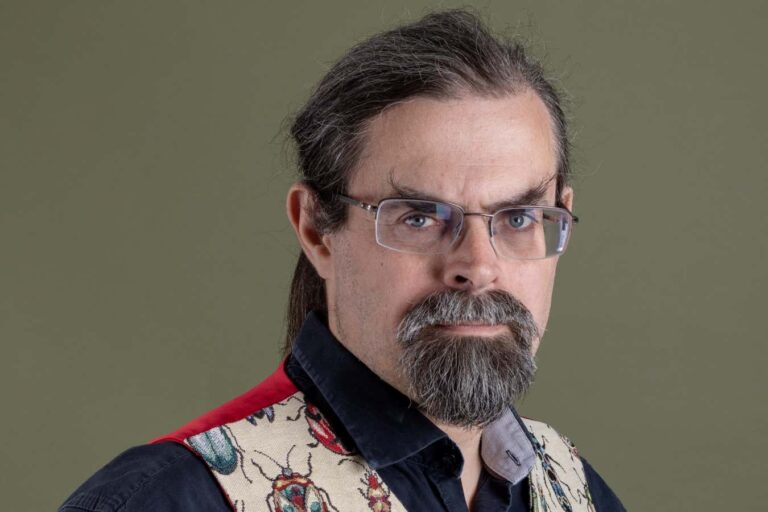
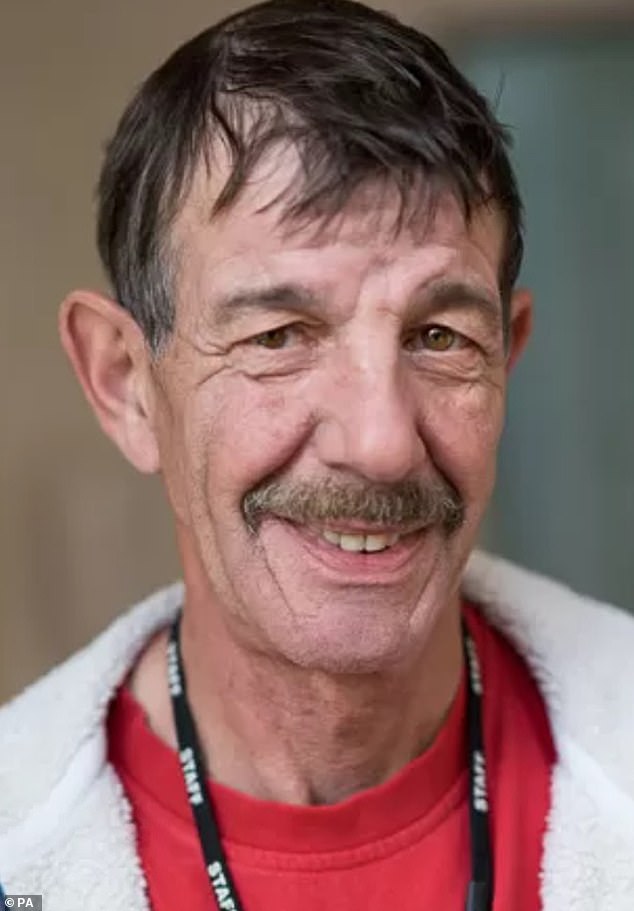
The family of Ian Coates (pictured), 65, who was killed during the Nottingham massacre on June 13 2023, have spoken out at a public inquiry

The inquiry is investigating how Valdo Calocane (pictured), 34, was allowed to carry out the three killings despite his history of violence


Calocane also slaughtered undergraduate students Barnaby Webber and Grace O’Malley-Kumar, both 19, in June 2023
She said the female officer kept going outside to speak to someone, adding: ‘She kept saying there’s no information, there’s no information. She couldn’t tell me anything for all those hours.’
She told the inquiry that police liaison officers later asked her to tell them what she knew about what had happened.
‘And I said, “Yes, Ian was in an RTA but I don’t know any more than that”, Ms Newton added.
‘They looked shocked on their faces and said, “You’ve got the wrong information, you’ve been told the wrong information. Ian’s been killed and he’s been stabbed”. That’s how I learned.
‘The first information, I accepted, but the second I couldn’t accept. You don’t know which one was true, or have they got the wrong person. It felt like he had been killed twice. It wasn’t right.’
Ms Newton said she had told Nottinghamshire Police that she did not want to see the face of Calocane – who is being referred to during the inquiry as VC – but was later shown videos of him walking around the city on the morning of the attacks.
She said: ‘I didn’t want to see VC’s face, I didn’t want him to take my life over as much as he has done. I wanted to keep his face out of my mind.’
Ms. Newton was giving evidence alongside Mr. Coates’s two sons, James and Lee, at a public inquiry in London into the attacks.
The massacre came three years after Calocane was arrested by Nottinghamshire Police in May 2020 for hammering down neighbours’ doors. In one case, a woman jumped from a first floor window to escape him.
But, after arresting Calocane, police dropped the case because a consultant psychiatrist deemed the schizophrenic ‘incapable’ mentally to be held responsible.
The inquiry is investigating how Calocane was free to kill despite his history of violence.
Ms Newton said she only became aware of previous incidents involving Calocane and the police during the inquiry process.
She said: ‘I was never told any information about his past. The first time was this hearing – I didn’t know anything about any of this at all.’

Police forensic officers during the aftermath of the attack in Nottingham in June 2023
During a meeting with the now-retired chief constable of Nottinghamshire Police Kate Meynell, Ms Newton said she was not told about Calocane’s past involvement with police but was instead told about a WhatsApp group in which police officers had discussed the fatal attacks.
Asked what she would have done had she had known this information, Ms Newton said: ‘I wouldn’t have thanked Kate Meynell for all the information she gave me and for letting me come and visit her. I have lost faith in the police and I feel like I have not been given the information and have been lied to really.
‘I should have been given information about his past, not straight away, but down the line. She could have given me more information when I went, rather than just telling me about the WhatsApp group.’
In the wake of the attacks, Ms Newton asked Nottinghamshire Police how Calocane was allowed to be ‘roaming’ the city so long after he had carried out the fatal stabbings and was given ‘excuses’.
She said: ‘I did ask that question to Kate Meynell and (my family liaison officer) and they said it could be quite a few reasons, there was not enough police that morning, Nottingham is a big place.
‘Those were the excuses I got. I did say it was early in the morning and there wouldn’t have been a lot of people around. They said they might just not have had enough police officers in that morning.’
Ms Newton told the inquiry she was ‘glad this has all come out’ but added that ‘the police need to be more helpful’.
She said the prosecution of Calocane was not explained clearly enough, adding: ‘I mean meeting or you’re introduced to people, you never, you don’t actually understand because it’s rushed, it’s not explained enough, they think you understand because it’s their job.
‘The way they talk about the criminal justice… you don’t understand it.’
Calocane was discharged by Nottinghamshire Healthcare NHS Foundation Trust (NHFT) in September 2022.
Ms Newton read an email she sent to NHFT following meetings with representatives from the trust.
She read her email to the inquiry, which said: ‘I want you to understand that I am not interested in apologies because it is too late, too little.’
In the email, she said she held the NHS responsible for the deaths of Mr Coates, Mr Webber and Ms O’Malley-Kumar.
‘I have zero confidence in any changes that NHS makes in the future. It does not learn its lessons and does not care about people, only statistics and numbers,’ she wrote.
‘I believe that is how you see Ian Coates, as just another statistic that you brush aside and file away. What I want is the individuals responsible for the catastrophic NHS failings to be held to account.’
She added: ‘I want those who failed to manage VC’s care to be struck off from ever being in a position of care ever again.’
Ms Newton told the inquiry: ‘I think the police have let the public and myself and all other families down.”
Asked why, she said: ‘Because they didn’t do their job properly, they didn’t communicate with the NHS, the NHS didn’t communicate with the police. So I think between them all they’ve caused this.’
The probe heard on Monday that Mr Coates’s body was kept at the crime scene for nearly 15 hours in June 2023 while police investigated.
Tim Moloney KC, who represents the bereaved families, told the hearing that for more than two hours after the grandfather died, there was no forensic tent and he was covered in blankets.

Calocane, now 34, pleaded guilty to manslaughter on the grounds of diminished responsibility and is serving an indefinite hospital order at Ashwood High Secure Hospital in Merseyside
James and Lee Coates have previously said their father was just a few months away from retiring when he was killed.
James said he had been aware of a police incident in the city on the day of the attacks, which had cordoned off roads as colleagues were struggling to get to work, and later that someone had been killed on Magdala Road, which was close to where he lived, but had no idea it was his father.
‘It wasn’t until 3pm that I was walking up the road to my house that I decided to check Instagram. I’d not got notifications on, but I got a message from (a family friend) saying “I cant believe what’s happened to your dad, please ring me”.
‘And my first instinct is it’s a hoax message and it’s been hacked and trying to get me to ring this number and then I asked her is this a joke and she messaged again reiterating that I should call her.
‘She was in hysterics, she said my dad had been involved in an RTA but she had seen what was going off in Nottingham. I still didn’t believe it.’
James told the inquiry they only received a call from Nottinghamshire Police 10 minutes before former chief constable Kate Meynell did a press conference to let Nottingham residents know what had happened, by which point they had tried calling a helpline they saw on the television, non-emergency number 101 and even 999 to try to get information about what had happened to their father.
‘By then, we’d pieced almost everything together ourselves from social media and the news so then it was just a case of them apologising that we had to do that,’ he said.
James’s brother Lee told the inquiry he found Ms Meynell’s claims on TV that officers were ‘doing everything for the bereaved families’ rude and disingenuous.
He said: ‘She’d personally not made any contact with us. We’d had to fight to find out information about our dad.’
James told the inquiry: ‘Police logs showed my number was available to police at 12 minutes to eight in the morning and we didn’t get a call back until around 5pm, (which) is disgusting for me.’
The brothers said they felt ‘abandoned and overwhelmed’ that they were not fully informed about what had happened to their father and that they were an ‘afterthought’ when vigils were arranged in the city.
Speaking of the moment he saw Calocane for the first time in court, James told the hearing: ‘It struck me how large he was… my dad was six months from retirement, he was quite skinny, he lived off coffee and cigarettes.
‘Seeing his build, I knew there was never going to be any chance of them protecting themselves against him.’
Lee said he was ‘absolutely distraught’ when he heard in November 2023 that he should expect Calocane to plead not guilty to murdering his father.
‘I promised (Ian’s partner Elaine Newton) that this guy will go away for the rest of her life’, he told the inquiry.
‘So when we got this information that he’s potentially not going to go away for the crimes that he’s committed, where they’re telling you that he’s unsafe to go into a normal prison.
‘Of course he is, he’s a monster, you know, look at what he’s done. This is why we have prisons, no? So we can put people like this away.’
Calocane had been sectioned four times in the three years before his fatal attack, but repeatedly released back into the community despite concerns about his deteriorating behaviour.
He had a history of violence and reportedly assaulted two colleagues at the factory where they worked just weeks before he struck.
Yet Leicestershire Police called to the scene did not realise Calocane already had an outstanding warrant for his arrest by Nottinghamshire Police for allegedly assaulting an emergency worker – something the inexperienced officer admitted was an ‘operational mistake’.
The inquiry also heard police evidence went missing, with information not properly shared.
Calocane, now 34, pleaded guilty to manslaughter on the grounds of diminished responsibility and is currently serving an indefinite hospital order at Ashwood High Secure Hospital in Merseyside.
He will stay there until either the Secretary of State for Justice or a mental health tribunal assesses that he no longer poses a risk to the public.
It is understood that he is staying in a room with a hatch in the door, under supervision around the clock and with almost no contact with other patients.
An insider told the Mail: ‘When he arrived he was distressed and extremely unpredictable which meant he had to be contained under the most secure of regimes,’ said an insider who worked at the hospital.
‘We were briefed that we were dealing with an individual who was very ill and potentially extremely dangerous. With patients as sick as him you just never know when he might react and become violent – there were no clues as to how he might behave or what his triggers might be because none of us had a relationship with him.
‘It was extremely stressful for everyone. Protocols were developed for dealing with him quite quickly which meant that you always had a team who had the capability to restrain him if necessary.
‘There were a few occasions where he became violent but fortunately no one was hurt and he was restrained before he could either damage himself or anyone else.
‘I’d say that in all the years that I’ve worked at Ashworth he is probably the most dangerous patient I have worked with, because he was so unpredictable.’
Born in Guinea-Bissau, Calocane’s family first settled in Portugal before moving to Britain when he was 16.
Having worked as a cleaner and labourer after leaving school, he enrolled at the University of Nottingham to study mechanical engineering.
It was while there that his mental health rapidly disintegrated and he was diagnosed with paranoid schizophrenia in 2020.