
The family of a murdered mother-of-two who disappeared in an enduring mystery have told her killer husband to tell them where her body is or ‘go back to your cell’.
Arlene Fraser’s sister Carol Gillies believes recent changes to parole laws are their last chance of forcing Nat Fraser to reveal the location of her remains.
Her disappearance in Elgin in 1998 led to one of the biggest police investigations in Scottish history and resulted in a murder conviction for her estranged husband.
Fraser, 67, was sentenced to at least 17 years after a retrial in 2012 for paying a hitman to murder his 33-year-old wife, whose body has never been found.
In September the Scottish Parliament passed ‘Suzanne’s Law’, meaning the Parole Board must take into account a refusal by a killer to reveal the location of remains.
The law previously stated that failure to reveal the location may – rather than must – be considered when deciding whether someone will be released from prison.
The changes, which come into force next month, have raised hopes that the family may get closer to the truth when Fraser becomes eligible for parole in 2028.
In a new BBC documentary out today, Mrs Gillies says: ‘You spend the whole time just trying to think of a way to get Arlene back and Nat’s the only one that knows.

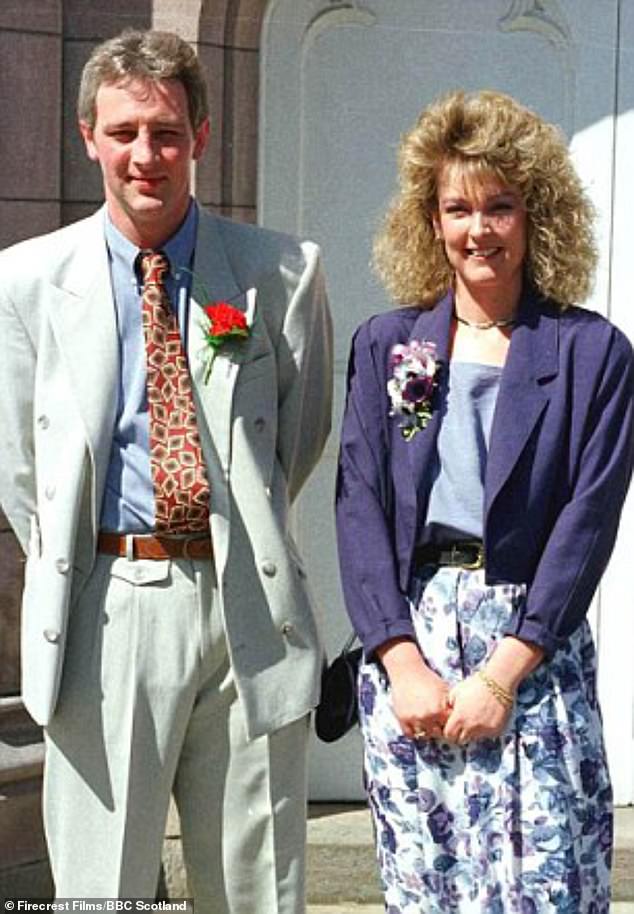
Arlene Fraser with her estranged husband Nat Fraser, who was sentenced to 17 years in prison

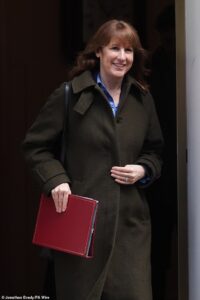
Mrs Fraser’s sister Carol Gillies, who has told her killer husband to tell them where her body is

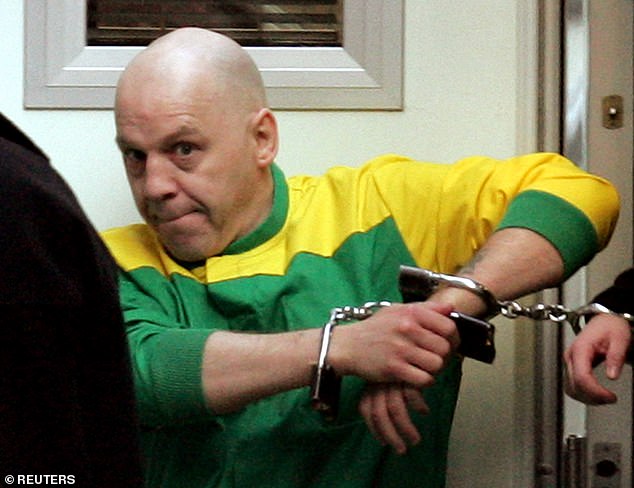
Nat Fraser (right, in 2008) was jailed after paying a hitman to murder his 33-year-old wife
‘He controlled Arlene when she was alive and he is controlling her when she is dead. It’s a form of mental torture.’
Speaking in ‘Murder Case: The Hunt for Arlene Fraser’s Killer’, Mrs Gillies, 63, also says that Suzanne’s Law ‘gives Nat Fraser a choice: tell us where her remains are or go back to your cell’.
She adds: ‘It’s the final chance of getting to the truth because if the Parole Board can’t do anything to help us he will get out and the truth will be gone for ever.
‘We need to believe that one day we won’t necessarily bring Arlene home but one day we might get somewhere near the truth and that’s what I’m holding on to.’
In a further statement issued by the BBC today, Mrs Gillies said she ‘saw this documentary as an opportunity for me to shine a light on crucial matters such as violence against woman and the parole process’.
She also told how it was a ‘difficult watch to see footage of Nat Fraser denying all responsibility’, adding: ‘We feel incredibly sad that a life watching her children grow up has been taken from her by this brutal crime. It has also been extremely painful to watch videos of a living Arlene.’
‘The documentary outlines the horrendous torturous journey that Arlene’s murder has taken us on. There has been a stream of hearings, High Court trials, press conferences and of course documentaries.
‘However, thanks to the efforts of the police, the media and the justice system we have overcome every hurdle and Nat Fraser was convicted and imprisoned twice despite there being ‘no body’.’

Mrs Fraser was last seen as she waved her children off to school in Elgin on April 28, 1998

A police photograph of Arlene Fraser after she was assaulted by her husband Nat Fraser
Former detective superintendent Alan Smith, who worked on the murder investigation, tells the documentary: ‘The agony here is the family don’t have a headstone, they don’t have a grave that they can visit.
‘That for me is an extension of the torture that Nat Fraser has exerted on this family.’
Mrs Fraser was last seen as she waved her children off to school in Elgin on April 28, 1998. The children later returned home to an empty house.
A huge search was launched to find Mrs Fraser and detectives began investigating her troubled marriage.
A trial at the High Court in Edinburgh later heard that Fraser was motivated by his wife leaving him and seeing a lawyer about getting a payoff.
In 2000, Fraser pleaded guilty to throttling his wife in a separate attack about a month before she disappeared, on March 22, 1998.
He was jailed for 18 months over this incident – although the family told of their disappointment at the time that an attempted murder charge was dropped.
After further investigations, Fraser was found guilty of murder in 2003 and jailed for at least 25 years.
But he continued to protest his innocence and launched an appeal which eventually saw his conviction quashed by the Supreme Court in 2011.

Former police detective superintendent Alan Smith, who worked on the murder investigation

A huge search was launched to find Mrs Fraser and detectives investigated her marriage
Fraser was then found guilty for a second time following a six-week retrial in 2012 and jailed for at least 17 years – backdated to June 2011 – before he can apply for parole.
Judge Lord Bracadale told Fraser at this second sentencing hearing: ‘The evidence indicated that at some point you arranged for someone to kill your wife, Arlene, and dispose of her body.
‘Thus you instigated in cold blood the pre-meditated murder of your wife and mother of your children, then aged 10 and five years.
‘The murder and disposal of the body must have been carried out with ruthless efficiency, for there is not a trace of Arlene Fraser from that day to this and her bereft family continue to live with no satisfactory knowledge of what happened to her remains.’
Suzanne’s Law is named after Edinburgh bookkeeper Suzanne Pilley, whose body has not been found after she was killed by her former lover David Gilroy in 2010.
Mick McAvoy, executive producer at Firecrest Films, which produced the documentary, said in a statement: ‘Arlene Fraser’s case has remained deeply rooted in the Scottish public consciousness since her disappearance in 1998.
‘With support from her loved ones, this series explores the intricacies of Arlene’s case from the moment she went missing in April 1998 right up to the present day, with her family’s fight in the Scottish Parliament to change the parole process for ‘no body’ murderers.’
Murder Case: The Hunt For Arlene Fraser’s Killer is available on BBC iPlayer. It will also air on BBC Two tomorrow at 9pm