





Image source: Getty Images
Shareholders in this FTSE 250 stock have had a miserable week. In fact, they haven’t had much to cheer about for the past 18 months or so. From August 2024 to now (9 March), the group’s share price has tanked 67%.
But sometimes a beaten-down stock can be a bit of a bargain. Could this be the case here? Let’s discuss.
What’s going on?
Vistry Group (LSE:VTY) was punished by investors last Wednesday (4 March). Its share price fell 25.6% following the publication of its 2025 results. The housebuilder’s shares were last trading at this level in November 2012. Nearly 14 years of going nowhere is hugely disappointing.
Last week’s events are even more depressing given that shareholders probably thought the worst was behind the group.
In October 2024, Vistry issued a profit warning after it discovered it had got some of its cost estimates wrong. Embarrassingly, just four weeks later, it had to announce the situation was worse than the group had initially thought. A third warning followed in December 2024, following a deterioration in trading conditions.
But a closer look at the group’s 2025 results suggests investors may have over-reacted last week. At 59.3p, adjusted earnings per share was 6% higher than in 2024. The stock now trades at an attractive 7.8 times historic earnings.
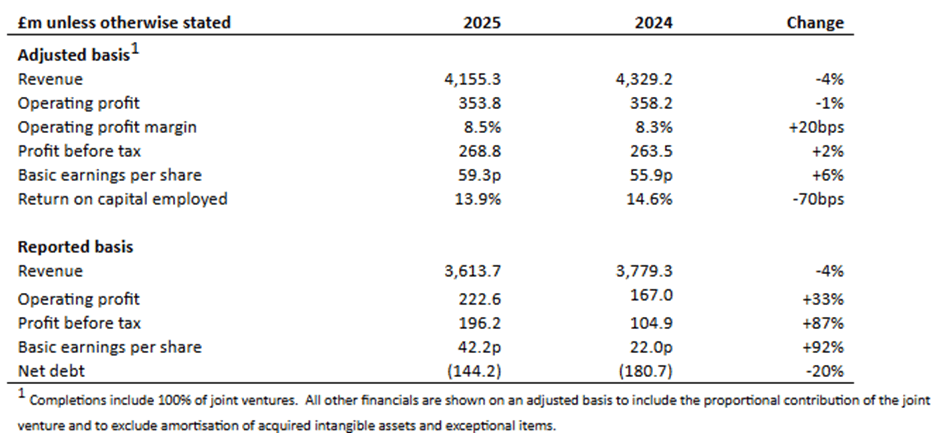
However, the group did warn that it was employing “targeted pricing and sales incentives”, which would lead to a “lower overall margin” this year. Even so, it expects to end 2026 in a net cash position.
What I suspect upset the City the most was the decision to suspend its share buyback programme. The group stopped its dividend in 2023, diverting the money saved to buying its own shares. This policy has now been scrapped with the group planning to use its surplus cash to reduce its debt.
A different business model
The group’s unusual in that its main focus is affordable housing, commonly defined as “housing for sale or rent for those whose needs are not met by the market”. In 2025, it built one in seven of these types of properties in the country. It should therefore benefit from the government’s £39bn Social and Affordable Homes Programme (SAHP), which is to run for 10 years until 2036. The plan is to fund 300,000 new homes.
Even if the group doesn’t secure funding, many of its customers – including Registered Providers and Local Authorities – are likely to succeed. These partnerships accounted for 74% of completions in 2025.
Despite its recent woes, I think Vistry’s worth a closer look. It retains a strong balance sheet and has an order book worth £4.5bn. And despite tough market conditions, it managed to increase its average selling price in 2025.
But it might take a while before things start to improve so the stock’s likely to appeal only to patient investors. I’m confident that the group will be successful in bidding for SAHP cash – nobody in this sector of the market comes close to matching Vistry’s size and scale. But with planning bureaucracy and all the other red tape associated with government contracts, I suspect it will be a few years before these properties are built.
However, on balance, I think the stock’s one for long-term investors to consider.