

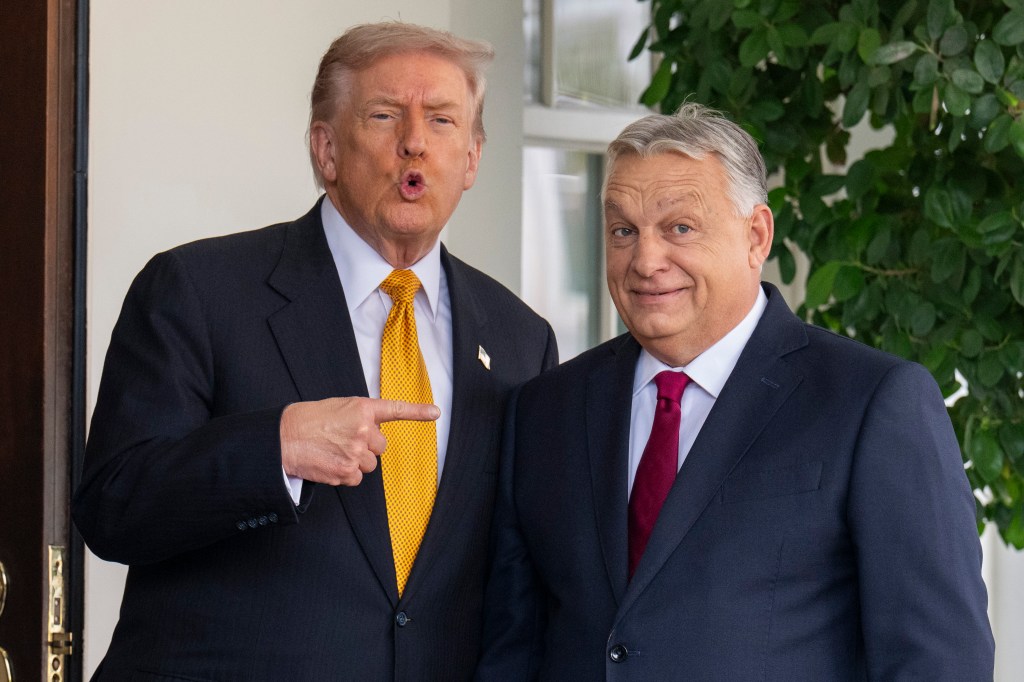
Donald Trump and numerous far-right European governments have created a “chilling effect” that is causing creatives across the continent to self-censor.
That is an alarming conclusion in a report published today from the Federation of Screenwriters in Europe (FSE), which is leading a call to action at Series Mania against what it sees as a frightening pusback against cultural institutions and freedom of expression.
The FSE’s “Right to Write” report said that globally “there has been a substantial shift in political beliefs and values in the last decade or so, which have led to a substantial rise in popular support for hard-right or extreme-right parties.” It flagged seven far-right parties in Europe currently governing either alone or in coalition, in Croatia, Czech Republic, Finland, Hungrary, Italy, Slovakia and Sweden.
Attacks on creatives from these governments have led to a “chilling effect,” the report explained, by which “subjective decisions as to the creative, commercial and audience potential of film and television projects are made, even at early development stage.”
“This is a system clearly wide open to abuse if malign actors were to have control of these funds and the subjective decision-making process on which it normally operates,” it added. “Knowing what happens when a far-right party comes to power, broadcasters and production companies are also adapting their production and development portfolios in response to this unstable and shifting political landscape. Their risk management strategies see them moving away from stories which might attract the opprobrium of increasingly powerful far-right actors.”
The FSE flagged actions by the Hungarian and former Polish governments in particular.
The “chilling effect must also apply to the creators themselves,” said the report.
“Self-evidently screenwriters pitch projects to those they think will be interested,” it said. “Realising that romantic comedies, escapism and historical dramas, that demonstrate the innate capacity of their compatriots to defeat foreign invaders, are now the required genres, writers may decide to put their immigrant or LGBTQ stories in the bottom drawer.”
The FSE pointed to the European industry’s reliance on public broadcaster (PSB) funding and government agencies for projects, and how this could be under threat, “leading to a reduction in the volume of work available for screenwriters and many others,” as it flagged numerous examples of PSBs losing out in recent years.
It floated, however, that a “relatively positive picture for film and television production in Europe” is in “marked contrast” to the U.S., which made less than half of the feature films produced in Europe in 2023, and around 60% of the number of scripted series that same year.
“Lasting consequences” from Trump administration
Unsurprisingly, the report singled out Trump and his administration, raising concerns that his “autocratic or authoritarian” government could indirectly, or directly, impact funding for European projects.
“Far-right hostility to the EU’s imposition of regulatory frameworks, combined with the Trump administration’s hostility to regulation which it claims impinges on US companies, raises the prospect that the legislative and policy underpinning of Europe’s audiovisual ecosystem could be weakened, with lasting consequences for creative livelihoods,” it said. “The Trump administration in the US has made clear its dislike of EU legislation, in the digital field in particular.”
We have previously written about how the Trump factor could impact the antitrust process probing the $111B Paramount-Warner deal. He has for the past year or so repeatedly threatened to impose 100% tariffs on movies made outside the U.S.
The FSE flagged actions like the closure “for renovations” of the recently-renamed Trump Kennedy Center as concerning for freedom of expression around the world, while criticizing JD Vance’s now infamous speech in which he said “free speech, I fear, is in retreat,” in Europe.” “Given that twenty-one of the twenty-seven member states of the European Union have higher places in the RSF Press Freedom Index than the US, which is at fifty- seven on the Index, it is difficult to treat the Vice-President’s comments seriously.”
The report did note, however, that even some far right parties have become “disenchanted” with Trump’s administration due to “attacks on European sovereignty, most egregiously in respect of Greenland.”
Rights and responsibilities
The report’s authors and supporters are at Series Mania in Lille this week shouting about its resolutions, which are that the FSE encourages members to monitor and report on individual incidents of censorship, public statements by political figures, and controversial appointments to cultural institutions.
The FSE “may use this information to advocate at the European level and to seek support from institutions or non-governmental organisations, with the aim of either establishing a dedicated European Observatory on freedom of artistic expression in audiovisual writing or ensuring that this specific field is fully integrated into existing frameworks.”
“We live in a time of authentic crisis,” the report concluded. “But these crises cannot be resolved by denying that they exist. Screenwriters have a right and a responsibility to resist the corrosion of freedom of expression, to oppose those who would tell them what, how and whether they can write and to insist on the power and value of their stories.”