



David Lammy’s ‘soft justice’ reforms of jury trials have been supported by MPs who voted by a majority of 101 to pass the bill at its first Commons hurdle.
Tonight’s decision to back the controversial Courts and Tribunals Bill comes despite a Labour MP condemning the curbs in emotional speech about being raped.
Charlotte Nichols said that the attack while she was an MP had caused PTSD and led to her being sectioned for her own protection.
She accused the Justice Secretary of ‘weaponising’ the experiences of rape victims to justify changes ‘that aren’t directly relevant to them’.
A significant number of Labour MPs abstained from voting for the Bill on Tuesday night after many raised objections.
Around 90 Labour MPs had no vote recorded, suggesting a considerable amount of dissent and raising questions about whether it will become law.
Ten Labour MPs voted against, however 301 voted in favour, allowing it to pass its first Commons hurdle.
Seven Labour MPs, including former shadow chancellor John McDonnell, also voted in favour of a Conservative amendment to reject the Bill. The amendment was defeated.

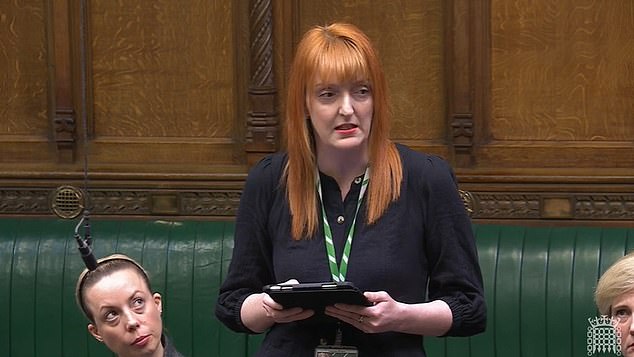
Labour MP Charlotte Nichols talked about her experience during a debate on the jury trials legislation in the House of Commons
The Bill passed its second reading despite Jo Hamilton, a victim of the Post Office scandal, warning that curbing jury trials will lead to ‘many more miscarriages of justice’.
More than 3,200 lawyers, including 300 top barristers and retired judges, also signed a letter blasting the plans saying they are ‘based on little evidence’.
The controversial Courts and Tribunals Bill will remove jury trials for cases with a likely sentence of under three years to tackle the court backlog.
Ahead of the Commons vote, Mr Lammy, who is also Deputy Prime Minister, faced a furious backlash to his plans.
Addressing MPs, he acknowledged that the changes had provoked ‘fierce’ debate but said it would reduce trial times and free up hearing days.
He said that if no action was taken, the backlog could reach 200,000 cases in a decade and pointed to research which said it would reduce trial times by at least 20per cent.
‘The choice before the House is stark. We cannot continue with this rising backlog,’ he said.
‘Victims are currently worn down, people simply give up, cases collapse and offenders remain free. Free to roam the streets, free to commit more crimes, free to create more victims.’
But Ms Nichols accused the Government of not helping rape victims as she waived her right to anonymity to reveal that she was attacked.
She revealed she had waited 1,088 days for the trial as she criticised the court backlog for exacerbating her experience.
She accused the Government of pitting survivors and defendants against each other in a ‘deeply damaging’ way.
‘Don’t say that this bill helps deliver justice for rape victims until it actually materially does,’ she told Mr Lammy.
Ms Nichols added: ‘There is so much that we can be doing for rape victims that isn’t the Lord Chancellor using them as a cudgel to drive through reforms that aren’t directly relevant to them.
‘In this debate, experiences like mine feel like they’ve been weaponised and are being used for rhetorical misdirection.’
Meanwhile, rebel ringleader Mr Turner said the Government’s proposed changes to juries were ‘unworkable, unjust, unpopular and unnecessary’.
However, the former barrister said he would abstain because he was confident these measures would not become law.
‘I am more confident now than ever I was that the worst parts of this Bill will be defeated at amendment stage,’ he said.
He added that under the proposed legislation, not one of those 900 sub postmasters in the Horizon scandal who were convicted would have been entitled to a trial before their peers.
It came after former sub-postmaster Jo Hamilton who was wrongly convicted in the scandal wrote to Mr Lammy urging him not to ditch the ‘safety net of a jury’.
Labour MP Stella Creasy suggested she could not support the Bill as she did not believe magistrates’ courts have capacity for cases that will no longer be heard by crown courts.
Labour MP Jon Trickett also branded the plan to curtail access to jury trials ‘oppressive’ and ‘authoritarian’.
He said that jury trials are ‘a fundamental part of our constitutional a system and the idea somehow that we should begin to abandon it is a mistaken one’.
He added: ‘I am not convinced. This is oppressive, it’s authoritarian and quite honestly, Deputy Prime Minister, as much I admire, it’s reactionary, too.’
Shadow justice secretary Nick Timothy said the Government was attacking ‘an ancient English right’ which made the UK legal system ‘the envy of the world’.
He said the Government was ‘rushing’ proposed changes to jury trial through Parliament ‘at breakneck speed’.
Father of the House Sir Edward Leigh said the court backlog was a ‘temporary administrative crisis’ which should not be used to justify the jury trials changes.
Meanwhile, victims’ minister Jess Phillips said she was a victim of the courts backlog with a man accused of breaching a restraining order against her not due in crown court until 2028.
Under the Courts and Tribunals Bill, cases with a likely sentence of three years or less will only be heard by a single crown court judge, without a jury, in the biggest shake-up of the criminal justice system for 800 years.
Magistrates’ powers will be increased so they can hand down sentences of up to 18 months’ imprisonment, up from 12 months currently, so they will be able to deal with more cases.
The proposed changes follow recommendations from a review by retired Court of Appeal judge Sir Brian Leveson published last year.
The Commons vote came after thousands of lawyers signed a letter accusing Mr Lammy of seeking to erode a ‘deeply entrenched constitutional principle for negligible gain and with substantial risks’.
The letter was organised by the Bar Council and signed by top lawyers, including the former director of public prosecutions Sir David Calvert-Smith.
It said that ‘chronic underfunding’ was to blame for the backlog, adding: ‘Juries have not caused this crisis. Practically, the proposals are based on little evidence.’
The controversial court reforms passed their first Commons hurdle, with 304 MPs voting in favour to 203 voting against, giving a majority of 101.