
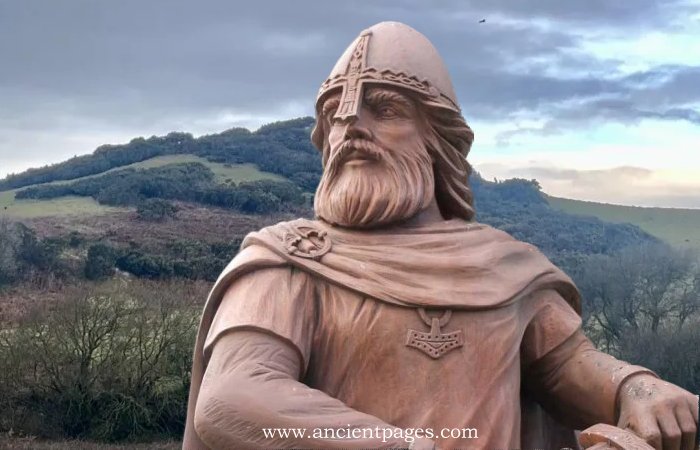
Jan Bartek – AncientPages.com – Ivar the Boneless, a renowned Viking leader and son of Ragnar Lodbrok, is celebrated for founding a Viking dynasty in Dublin and leading formidable campaigns in 9th-century England. Despite his historical significance, Ivar’s burial site remains undiscovered. Traditionally, some believed he was interred at Repton in Derbyshire; however, recent archaeological theories suggest his grave may actually be located in west Cumbria.

Archaeologist Steve Dickinson of the European Association of Archaeologists has proposed that Ivar was buried with his ship beneath a hill known as The King’s Mound—a site referenced in medieval texts. Dickinson describes this potential discovery as evidence that a “Viking necropolis” could exist on the Cumbrian coast. If confirmed, The King’s Mound would be among only 16 monumental ship burials identified across north-west Europe and would represent the first such find within the UK.

Steve Dickinson is searching for the Viking’s long-lost grave. Credit: Steve Dickinson
Before Christianity became widespread among Vikings, it was customary to bury prominent individuals with their possessions—often inside boats or wagons—to aid their journey to the afterlife. Ship burials were rare honors reserved for high-ranking warriors or nobles like Ivar. These ceremonies involved placing the deceased on a ship, along with valuable items such as jewelry, weapons, foodstuffs, regalia, and, in some cases, sacrificed animals or pets. The most notable example of this practice in Britain is Sutton Hoo in Suffolk.

The top of the hill could contain a Viking ship and the remains of Ivarr the Boneless, according to archaeologist Steve Dickinson. Credit: Steve Dickinson
Dickinson’s research into Icelandic sagas led him to repeated references to “Coningeshou,” meaning The King’s Mound—strengthening his belief that this could be Ivar’s final resting place. Although any future discovery may not conclusively identify Ivar himself due to limited evidence from ancient gravesites, ongoing investigations continue at this secret location near the sea: an impressive mound measuring about 60 meters (197 feet) wide and 6 meters (20 feet) high.

Metal ship rivets have been found in the area. Credit: Steve Dickinson
Later this year, Dickinson plans ground scans at The King’s Mound to search for signs of burial activity; preliminary finds from nearby areas lend support to his theory. While definitive answers remain elusive, these efforts highlight both historical intrigue and modern archaeological investigation surrounding one of history’s most enigmatic Viking leaders.
See also: More Archaeology News
“We’ve been able to use metal detecting to find various things, including, interestingly enough, very large ship rivets and lead weights used in weighing out a significant silver hoard that was found nearby,” he told the BBC.
There are also 39 smaller mounds surrounding the hill, which he said could contain the graves of Ivarr’s retainers, family members and warriors.
“They kind of formed the honour guard for the ruler,” Dickinson added.
“It’s quite exciting really – there’s a whole kind of Viking necropolis up on the coast of Cumbria, which can keep archaeologists busy for years.”
Written by Jan Bartek – AncientPages.com Staff Writer