

Brits have been warned that inflation could stick at 3 per cent until the end of the year unless the Iran war is over soon.
The Treasury’s OBR watchdog said if oil and gas prices stay at current levels the headline CPI would likely stay a percentage point higher than predicted at the Spring Statement just last week.
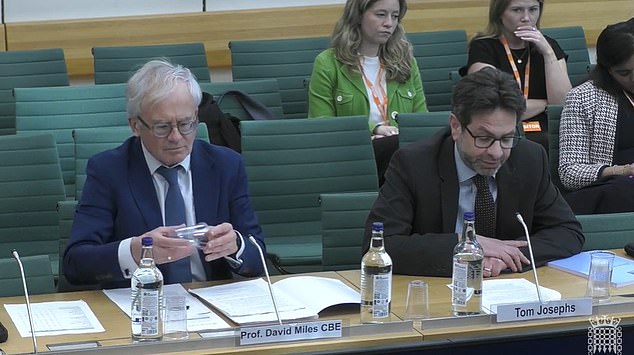
Giving evidence to MPs, Prof David Miles cautioned that if energy prices spiked again as they did yesterday the situation could be far worse.
However, he also suggested that a quick return to lower levels would mean ‘very limited’ impact on inflation across the year.
CPI was running at 3 per cent in the 12 months to January, far above the Bank of England’s 2 per cent target. There had been hopes that Threadneedle Street would ease pressure on mortgage-payers by cutting interest rates this month, but the Middle East crisis looks to have dashed those hopes.
The FTSE 100 joined other global stock markets rallying today after Donald Trump suggested the military campaign in the Middle East is ‘very complete’.
The comments sent oil prices tumbling from the eye-watering highs hit yesterday, despite mixed signals as America and Israel launched another wave of attacks.
However, the crucial Strait of Hormuz – the route for around a fifth of the world’s oil supplies – remains effectively shut.
Oil prices remain about a fifth higher than before the crisis, and gas prices are also up.

Giving evidence to MPs, the OBR’s Prof David Miles said if oil and gas prices stay at current levels the headline CPI would likely stay a percentage point higher than predicted at the Spring Statement just last week

The forecasts released by the OBR last week suggested CPI inflation would be falling sharply to 2 per cent this year

Rachel Reeves has said the developments in the Middle East were already likely to push up inflation

The FTSE 100 joined other global stock markets rallying today after Donald Trump suggested the military campaign in the Middle East is ‘very complete’
The British Chambers of Commerce has warned that UK economic growth will slow and unemployment will continue rising.
The BCC’s latest economic report said the geopolitical situation remains ‘highly uncertain’ but could ‘change the economic outlook considerably’.
It predicted that headline CPI inflation will be 2.7 per cent by the end of the year, instead of the 2.1 per cent the body previously anticipated.
Keir Starmer has said the longer the war continues the more likely it is there will be economic damage in the UK.
Speaking in the House of Commons last night, Ms Reeves said the developments were already likely to push up inflation.
‘The economic impact of the situation in the Middle East will depend, of course, on its severity and its duration,’ the Chancellor said.
‘The movements that we have already seen are likely to put upward pressure on inflation in the coming months.’
Ms Reeves said she was ready to support ‘a co-ordinated release’ of international oil reserves to ease the economic shock of the crisis and called for action to ‘guarantee the security of vessels passing through the Strait of Hormuz’.
Economist Gillian Tett cautioned that that world does not ‘know what the off ramp is actually going to be or not be going forward’.
She told BBC Radio 4’s Today programme: ‘We’ve already seen the knock-on effect on supply chains with companies in Asia…. about half a dozen chemical companies declaring force majeure, which basically means they are ripping up their contracts because they can’t get access to the key components they need.
‘That type of event cannot be unwound quickly, and it’s not good for confidence.’
The Chancellor met the finance ministers of other G7 nations yesterday to discuss the possibility of such a release, but it concluded without agreement on any solid action.
Susannah Streeter, Chief Investment Strategist of Wealth Club, said the ‘flash of fear’ over oil prices was ‘fading’.

Oil prices tumbled from eye-watering highs overnight, despite mixed signals as America and Israel launched another wave of attacks

The FTSE 100 joined other stock markets rallying today after Mr Trump’s latest comments – although it remains lower than before the war began

She added: ‘A relief rally is now taking hold as hopes lift that an end to the conflict could be in sight.
‘But given that the fighting is continuing and the key Strait of Hormuz remains impassable, worry is still percolating.
‘Oil prices remain more than 25 per cent higher than before the conflict began. Trump has pledged that the US Navy will provide a guard for tankers through the Strait, but any timeline for that is highly obscured, with forces for now focused on taking out military infrastructure rather than becoming ship escorts.
‘Until a longer‑term resolution is found, companies and consumers are still set to pay the price for the attack by the US and Israel on Iran.’