

Australia’s leading supplier of crude oil has warned it may have to prioritise its citizens over its trading partners as shipments continue to be disrupted due to the war in Iran.
Malaysia, which is also Australia’s third-largest source of petrol and diesel, said it could not guarantee Australia’s petrol supply would not be disrupted if the war continues to drag on.
A spokesman for the Malaysian embassy told The Australian Financial Review: ‘Of course, the [Malaysian] government will prioritise our own needs, and only then we can look at whatever demand that we receive from overseas.
‘There are some other countries as well that might be able to supply to Australia, but still, everyone is having the same problem right now.’
Energy Minister Chris Bowen dismissed the concerns.
‘It wasn’t any particular announcement that they were taking any particular action,’ he told ABC’s Radio National.
‘Malaysia produces, refines, a lot more fuel than Malaysia or Malaysians would need at any given time.
‘We continue to talk to all our partners across Asia … about the flow of energy both ways … in terms of this crisis.

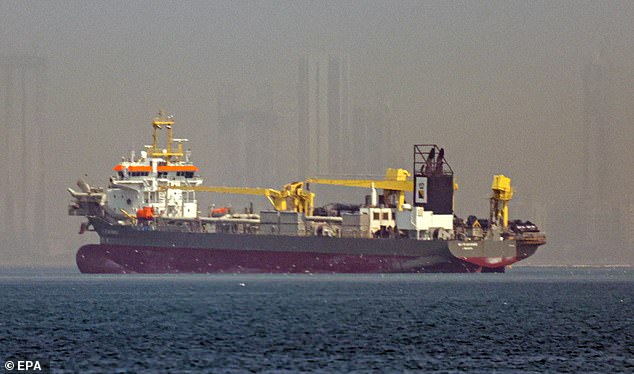
The conflict in the Middle East has impacted oil shipments in the region and caused the global price of oil to surge

Aussies face nervous times as fuel supplies are impacted due to the conflict in the Middle East
‘At the moment … the Malaysian government has taken no action to threaten the supply of fuel to Australia and all the ships that we’ve expected to arrive have arrived.’
Fuel deliveries scheduled for March have so far landed as expected, but market experts say supply shocks could begin to bite by mid-April.
It comes after Prime Minister Anthony Albanese convened an emergency meeting of state premiers at National Cabinet on Thursday to discuss Iran’s oil blockade.
The Reserve Bank has also warned of the potential for a recession if inflation rises because of knock-on effects to the supply chain from petrol price shocks.
Government modelling predicts the nation’s gross domestic product could be 0.6 per cent lower by 2027, about $18billion, if the conflict isn’t resolved soon, Treasurer Jim Chalmers revealed in a speech on Thursday.
China told refiners not to load cargoes that had not cleared customs by March 11, which meant fuel that was destined for Australia did not load at a Chinese port last weekend.
Asked about the shipment on Tuesday, Energy Minister Chris Bowen said: ‘All the indications to me from everyone who’s engaged in the supply chain is that the ships that have been expected to arrive have arrived and are expected to arrive over March and well into April.’
Australia’s second-largest source of refined petroleum South Korea has capped petrol and diesel exports at 2025 levels to stop its exporters from sending fuel to more profitable international markets.
South Korea, who provides about 20 per cent of Australia’s refined petroleum, gets 70 per cent of its crude oil from the Middle East.

Australia imports 90 per cent of its fuel, mainly from Asia

Anthony Albanese announced that the Fuel Supply Taskforce will be led by former chief executive of the Australian Energy Regulator, Anthea Harris
A spokesman for the South Korean embassy said: ‘The government of the Republic of Korea will continue to maintain close communication and work closely with the Australian government for the stabilisation of petroleum product supply chains.’
The war has exposed Australia’s fuel vulnerability as it imports about 90 per cent of its oil.
Malaysia produces its own crude oil but needs barrels from the Middle East to keep its export-oriented refineries running.
According to the Department of Foreign Affairs and Trade, Australian companies imported $6.9billion of refined petroleum products from Malaysia in the last financial year.
It accounted for 14 per cent of total refined fuel imports, to go with a further $4.4billion in crude oil, which was about a quarter of all imports.
Albanese announced on Thursday that the Fuel Supply Taskforce will be led by former chief executive of the Australian Energy Regulator, Anthea Harris.
Each state and territory will have a representative on the taskforce to ensure fuel is distributed to where it is needed.
The Prime Minister this week urged Aussies to stop hoarding petrol.
‘There is no less fuel in Australia than there was three weeks ago. This has been an issue of increased demand,’ Albanese said.
The PM and Foreign Minister Penny Wong have been hosting talks with their international peers to help ensure the sustained flow of fuel and diesel shipments to Australia.

While Australia imports refined fuel from Asia, those countries get their supply of crude oil from the Middle East
The Malaysian embassy spokesman said if Malaysia had enough supply for its own needs, it would continue exporting to Australia.
Oil is trading at $US111 per barrel, up from $US72 before the United States and Israel attacked Iran on February 28.
Former head of crude trading analytics at Shell Mukesh Sahdev said of Australia’s fuel situation: ‘We are okay for the week of March 22, and then we have a problem on the diesel side, just as demand for diesel is increasing. If you look at what is arriving, in diesel that week of March 22, we are importing 600,000 barrels a day. After that, the numbers are starting to fall.’