


New figures show Australia’s inflation rate ticked down just days before the Iran war made fuel prices soar.
Figures published by the Australian Bureau of Statistics on Wednesday showed the Consumer Price Index (CPI) was 3.7 per cent in the 12 months to February, down slightly from 3.8 per cent in January.
Trimmed mean inflation – which excludes volatile items to provide a clearer picture of underlying price pressures – was unchanged at 3.3 per cent.
The Reserve Bank of Australia’s inflation target is between two and three per cent. If inflation continues to move towards that range, the RBA would have more justification to consider cutting interest rates, which would help ease pressure on mortgage holders.
However, Wednesday’s inflation figure does not yet reflect the impact of disruptions in the Strait of Hormuz following the war on Iran that began on February 28, which are expected to push fuel prices higher and lift inflation in March.
Housing was the largest contributor to price growth, rising 7.2 per cent. The main drivers within the category were electricity (+37.0 per cent), new dwellings (+3.7 per cent) and rents (+3.8 per cent).
The surge in electricity prices reflects the end of government rebates from the previous year, which has pushed costs sharply higher in comparison.
Food inflation held steady at 3.1 per cent annually, with ongoing pressure from higher prices for meals out, red meat, driven by strong export demand, and coffee due to global supply shortages.

Governor Michele Bullock said the Iran war will add to Australia’s inflation problem, but domestic conditions were already too tight before its outbreak
Transport was the standout drag on inflation, falling 0.2 per cent over the year, with automotive fuel down 7.2 per cent prior to the Middle East conflict.
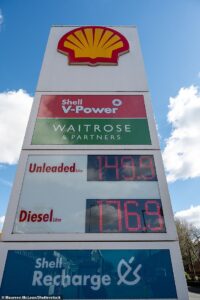
However, oil prices have risen significantly in March as the war drags on, adding further pressure to inflation, with some economists predicting fuel costs could rise by more than 25 per cent.
NAB senior economist Taylor Nugent said while the data had been overtaken by recent events, it remained important in shaping the Reserve Bank’s assessment of domestic inflation pressures before the Iran shock.
The central bank raised interest rates for a second straight month earlier in March.
Governor Michele Bullock said the Iran war will add to Australia’s inflation problem, but domestic conditions were already too tight before its outbreak.
Ahead of the inflation release, money markets were pricing in another three rate hikes by Christmas, which would leave the cash rate at its highest level in 15 years.
Global X ETFs Investment Strategist Marc Jocum warns more inflation pain will lie ahead.
‘This felt like a calm beach without waves just before a storm hits,’ he said.

Treasurer Jim Chalmers says rising oil prices will be challenging for Australia
‘This was February’s inflation, frozen in time before Middle East tensions escalated, before oil flows through the Strait of Hormuz came under threat, before fertiliser and food risks seeped back into the system, given that roughly a third of global fertiliser and a fifth of oil supply runs through that critical artery.’
Treasurer Jim Chalmers says rising oil prices will be challenging for Australia.
‘It is pleasing to see inflation come off a bit in February, but we don’t get carried away by that because we understand that the inflationary pressures from the war in the Middle East are substantial,’ Chalmers said.
He refused to waive the fuel excise, which would bring prices down by 50 cents a litre.
‘We have been focusing on a fair go at the petrol bowser, getting more supply of fuel, making sure it gets to regional areas, engaging with international counterparts and working with industry,’ he said.
‘That particular change (to the fuel excise) is not something we have been considering or costing up.’