



Australians are set to suffer from shockingly high utility bills next month as the cost of living continues to climb.
The Albanese government’s increase of health insurance premiums, the end of its energy bill rebate and the impact of the RBA’s interest rate rise will hit on April 1.
The result, according to insurance broker Compare Club, is the average household paying a mortgage could face more than $2000 a year in extra costs.
‘April 1 is shaping up to be one of the toughest single days for household budgets we’ve seen in years,’ head of research Kate Browne told the Daily Mail on Tuesday.
‘When you stack a rate rise, higher health premiums and the end of energy rebates on top of each other, you’re looking at more than $2,000 in additional annual costs landing at once, and that’s on top of everything Australians are already absorbing.’
The RBA’s monetary policy board lifted the cash rate to 4.1 per cent on March 17, with all four major banks passing on the mortgage pain in full.
According to NAB, this added around $120 a month to repayments on the average $736,000 home loan – equivalent to $1440 a year.
The month before, Minister for Health Mark Butler announced the average health insurance premium would rise on April 1 by 4.41 per cent.

The average household paying a mortgage could face more than $2000 a year in extra costs

Compare Club’s Kate Browne (pictured) said the high fee is a result of an interest rate rise, higher health premiums and the end of energy rebates on top of each other
Compare Club’s data found this means additional annual costs of between $80 and $160, depending on the level of cover.
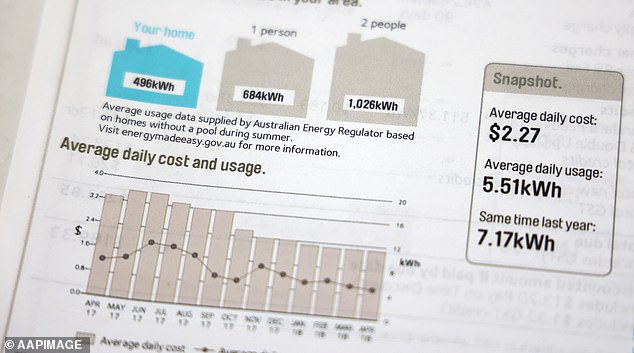
The $450 in annual government energy rebates – which households received from 2024 up to December last year – are also now gone, with the first unrebated quarterly bills arriving in letterboxes this week.
In Compare Club’s Financial Stress Index in March this year, more than a third (38 per cent) said they were financially worse off than the year before.
About 43 per cent of the 1000 Australians surveyed said they relied on credit at least occasionally to cover everyday household bills.
‘These are people trying to keep up with costs that are rising faster than their wages,’ Ms Browne said.
The pain also comes while petrol prices continue to alarm Australians as the Strait of Hormuz in the Middle East remains closed due to Donald Trump’s conflict in Iran.
For Australia, which relies heavily on imported refined fuels rather than direct crude from the Middle East, the crunch is coming fast and it has raised concerns for customers at the gas pump.
Nationwide, 91 octane unleaded petrol is selling for between $2.40 and $2.50 a litre, while diesel is edging closer to topping the $3.00 mark.

The RBA’s monetary policy board lifted the cash rate to 4.1 per cent on March 17, with all four major banks passing on the mortgage pain in full (pictured, RBA governor Michelle Bullock)

It comes as Australians are also grappling with his petrol and diesel costs
‘Short term, we’ll be okay. There’s a bit of fuel coming in until about mid-April,’ Macquarie University’s Doctor Lurion De Mello told the Daily Mail on Monday.
‘But after that, there’s too many uncertainties. Tankers are being diverted, and Australia doesn’t own any of its own tankers. We purely rely on overseas ones.’
To ease some of the financial pressure on Australians’ wallets, Compare Club’s research revealed possible savings for five states and territories by switching electricity provider.
This could see a potential annual $672 saving in South Australia, $588 in New South Wales, $537 in south-east Queensland, $456 in ACT and $433 in Victoria.
‘You can’t control the rate rise, but you can fight back on other bills,’ Ms Browne said.
‘Switching energy providers can save hundreds a year, and reviewing your health insurance could put another $300 back in your pocket.’
Customers can save between $100 and $200 a year by switching to the best available deal on gas plans.